A new cruise ship offers a comfortable way to explore the Congo and Sangha rivers for the first time — allowing passengers to experience the magnificent landscapes in near-total solitude.
By Fabian von Poser (text and photos)
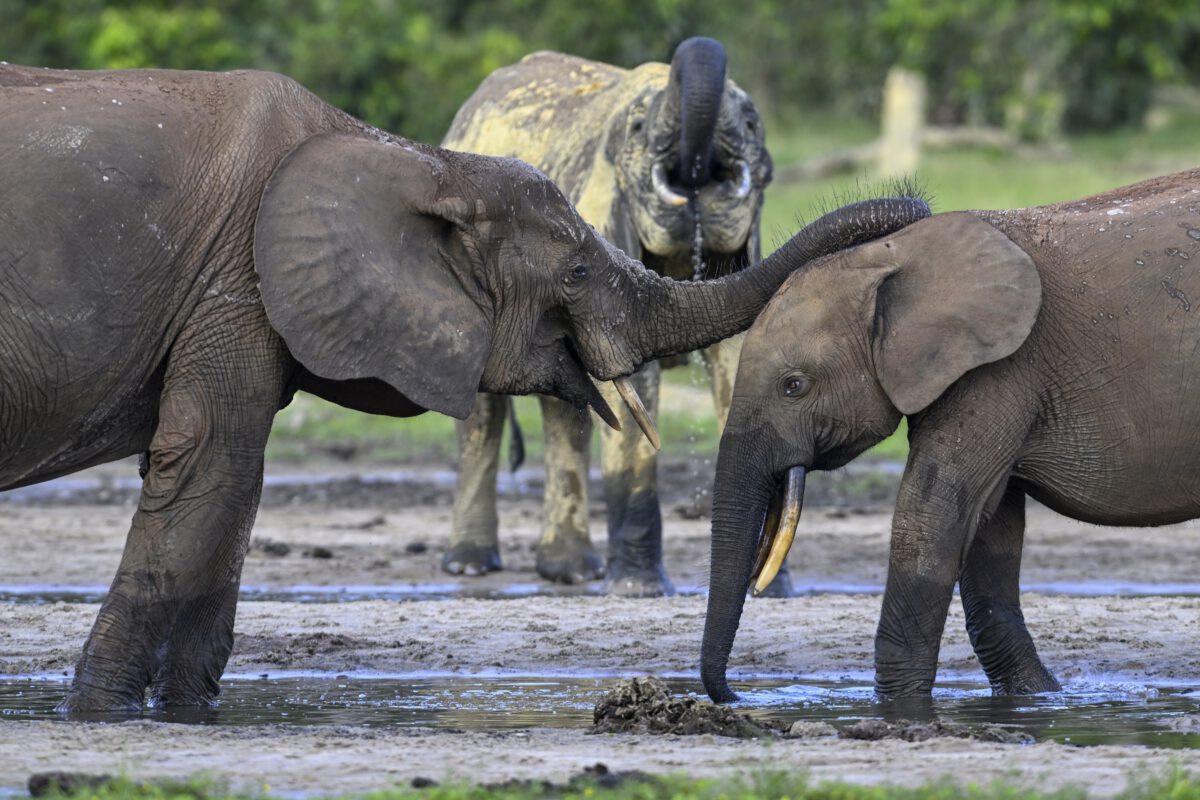
Some moments are unforgettable: We are sitting on a platform eight meters above the ground, deep in the rainforest. Dark storm clouds are rolling across Central Africa. Lightning flashes across the sky, turning night into day. Each time the sky lights up for a second or two, we see gray-blue shadows darting across the clearing below us. A hallucination? No—they are elephants.
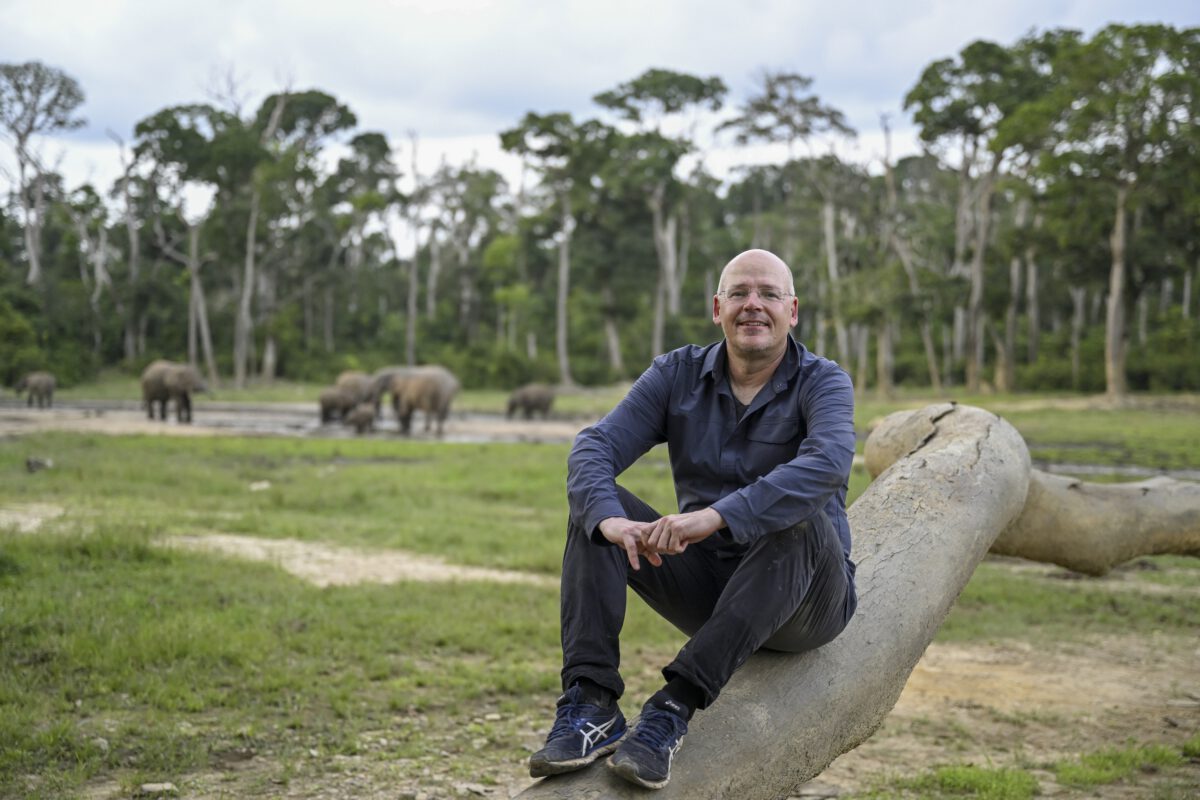
Dzanga Bai is legendary among conservationists. Located in the heart of the Congo Basin, this 500-meter-long clearing—often called the “Village of Elephants”—attracts a multitude of animals rarely seen in the dense, impenetrable rainforest: bongo antelopes, sitatungas, red river hogs, forest buffalo, giant forest hogs, forest elephants, and occasionally even gorillas and chimpanzees. They are drawn there primarily by minerals and salts, which are essential for digesting the tannin-rich vegetation of the rainforest.
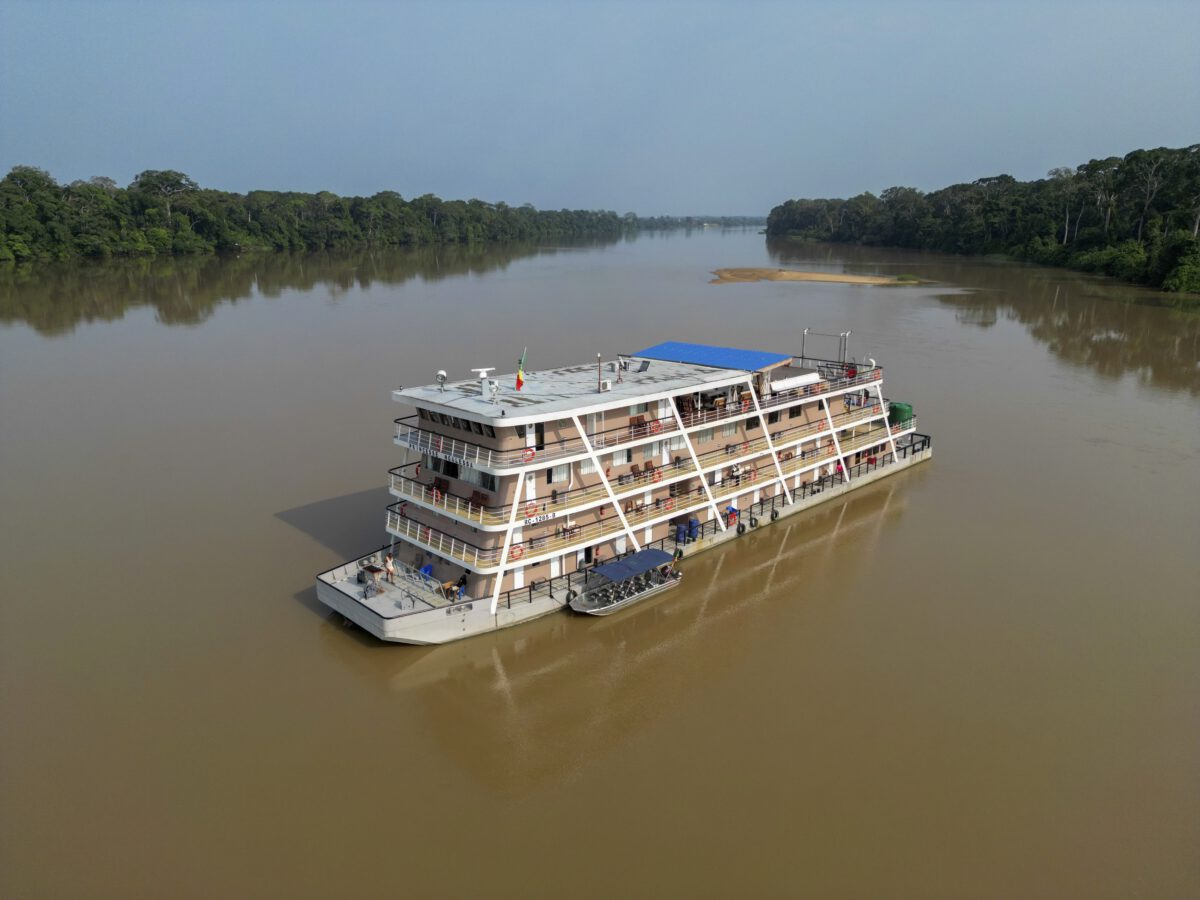
We are spending eleven days aboard the “RV Princesse Ngalessa”, a new four-star cruise ship navigating the Sangha and Congo rivers. Dzanga Bai, situated within the Dzanga-Ndoki National Park in the Central African Republic, is our first shore excursion. But let’s start at the beginning. A few days earlier, we had flown from Brazzaville—the capital of the Republic of the Congo—to Ouesso in the country’s north. Shortly thereafter, we—a group of 24 guests from Germany and Austria—found ourselves aboard the “Princesse Ngalessa”, a vessel that makes it possible to explore the Congo and its tributaries in comfort for the very first time.
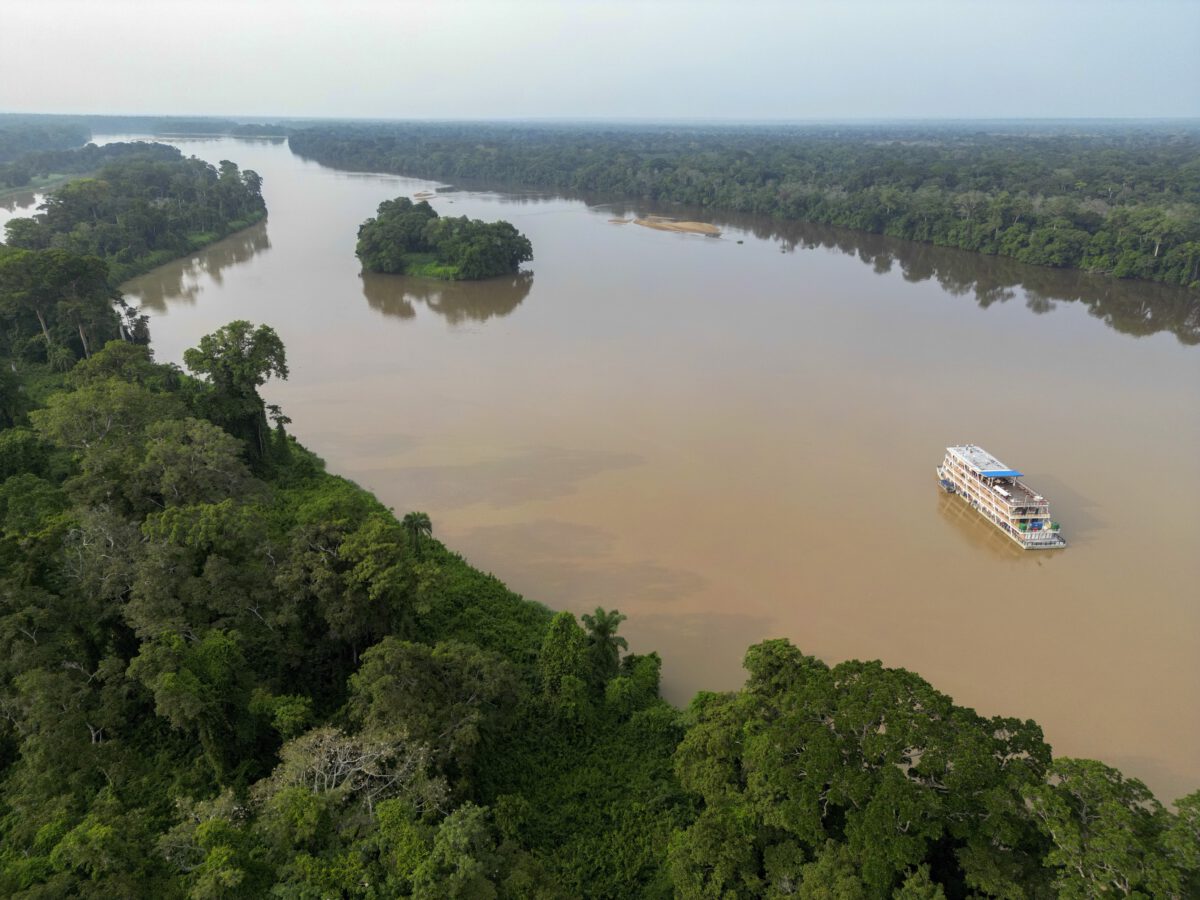
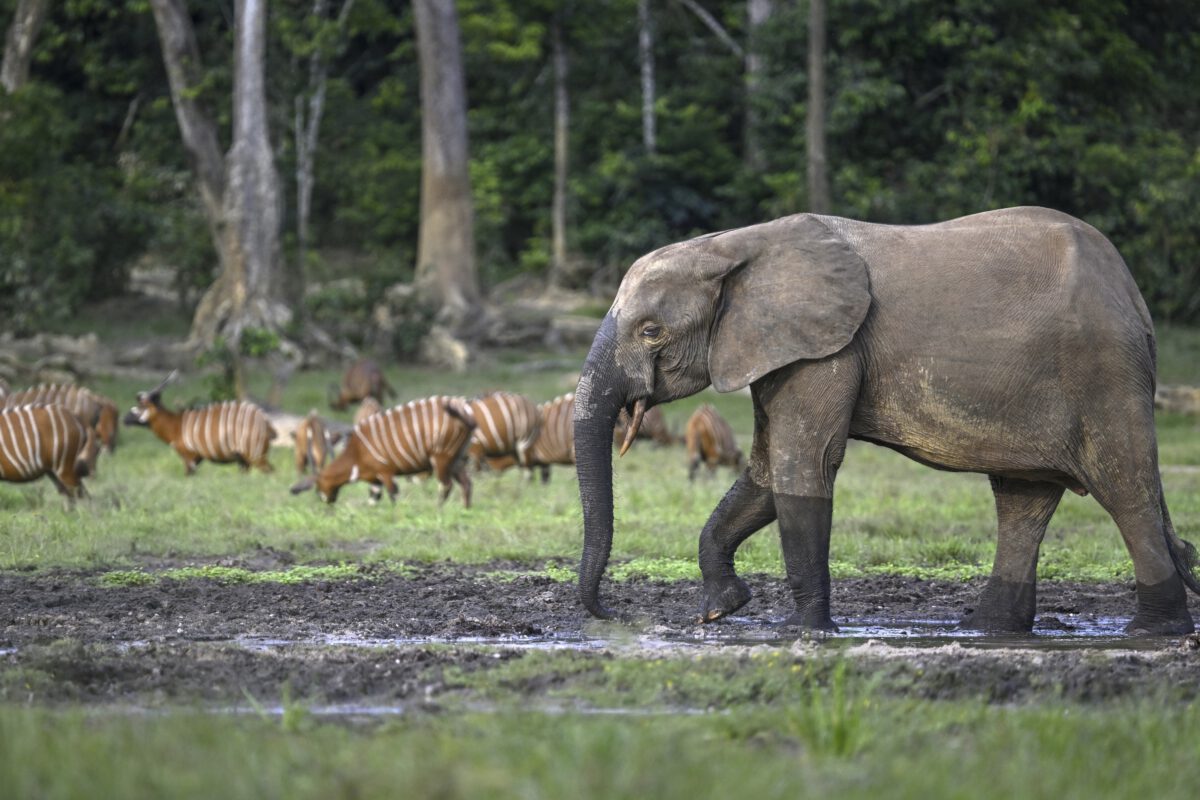
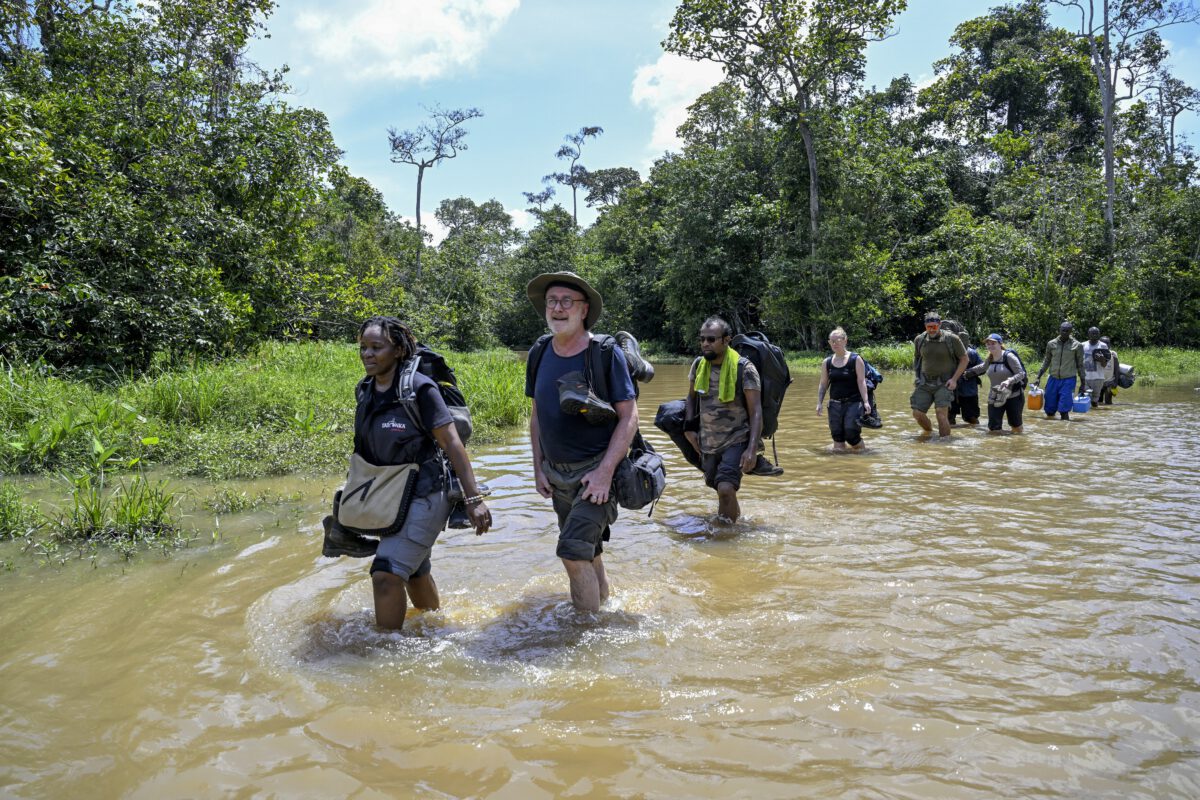
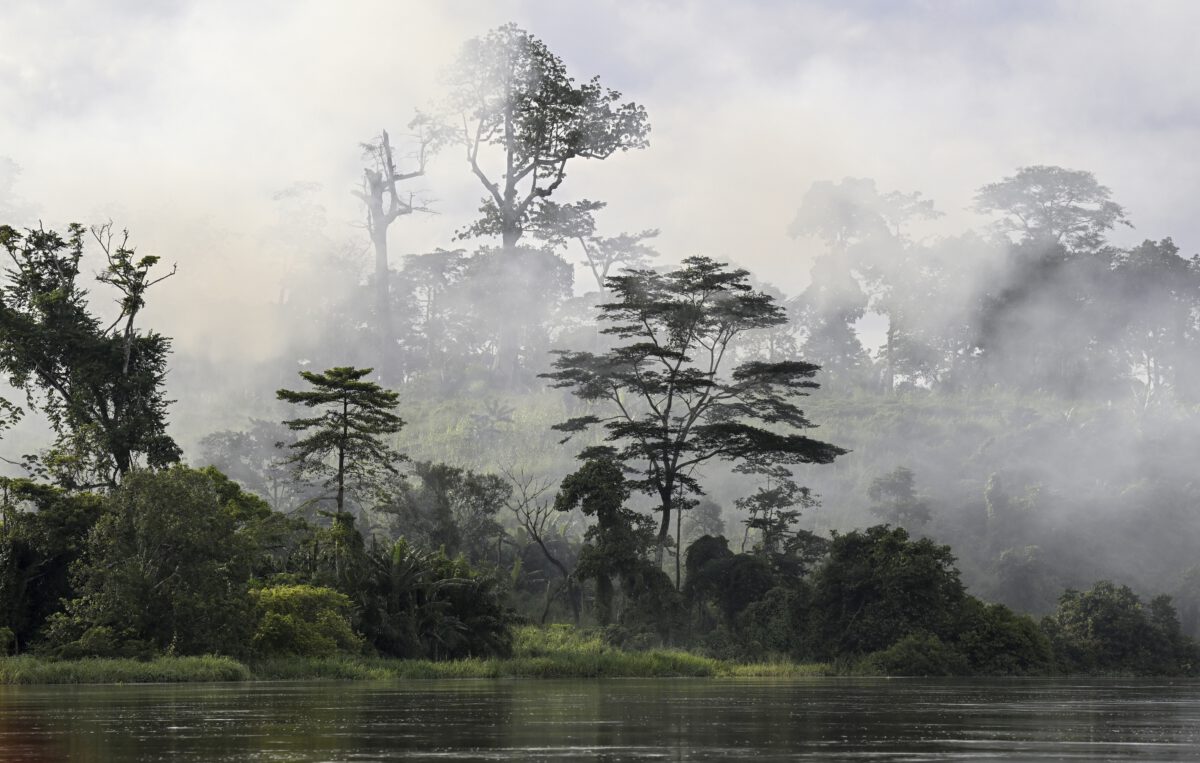
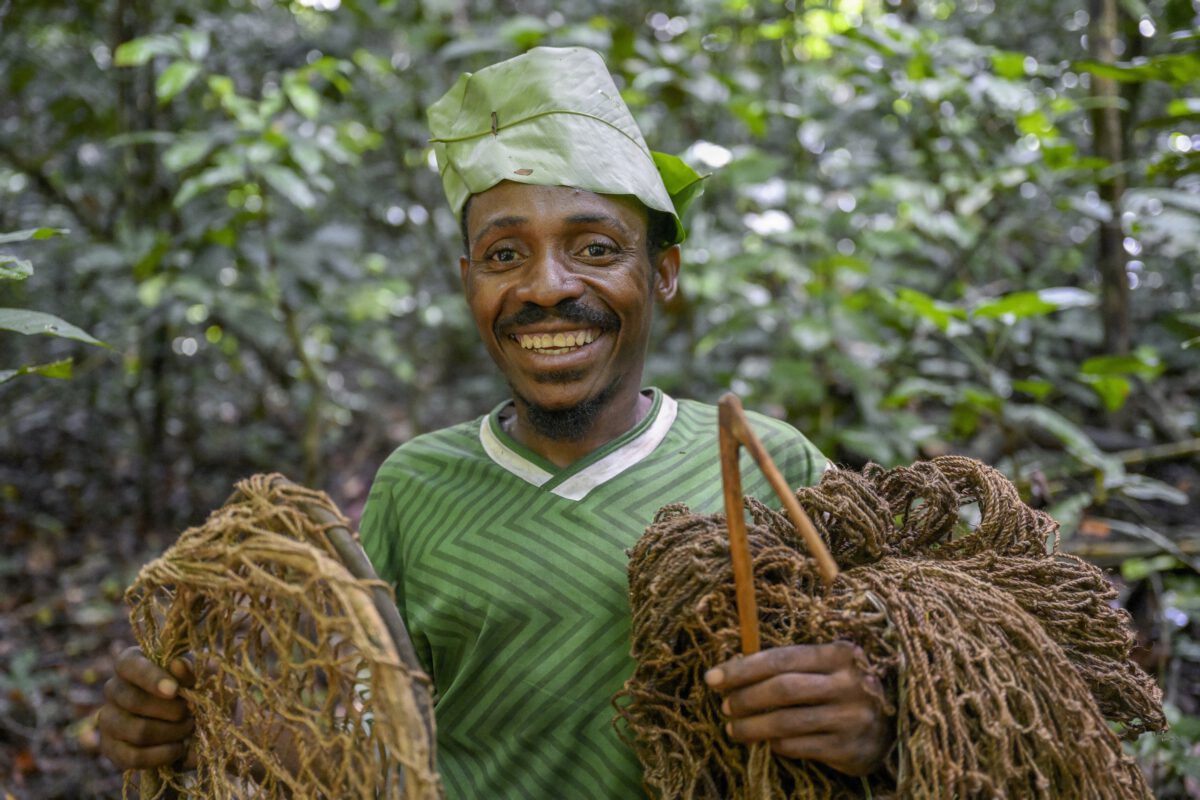
We travel up the Sangha River in small boats — not just to Dzanga Bai, but also to other forest clearings like Wali Bai in the Republic of the Congo and various BaAka villages. We have the Congo Basin’s epic river landscapes almost entirely to ourselves. We often go hours without seeing another soul on the water; unlike the Amazon in Brazil, the Congo Basin sees hardly any boat traffic, and certainly no tourism.
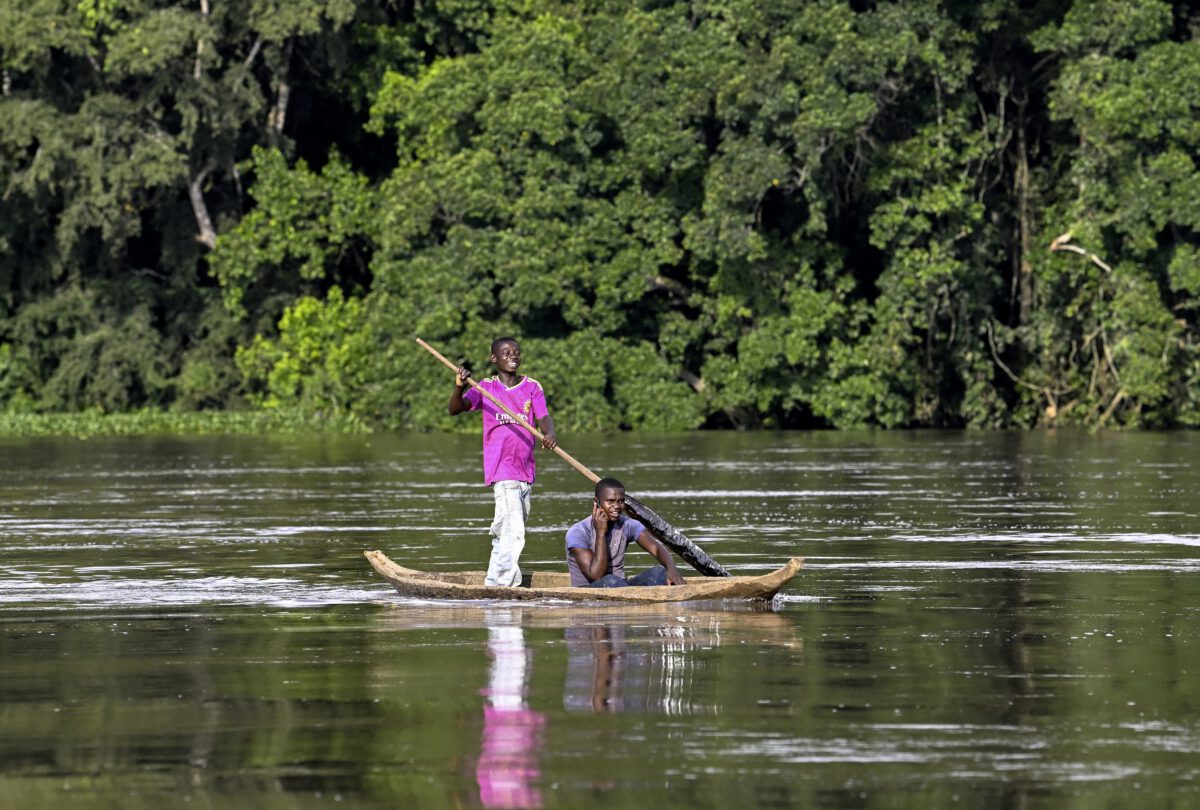
Traffic on the Sangha picks up near the settlements. At Bomassa, in the north of the Republic of the Congo, we watch dugout canoes heavily laden with bananas and cassava battling against the current, while others drift silently downstream. We frequently dock at checkpoints to pay river tolls. Every five, ten, or fifteen kilometers, mud huts appear along the bank, with fires smoldering in front of them. The people here live off the river: they bathe, wash, fish, and drink in its waters. We soak up the tropical greenery surrounding us. In most villages, we are quickly surrounded by curious children—scenes far removed from the news reports that usually reach the outside world from this region.
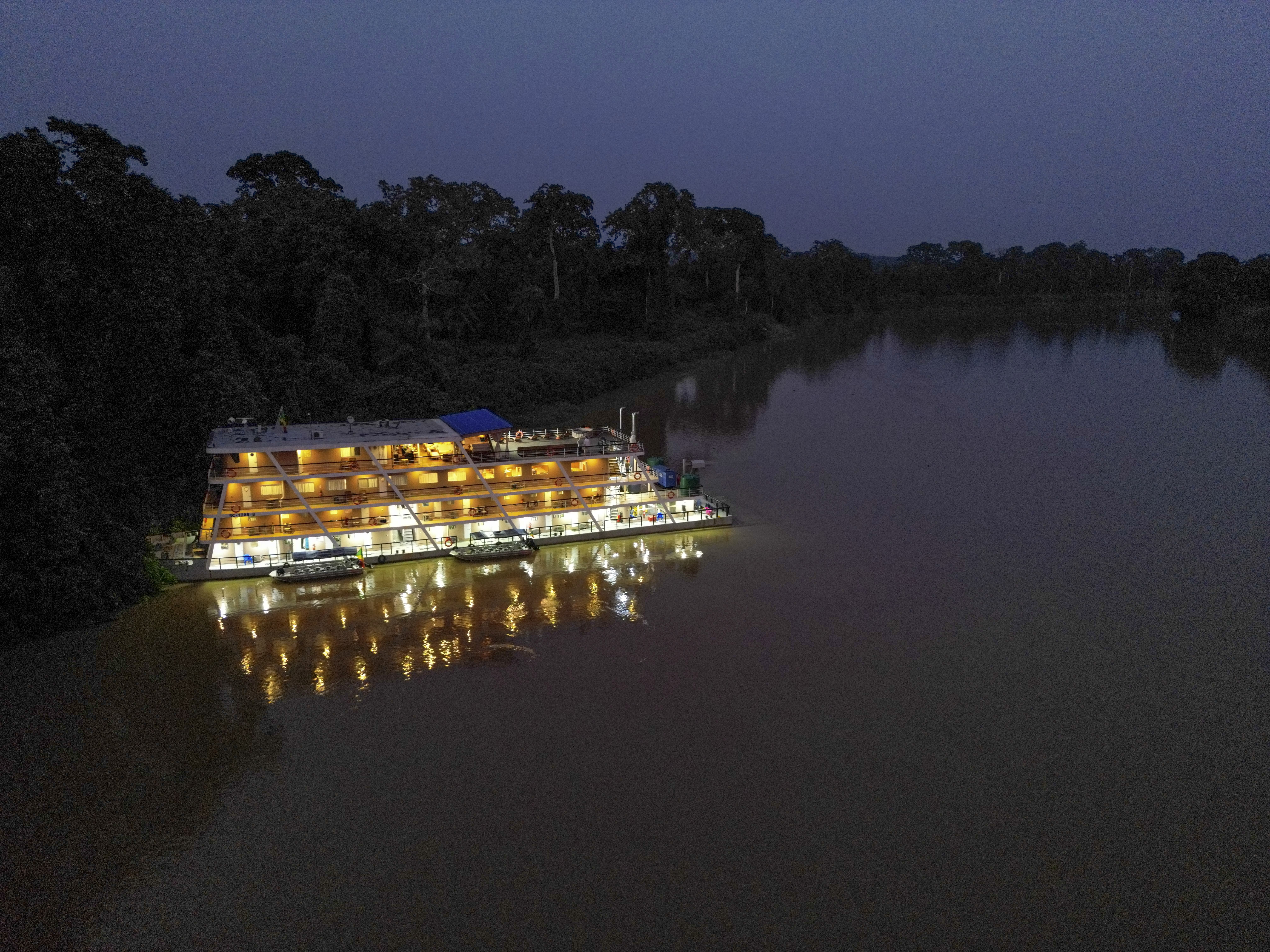
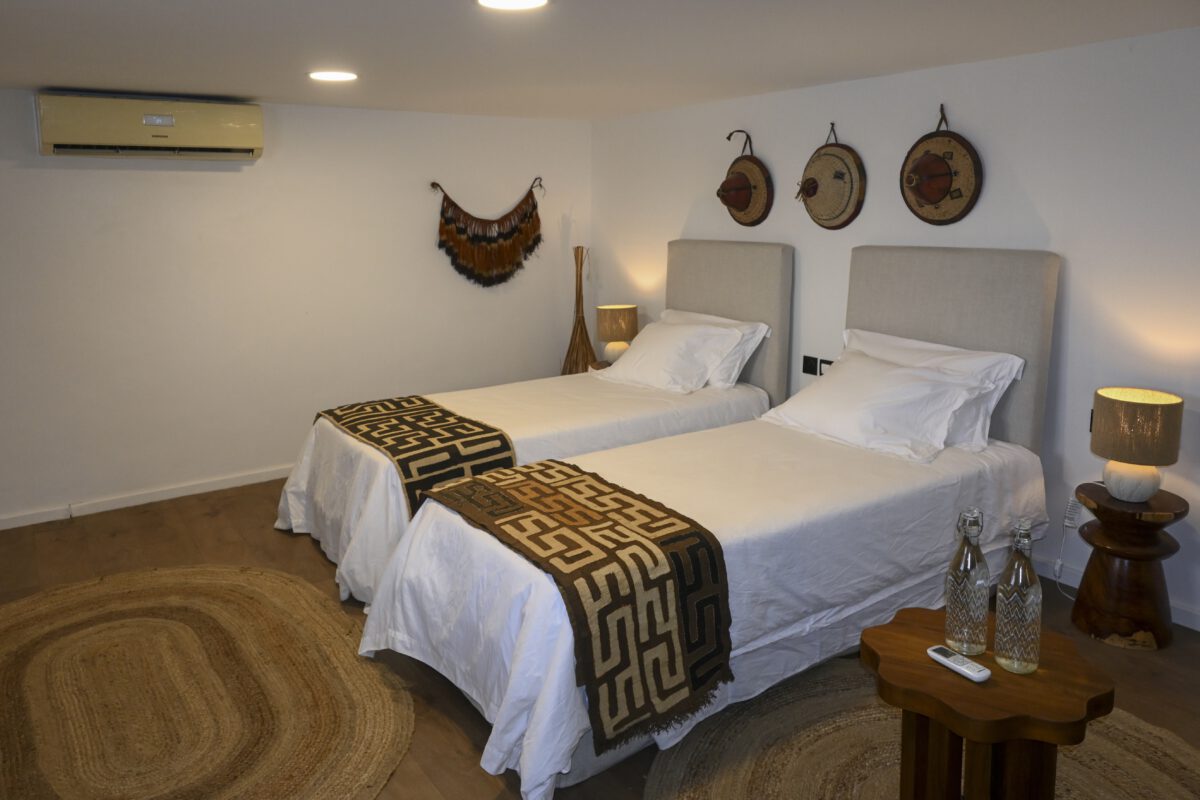
When we return to the Prinzessin after four days, the atmosphere is electric. Everyone is looking forward to cruising in comfort through the unique landscapes of the Congo Basin, as the ship is the floating equivalent of a luxury hotel. The 14 comfortable cabins are stylishly furnished with African décor and all feature air conditioning. The restaurant serves frog’s legs and cordon bleu. On the observation deck, the barman serves chilled beer, white wine and gin and tonic. There are 20 crew members to look after the 28 guests. When the Princess is lit up in the evening, she almost looks like a spaceship on the water.
We spent eleven days on the RV Princesse Ngalessa, a new four-star cruise ship, travelling along the Sangha and Congo rivers. Dzanga Bai, situated in Dzanga-Ndoki National Park in the Central African Republic, was our first shore excursion. But let’s start at the beginning. A few days earlier, we had flown from Brazzaville, the capital of the Republic of the Congo, to Ouesso in the north of the country. Shortly afterwards, we – 24 guests from Germany and Austria – were on board the Princesse Ngalessa, which makes it possible for the first time to travel in comfort along the Congo and its tributaries.
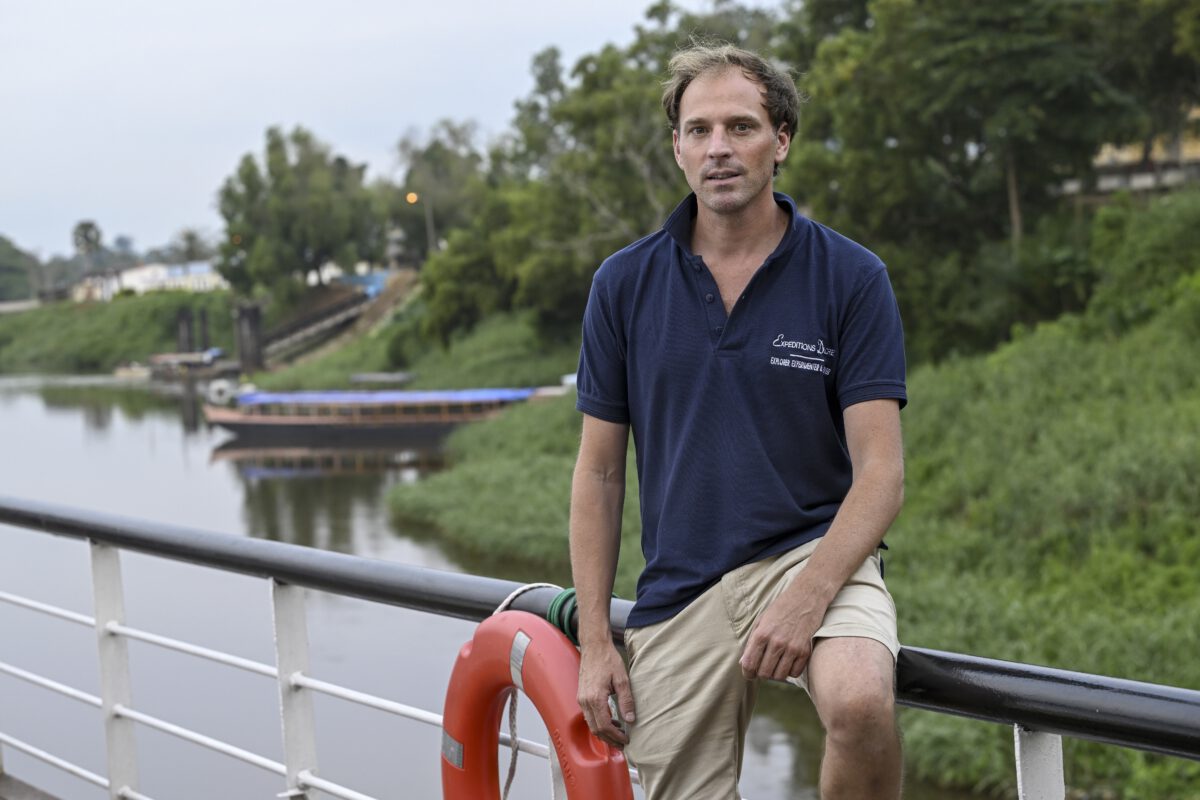
Nicolas Ducret is the visionary behind the ship. The 45-year-old grew up in Nantes, France. “My parents had a lot of travel books at home. Even as a child, I had just one wish: to discover the world,” the Frenchman says when we meet him on deck. At 23, Ducret cycled through 26 countries. He crossed the Atlantic by sailboat, rode on horseback from Kazakhstan to Afghanistan, and hiked through the Congo Basin. Later, he worked in Moscow for the French-Russian Chamber of Commerce and Industry.
During the Covid pandemic, the entrepreneur looked for new ideas. “That’s when I remembered the Congo,” says Ducret. Shortly thereafter, he leased the “Princesse Ngalessa” —launched in Kinshasa in 2017 — and extensively renovated it in 2023, transforming it into a four-star vessel. To identify the best spots for his guests, he spent six weeks exploring the Congo and Sangha rivers in a homemade pirogue. “And now, here we are,” says Ducret.
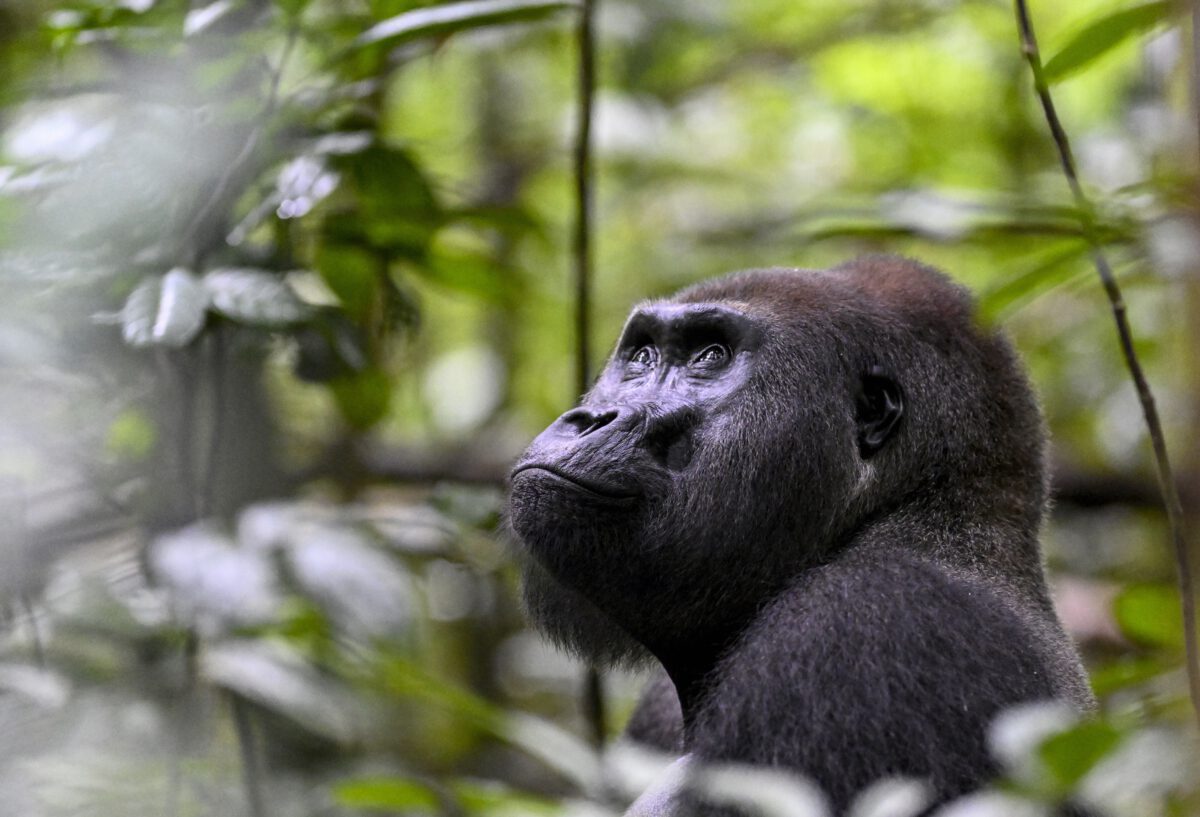
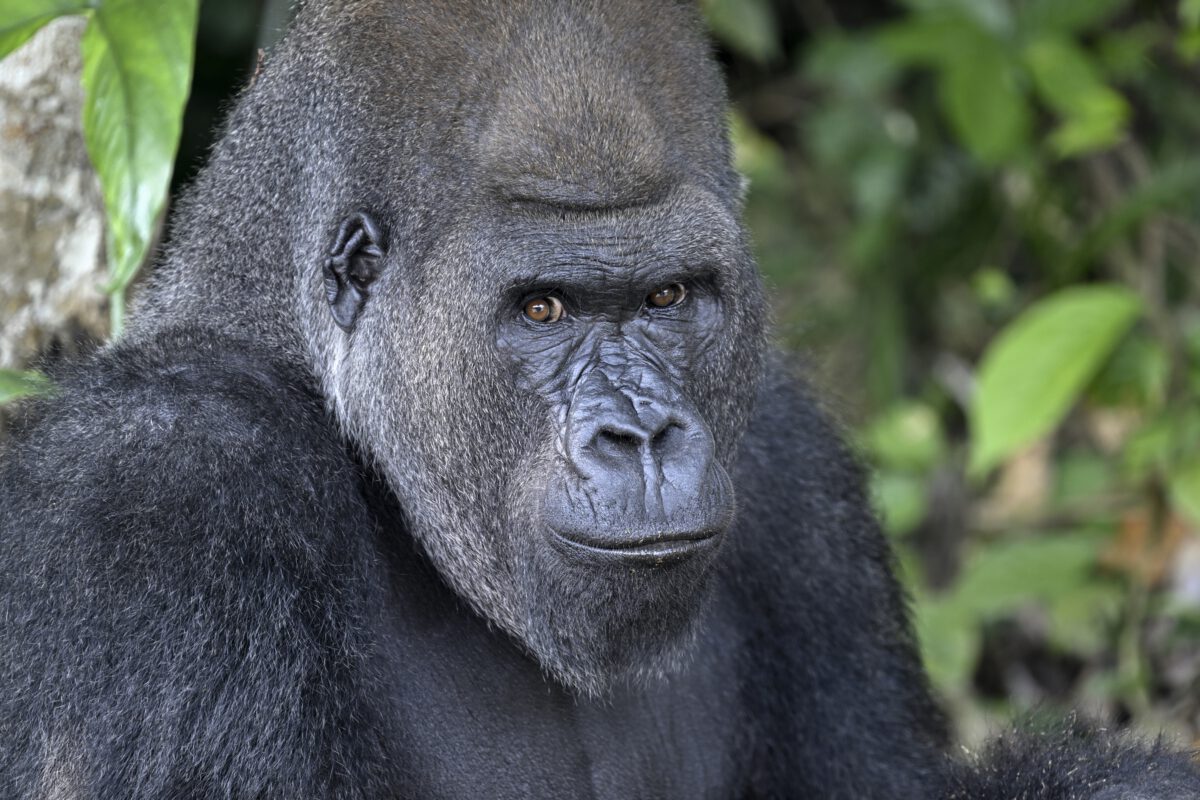
Even though the *Princesse* cannot complete the voyage during our trip—running aground on a sandbank just past Ouesso, forcing passengers to switch to cars to visit the remaining destinations—the journey through the Congo Basin remains an extraordinary experience. We observe gorillas in the Lesio-Louna Reserve in the Republic of the Congo and bonobos in the Democratic Republic of the Congo. And we do get to cruise on the great river after all—specifically during the crossing to see the bonobos.
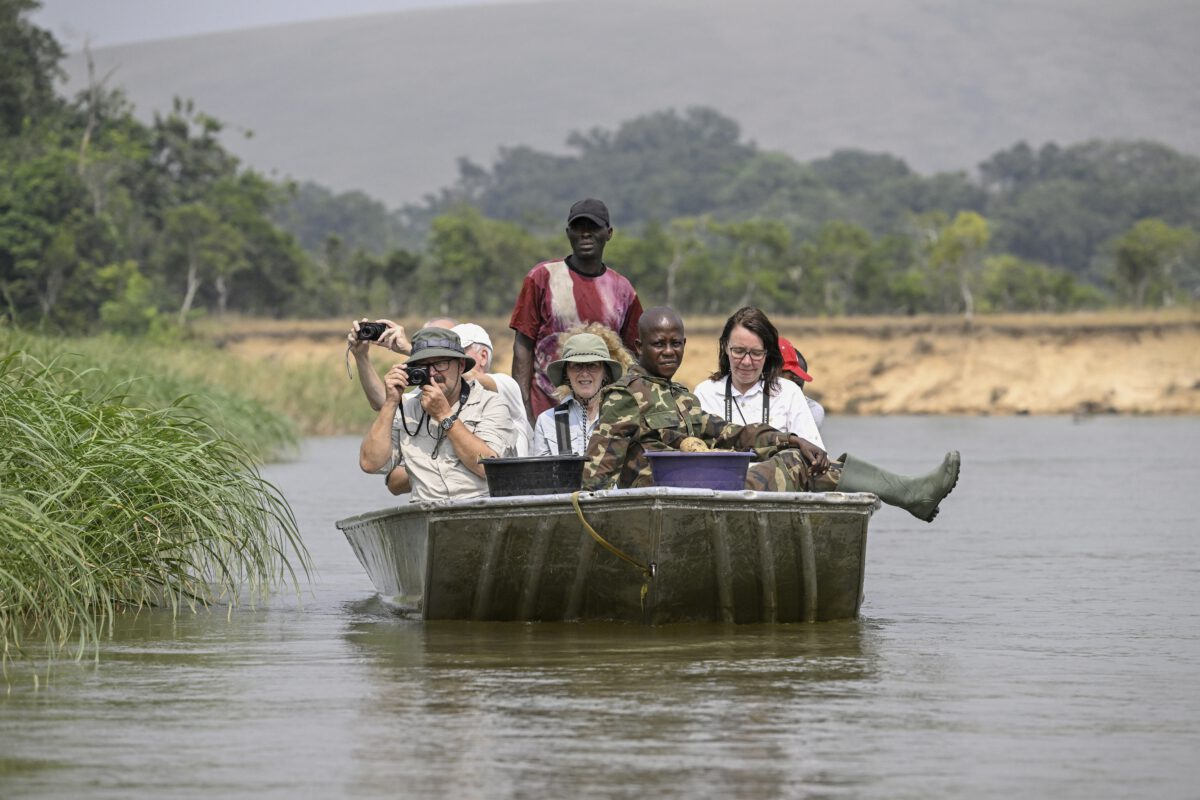
At 4,374 kilometres, the Congo is the second-longest river in Africa after the Nile. The locals call the Congo ‘Nzadi’, meaning ‘the river that swallows all others’. And rightly so, for on the Congo everything is bigger and more formidable than anywhere else. In places, the river is more than ten kilometres wide. The banks on the horizon are often nothing more than a green illusion. Whirlpools of unprecedented size drag everything that floats past into the depths: leaves, bushes, even whole tree trunks. Yet on the morning we cross from Mpouya in the Republic of the Congo to Tshumbiri in the Democratic Republic of the Congo, the river lies as smooth as glass before us. On the banks, fires smoulder in front of the thatched huts; women wash their clothes by the river; children play on the beach.
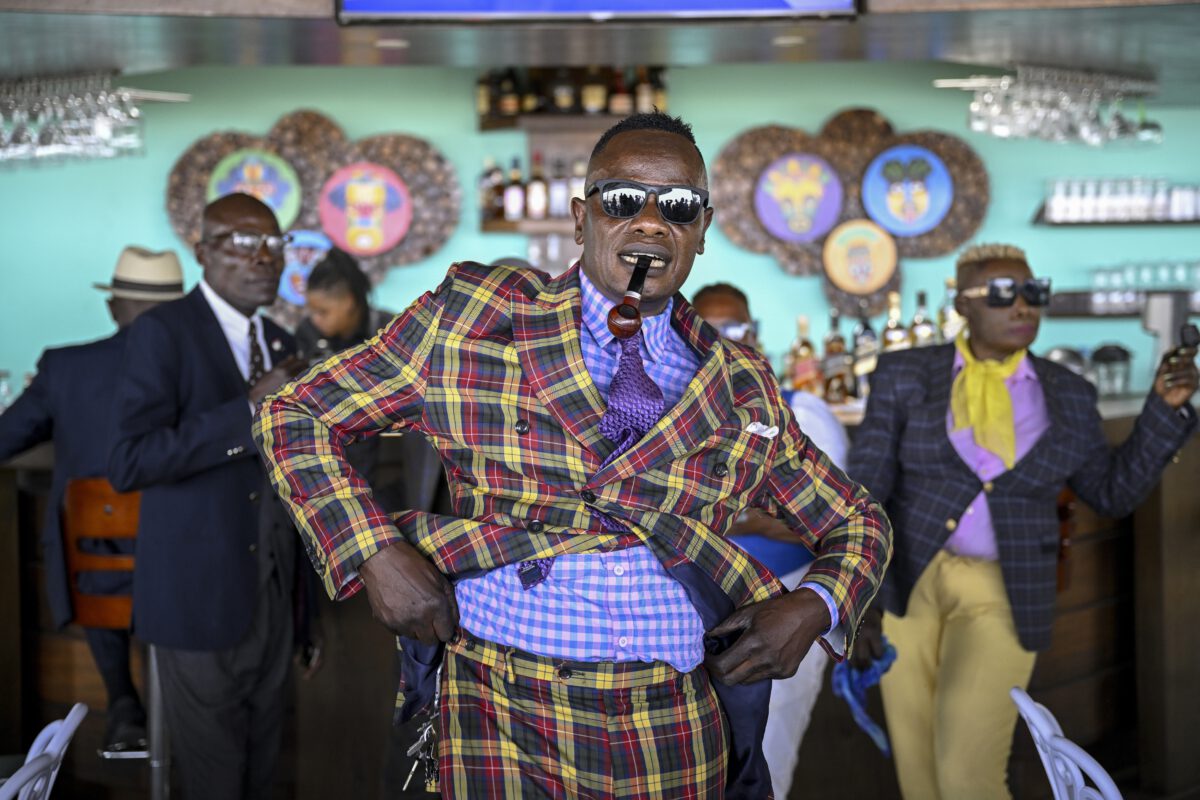
We have been traveling through the Central African Republic and the two Congos for more than two weeks. On the final day of our journey, we sit at the “Mami Wata” restaurant in Brazzaville, eating chicken with plantains and drinking Ngok beer while enjoying a performance by the so-called *Sapeurs*—members of the *Société des Ambianceurs et des Personnes Élégantes* (SAPE), an extraordinary subculture defined by elegant attire. Their outfits often feature expensive designer labels, such as suits from Versace, Gucci, and Yves Saint Laurent. For many *Sapeurs*, clothing is not merely a means of overcoming social barriers; they also uphold specific ethical principles, advocating for peace, courtesy, and respect for others.
As we watch the *Sapeurs* perform, the Congo River meanders along in the background. Pool Malebo—formerly known as Stanley Pool, after the British-American explorer Henry Morton Stanley—is close by. Kinshasa, formerly Léopoldville, lies on the opposite bank. It is a pity we did not see the *Princesse* arrive in Brazzaville, as the ship has been operating regular services on the Sangha and Congo rivers since its maiden voyage. Yet, anyone who has traveled the Congo sees the mighty river and its people through entirely different eyes.
Further information:
Getting there: For example, via Ethiopian Airlines (www.ethiopianairlines.com) via Addis Ababa or Air France (www.airfrance.de) via Paris to Brazzaville. Everything is organized from that point on.
Entry requirements: A visa is required for the Republic of the Congo; it must be applied for at the embassy in Berlin prior to the trip (www.ambacongo.de). Special permits for entry into the Democratic Republic of the Congo and the Central African Republic can be obtained locally.
Best time to travel: September to June. Cruises do not operate in July and August due to frequently low water levels.
Tour operators: In Germany, for example, Diamir Erlebnisreisen (www.diamir.de) offers trips on the RV Princesse Ngalessa. The tour lasts 19 days and costs from €12,990 per person.
Alternatively:
Lernidee Erlebnisreisen (www.lernidee.de) also offers a 17-day expedition cruise featuring a 9-day river voyage on the RV Princesse Ngalessa along the Congo River; prices start at €8,950 per person.
Health: A yellow fever vaccination is mandatory. Malaria prophylaxis, vaccinations against hepatitis A and B, and the combined vaccine for polio, diphtheria, and tetanus are strongly recommended. Be sure to use mosquito protection!
Safety: The German Federal Foreign Office warns against travel to the Central African Republic and many regions of the Democratic Republic of the Congo (www.auswaertiges-amt.de). However, the locations visited by the ship, as well as the Republic of the Congo itself, are considered safe.
Recommended reading: Redmond O’Hanlon, Kongofieber (Congo Fever), Eichborn Verlag 1998; David Van Reybrouck, Congo: The Epic History of a People, Suhrkamp Verlag 2012
Further information: About the tour operator and Expeditions Ducret (www.expeditions-ducret.com)
The author traveled with the support of Diamir Erlebnisreisen.
Photo credit: Fabian von Poser (16)
Comments