From the mountain gorillas in the rainforest to the herds of animals on the savannah
The small group of walkers has been trudging uphill for two hours. Every now and then, a shower of rain comes pouring down from the sky. The path is muddy, steep, rough-going and overgrown. Some are glad to be wearing gardening gloves, which protect them from injury when they reach into the thorny branches. It’s an adventure – exciting, unique, unforgettable – but by no means a walk in the park.
We are in Bwindi Impenetrable National Park in south-western Uganda. At the very front of the group are a tracker and a staff member who is clearing a path through the thicket. They guide the visitors through the tropical forest, which stretches from 1,160 to 2,600 metres above sea level. As they do so, they keep an eye out for sleeping nests in the undergrowth and for hand and footprints on the ground that bear a striking resemblance to human ones.
The group is on the lookout for a mountain gorilla family. For many visitors, an encounter with these gentle giants is one of the highlights of a trip through this country in the heart of Africa.
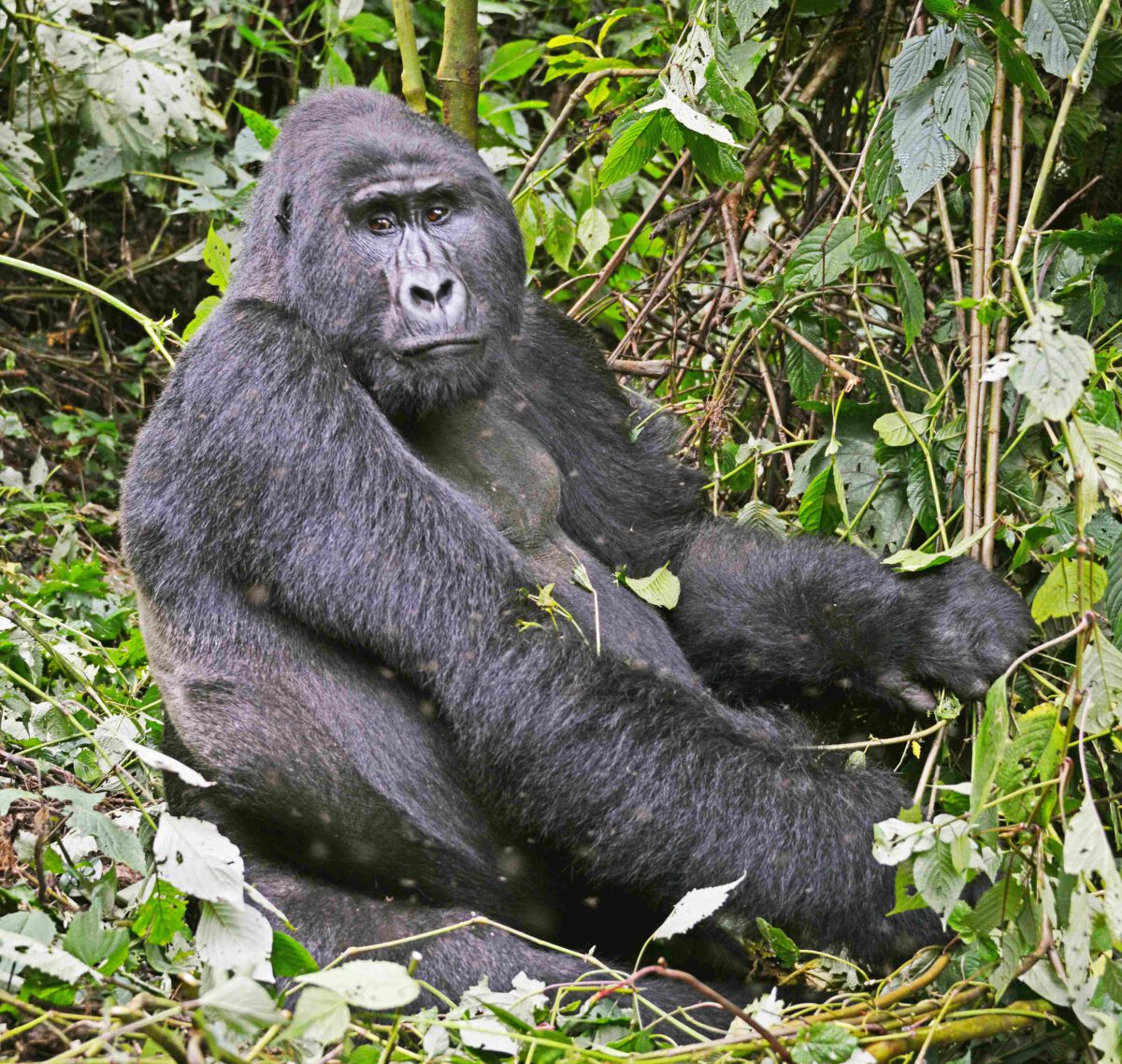
Around half of the world’s remaining mountain gorillas live in Bwindi Impenetrable National Park. The most recent census in Bwindi-Sarambwe, carried out in 2018, recorded 459 individuals. Together with the results of the 2015 census in the Virunga Massif, the global population of mountain gorillas was estimated at 1,063 strictly protected individuals. It is by far the most popular park for gorilla tracking. In Bwindi, there are more than 20 groups of mountain gorillas accustomed to human presence, spread across the four trekking sectors of Buhoma, Ruhija, Rushaga and Nkuringo. However, not all groups accustomed to humans are available for tourist visits, as some may only be visited by researchers and conservationists. Visitors are assigned to specific tour groups in accordance with the park’s permit regulations.
Each gorilla family may only be visited by a maximum of eight guests for one hour each day. Before setting off, each ranger explains the rules of conduct to the group. These include maintaining a minimum distance of ten metres from the animals, in accordance with the updated guidelines from the Uganda Wildlife Authority – even though this is not always possible if the gorillas suddenly approach. In this case, trekkers should remain calm, follow their ranger’s instructions and avoid sudden movements or attempting to touch the animals.
And then, suddenly, there they are: Twigs snap, leaves rustle, and a muscular silverback (as the adult males with silver-coloured back hair are called) emerges from the undergrowth at the edge of a clearing, accompanied by several females and a troop of babies with big, black eyes.
The leader, weighing around 200 kilos, effortlessly snaps a branch as thick as an arm and fixes his gaze on the group crouching in the grass. His deep growl makes the rain-damp air vibrate. Everyone freezes; no one says a word. But the ranger whispers with a smile: ‘The growling means he’s in a good mood.’ And indeed: the silverback rolls over onto his back with obvious pleasure and chews on his bamboo stalk.
Encountering the mountain gorillas is a breathtaking experience.
You can book the mountain gorilla experience in Uganda with a recommended tour operator here:*
https://privatetripuganda.com/request-a-trip/?ref=JGS219
But Uganda has much more to offer. The country is a wonderful destination that is now well-developed for round-trip travellers – particularly if you undertake your safari with an experienced tour operator who knows the area well.
Uganda is roughly the same size as Great Britain and resembles a single, beautiful garden. Even Winston Churchill raved about the country’s extraordinary diversity in his book *My African Journey*, published in 1908. He described the then Kingdom of Uganda as a ‘fairy-tale land’ and, in view of its extraordinary natural diversity, coined the nickname ‘Pearl of Africa’ – a phrase that remains famous to this day (‘Uganda is truly the pearl of Africa.’).
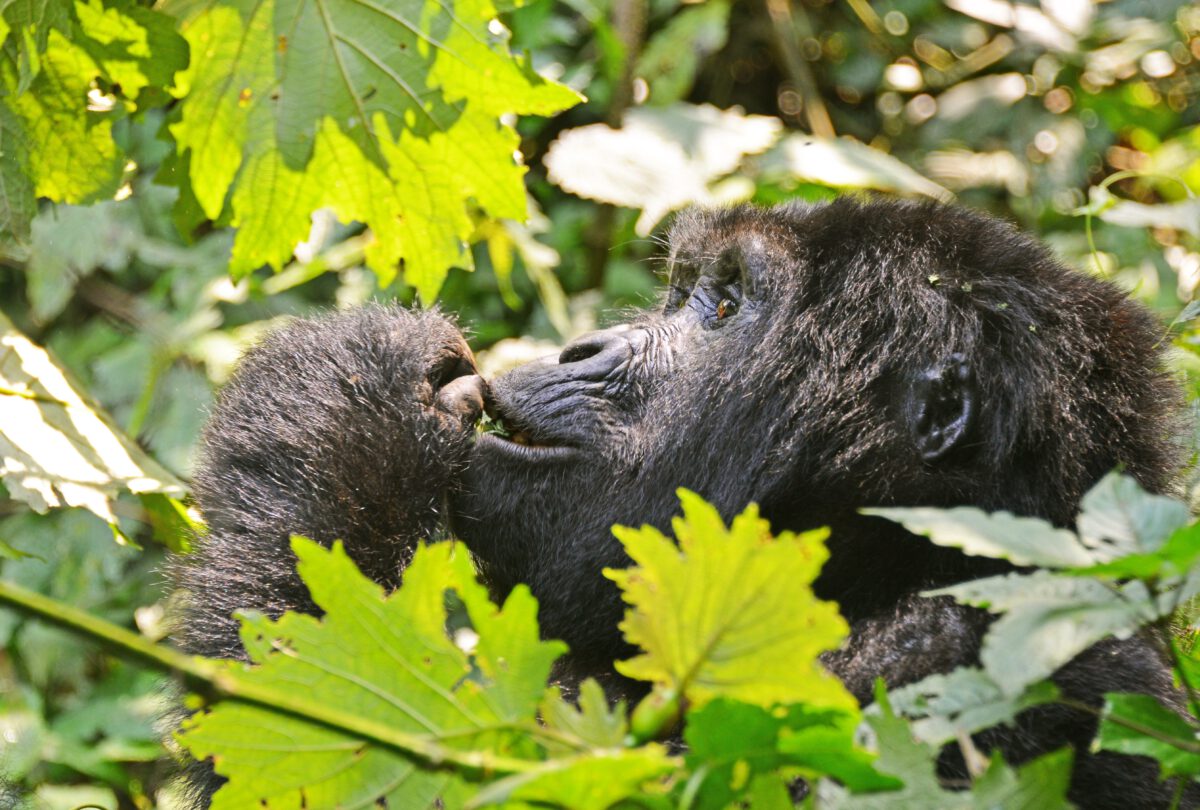
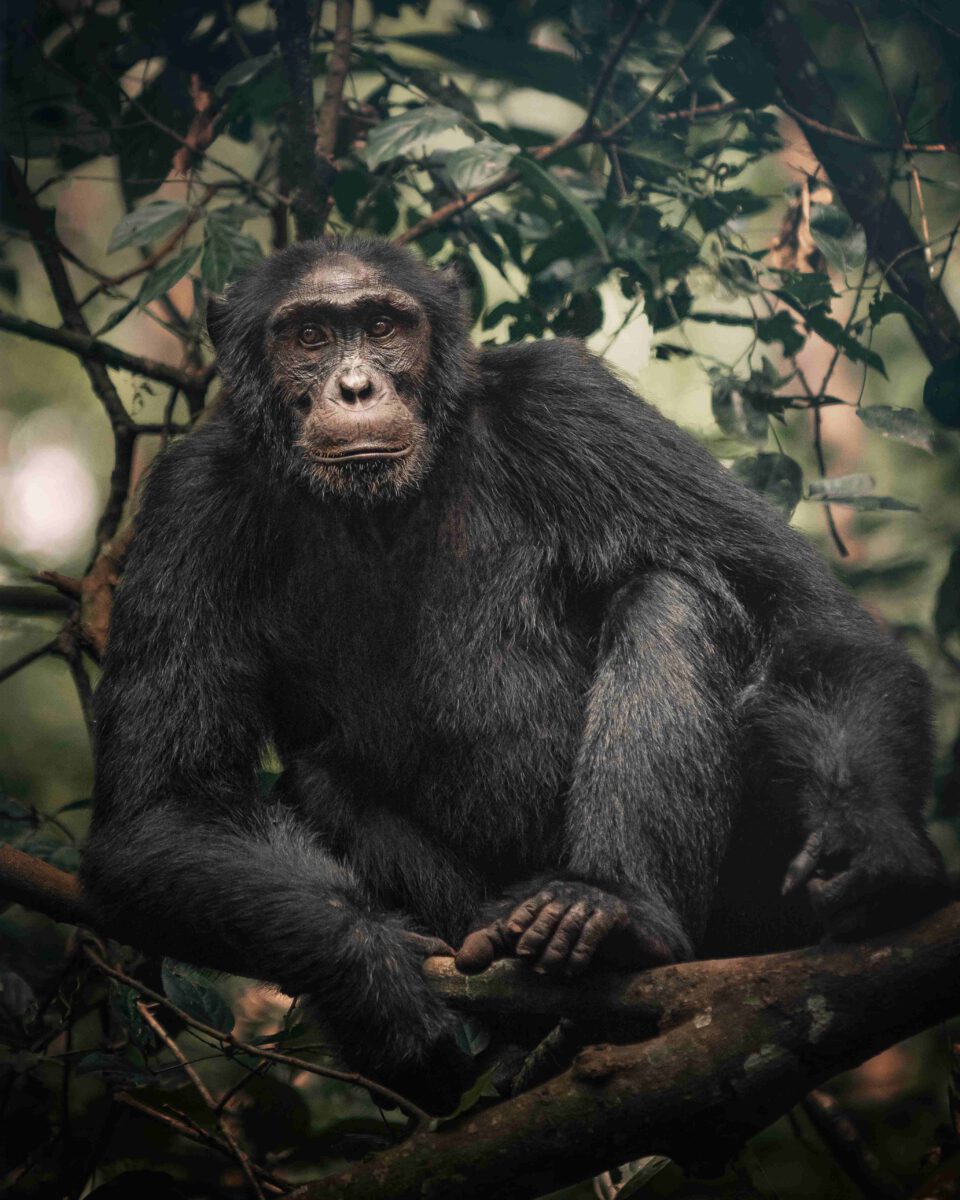
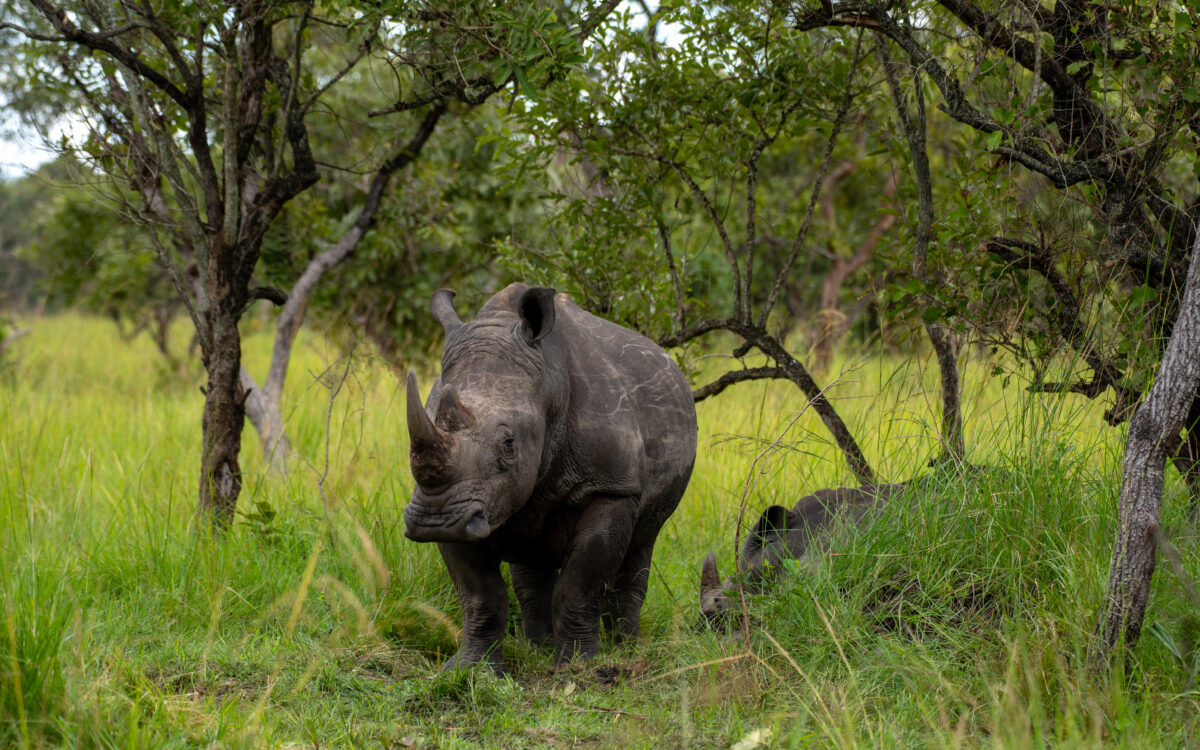
In fact, there is far more here than just the dense tropical forests home to gorillas, chimpanzees and other primate species in Bwindi Impenetrable National Park and the Virunga volcanic region. Among the natural wonders are also the spectacular, thundering waterfalls of the Nile, the great lakes of the Central African Rift Valley – including Lake Victoria, Africa’s largest lake – and the vast savannah landscapes with their herds of animals in Queen Elizabeth National Park.
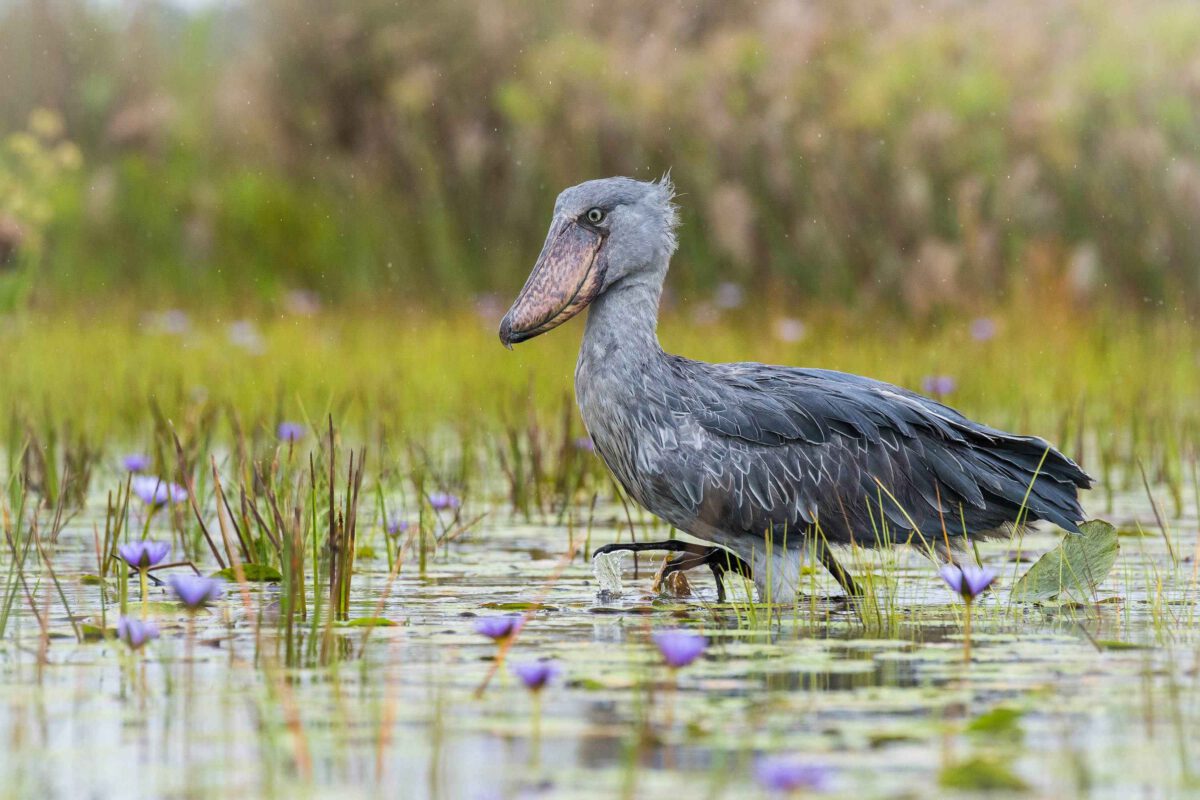
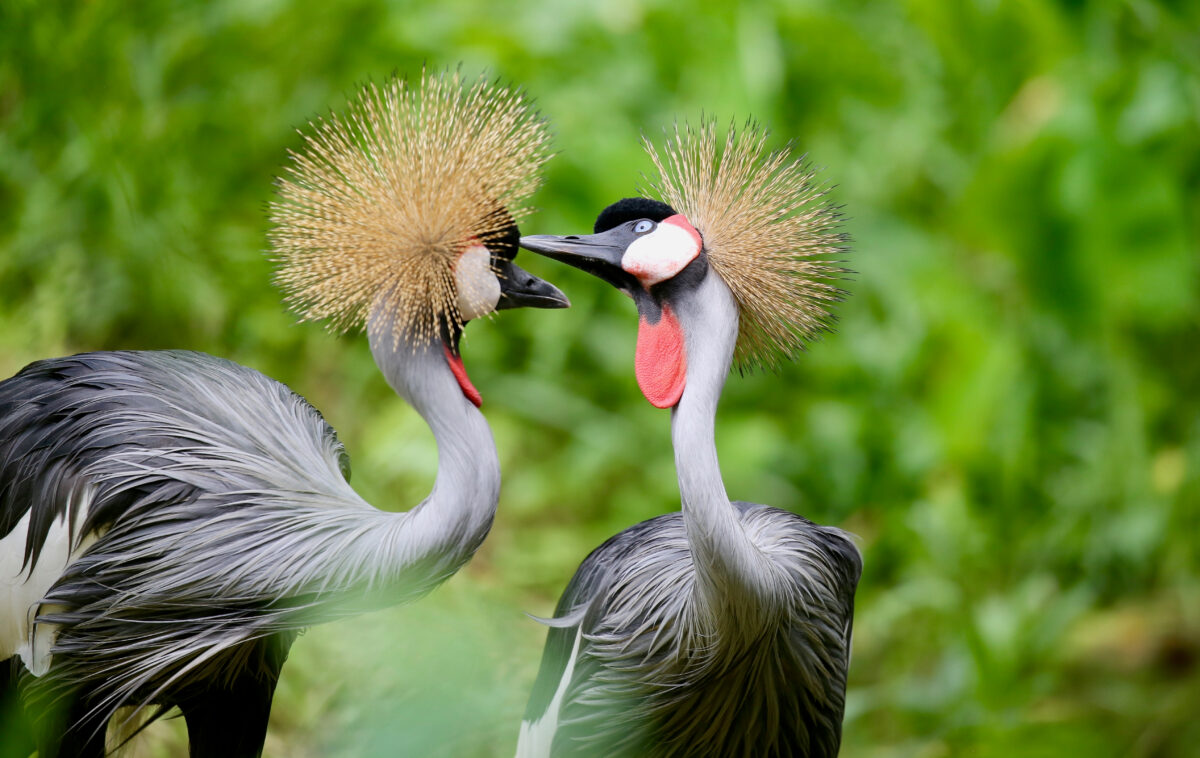
Among ornithologists, Uganda is also regarded as a true birdwatcher’s paradise. Among other species, visitors can spot the extraordinary shoebill here – an imposing bird measuring up to 1.50 metres in height, with a massive, shoe-shaped beak.
On safari to see lions, leopards and elephants
One of the most fascinating protected areas is Queen Elizabeth National Park, situated at the foot of the Rwenzori Mountains. Nearby rises the Rwenzori massif, which reaches a height of 5,109 metres and includes Mount Stanley.
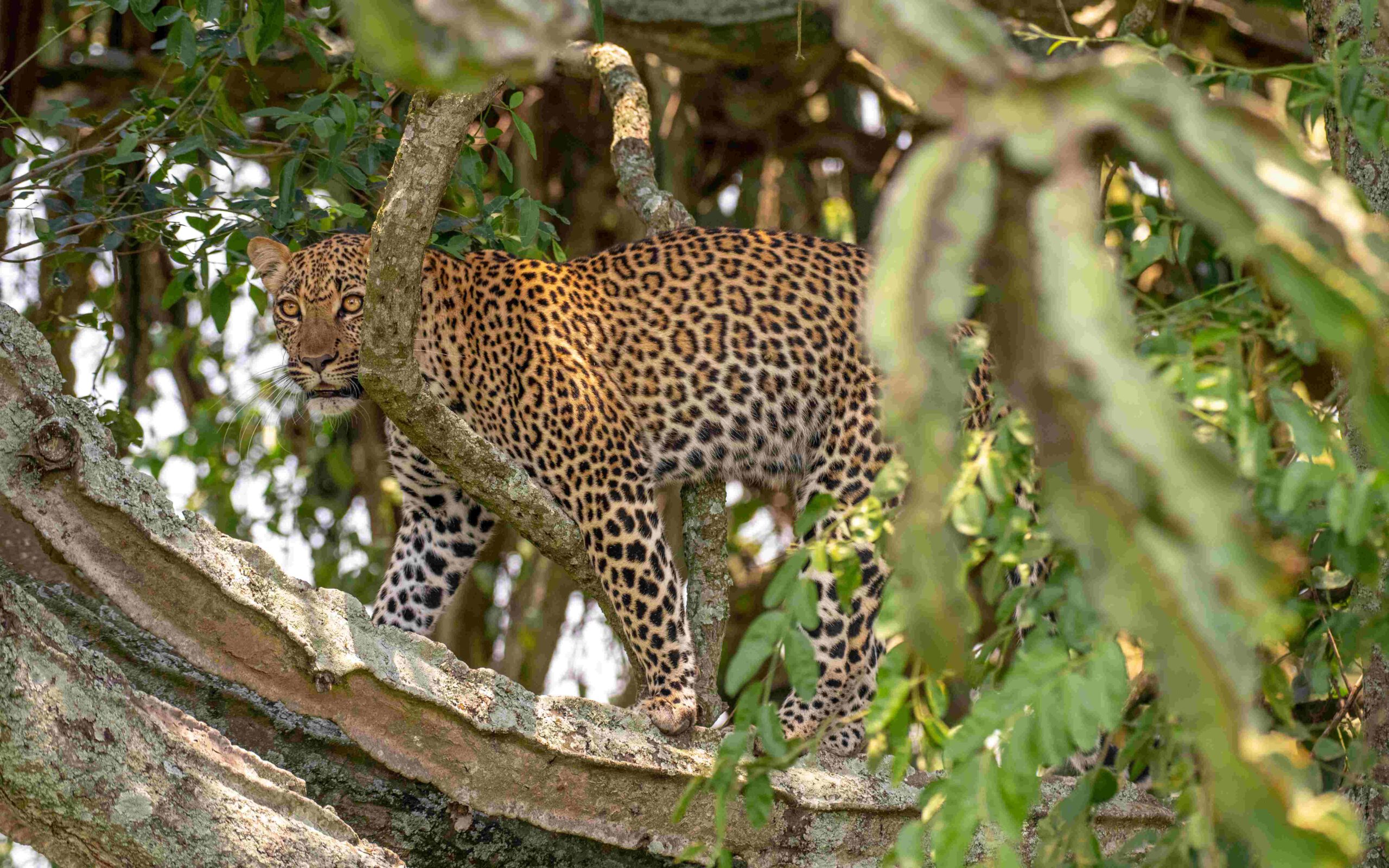
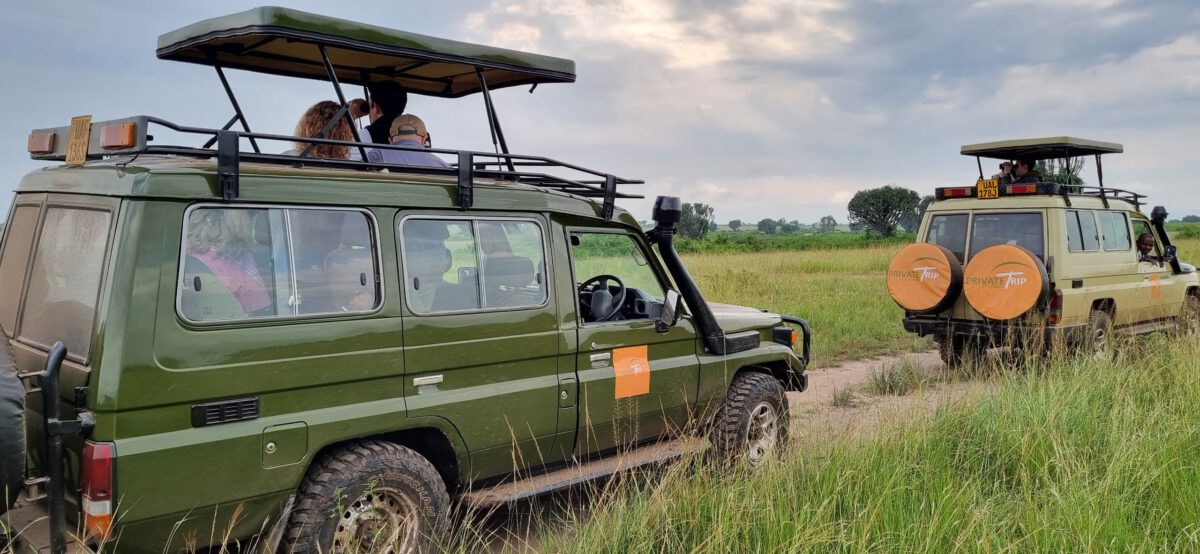
Anyone driving here early in the morning on a safari in a four-wheel-drive vehicle along the red clay tracks can observe big cats at close quarters. The rangers know exactly when to put their foot down so that their guests arrive in good time, for example, at a cactus tree where a leopard is crouched amongst the spiny branches, scanning the surroundings with its amber-coloured eyes.
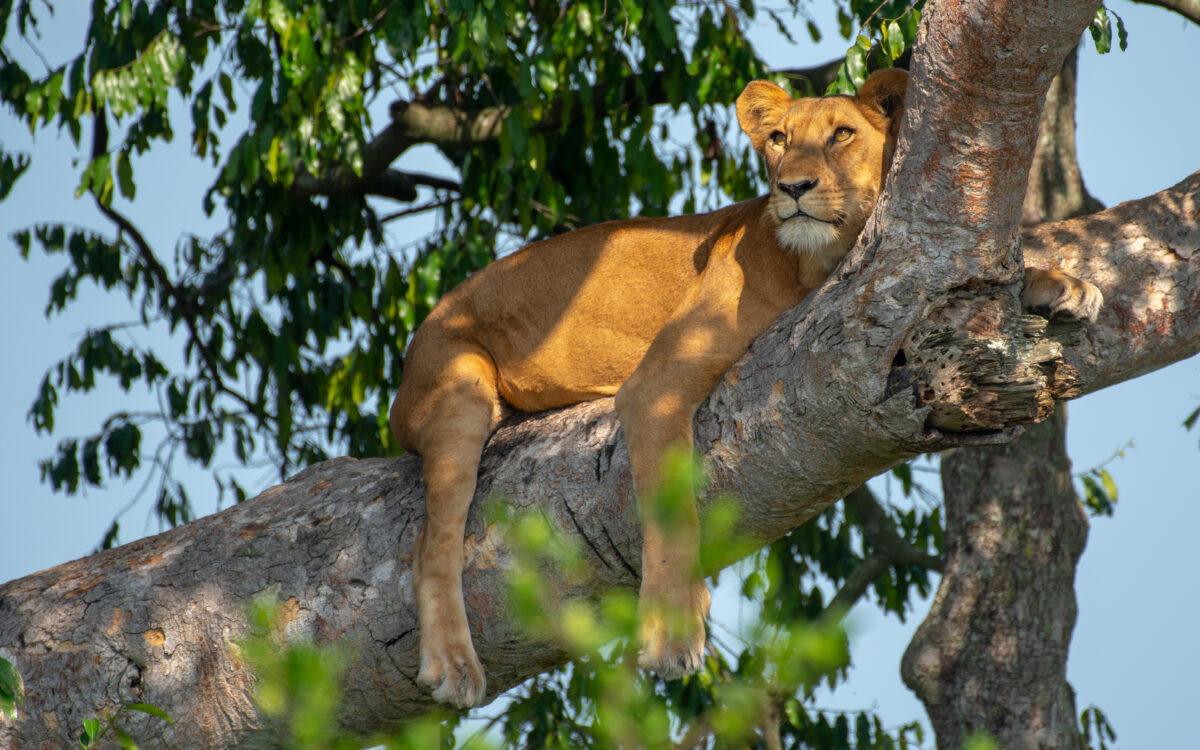
But sometimes the beautiful cat is not the hunter, but is itself in danger. For example, when lions are dozing in the grass beneath the tree, just waiting for their prey to come down. After all, even lions themselves might get the idea to climb the tree. In the southern Ishasha sector of Queen Elizabeth National Park, the lions are famous for spending their rest periods enjoying the view from the treetops.
But then the ranger’s radio is sure to crackle to life again soon, and a colleague advises him to carry on: not far away, a family of elephants is splashing about in a waterhole …
Uganda – the Pearl of Africa – offers an unforgettable safari full of extraordinary encounters with wildlife and fascinating landscapes.
Further information
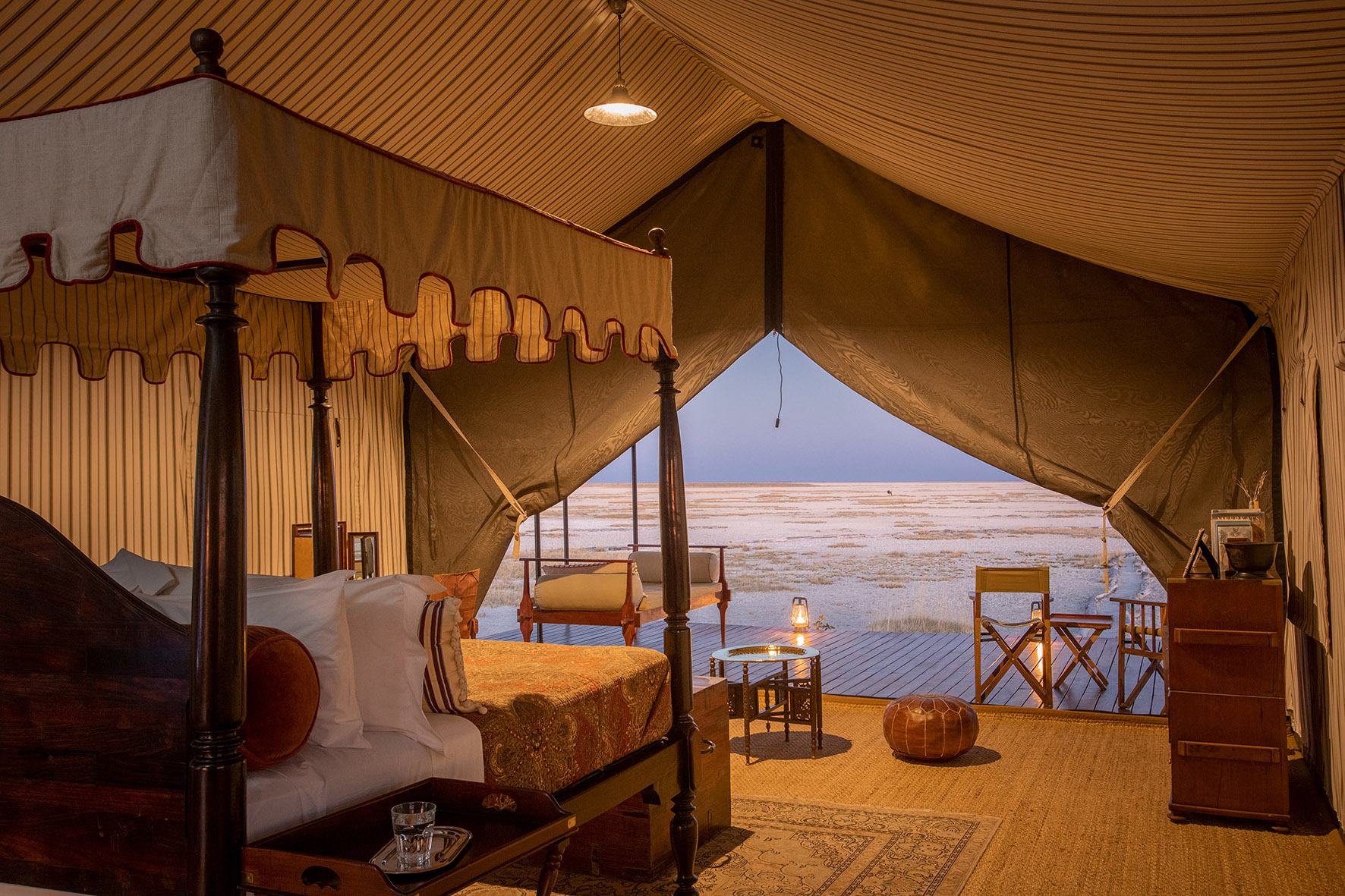
Circuit tour: A highly recommended ten-day circuit tour with an experienced Ugandan tour operator (Private Trip Uganda) is described in the PDF linked here. The prices quoted are for a group of up to twelve people. The permits for gorilla tracking, which cost between 600 and 800 US dollars per person depending on the season, are already included in the tour price. The same applies to accommodation, meals and all services during the tour. Only the flights are extra. Everything is organised from and to Entebbe Airport.
Click here for the safari in Uganda:
https://privatetripuganda.com/request-a-trip/?ref=JGS219
*Please note: I receive a commission when you book via my blog.
Best time to visit: The best time for gorilla trekking is during the two dry seasons, from June to August and from December to February. During these months, conditions are at their best for a trekking tour through the dense rainforest, for example in Bwindi Impenetrable National Park or Mgahinga Gorilla National Park. The steep mountain slopes are challenging, but during the dry season the paths are considerably less muddy and slippery.
The off-season, from March to May and from September to November, coincides with the rainy season. The countryside is a lush green at this time, and there are fewer tourists about. However, heavy rainfall can significantly worsen road conditions and make hiking on steep, slippery paths physically very demanding.
Getting there: For example, from/to Stuttgart to Entebbe with Turkish Airlines from around 650 euros.
Health: From September 2026, travellers will no longer be required to present proof of yellow fever vaccination as a condition of entry. However, a yellow fever vaccination is still strongly recommended to protect your own health, as the disease is present in Uganda. Travellers are advised to seek advice from their doctor before setting off. Malaria prophylaxis and vaccinations against hepatitis A and B are also recommended. You should also check your vaccination status for polio, diphtheria and tetanus. Ensure you have adequate protection against mosquitoes!
Safety: The Federal Foreign Office advises against travelling to the border area with the Democratic Republic of the Congo (up to 20 kilometres from the border) and to Semliki National Park. For the latest advice, visit www.auswaertiges-amt.de. However, the places visited as part of the tour organised by Private Trip Uganda are considered safe.
Entry: German nationals require a visa. This can only be applied for online via the Uganda E-Immigration System.
Photo & video credit: Private Trip Uganda
Comments