



From Mumbai to Kolkata – on a luxury train across northern India
23. March 2026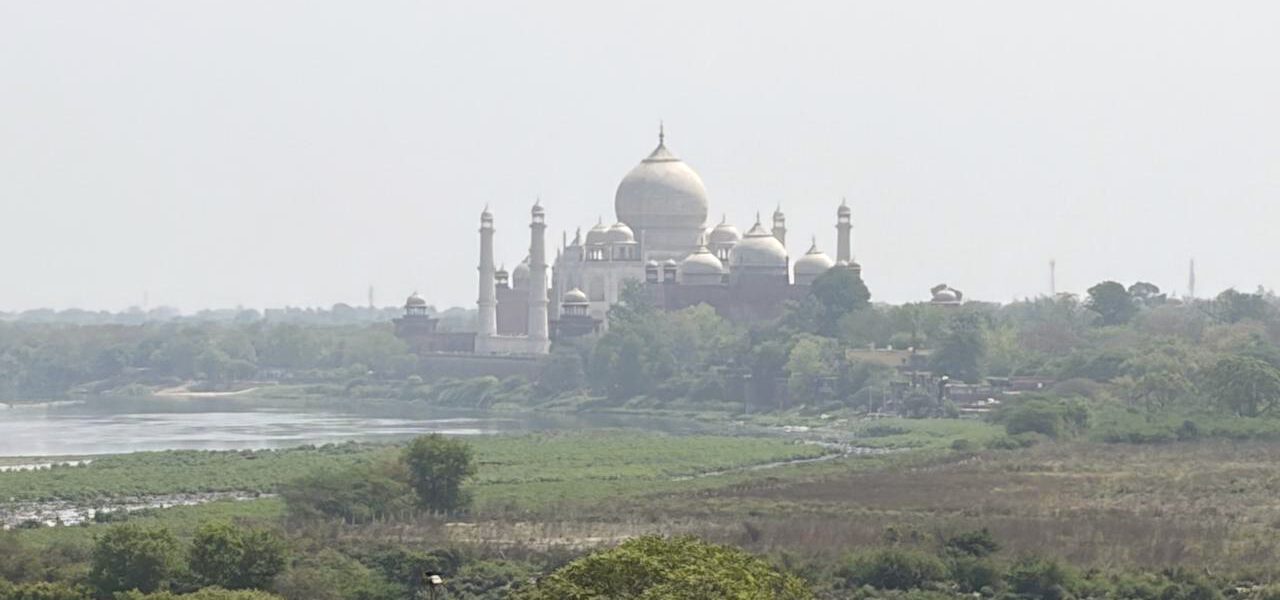
The Taj Mahal in Agra – a love story carved in stone for eternity
The echo carries my name back to me in a drawn-out sound. Almost mystical, mysterious, it resounds over the mock tombs in the octagonal hall beneath the onion dome of the Taj Mahal in Agra – almost as if the echo were whispering to me the world-famous love story of Mumtaz Mahal (1593–1631) and Shah Jahan (1592–1666). The ruling couple of the Indian Mughal Empire are buried here. Yet this almost fairytale-like building was constructed for Mumtaz Mahal – a name meaning ‘the chosen one of the palace’. She must have been a remarkable and intelligent woman who held an exceptional position in the harem of the Great Mughal Shah Jahan.
As the granddaughter of the powerful statesman Itimad-ud-Daula (see below ‘Baby Taj’), she was well versed in state affairs, advised her husband and even accompanied him on military campaigns. In 1631, she died unexpectedly at the age of 38 whilst giving birth to her 14th child in a small village during a military campaign. The loss of his favourite wife plunged Shah Jahan into a deep crisis and changed his life. He left political affairs to his sons and turned his attention to his hobby, architecture. His first building – and to this day a stunning landmark of India – is the world-famous mausoleum for Mumtaz Mahal in Agra. It is a must-see! It is a fantastic, almost fairy-tale-like structure, perfect in harmony and design. Incidentally, India owes the Great Mughal even more outstanding buildings, such as the Red Fort and the Friday Mosque in Delhi.
-

- A symbol of undying love: thousands of people make the pilgrimage to the Taj Mahal every day – a Persian-Indian mausoleum straight out of a fairy tale.
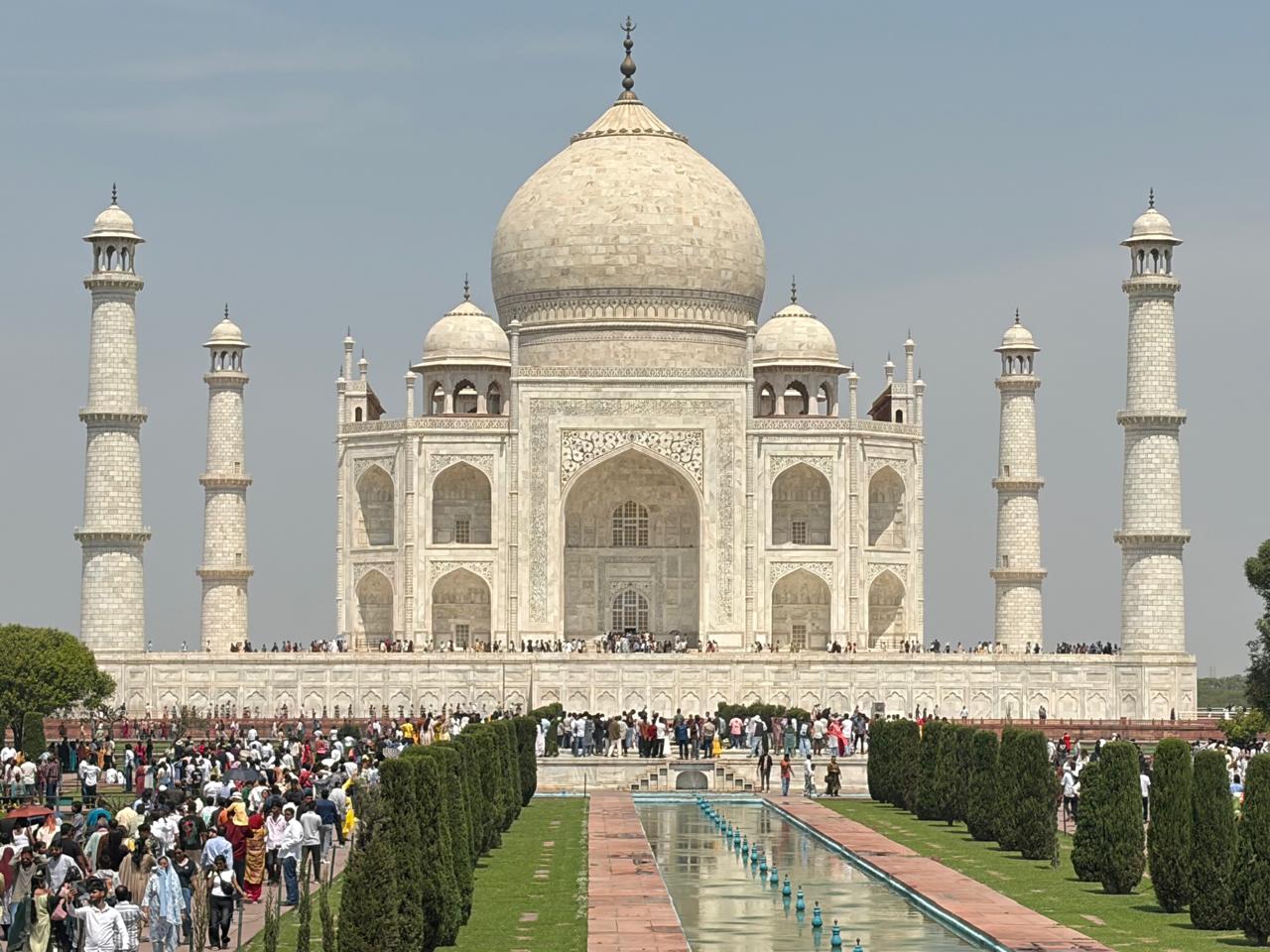
Back in the hall of the Taj Mahal, which is surprisingly much smaller on the inside than the building appears from the outside. Here, a roar now echoes across the mausoleums of the lovers behind the marble grille. Many people are queuing. The Taj Mahal attracts up to 50,000 visitors a day – it is India’s most popular attraction and is only less crowded in the early hours of the morning.
Everyone inside whispers their name to experience the extraordinary acoustic phenomenon. The echo is said to last 28 seconds, making it one of the longest in the world. I haven’t timed it, but it is extremely long and a magical ‘goosebumps moment’ that also preserves Mumtaz Mahal’s and Shah Jahan’s names for eternity. The actual tombs of the royal couple, however, lie in an underground crypt many metres beneath the cenotaphs (mock tombs).
But even from the outside, the Taj Mahal is simply breathtaking, flanked by twin buildings, a mausoleum and a guest house. The sprawling complex, enclosed by a wall and gates and built in the Indo-Arabic style – a blend of Persian elements and traditional ancient Indian craftsmanship – is truly impressive. You reach the mausoleum by walking through a beautifully landscaped garden, symmetrically divided into four sections by watercourses – a perfect, paradisiacal harmony. The mausoleum itself stands at the far end of the garden, overlooking the banks of the Yamuna River on a plateau with four minarets at its corners. It is clad in white marble slabs, adorned with ornate inlays of semi-precious stones such as lapis lazuli, agate or carnelian, or inscribed with verses from the Quran – a splendour that leaves one speechless.
Tip: On full moon nights, the Taj Mahal is sometimes open to a limited number of visitors, and in the moonlight – so I’ve been told – the inlays in the white marble glow, casting a magical glow over the building.
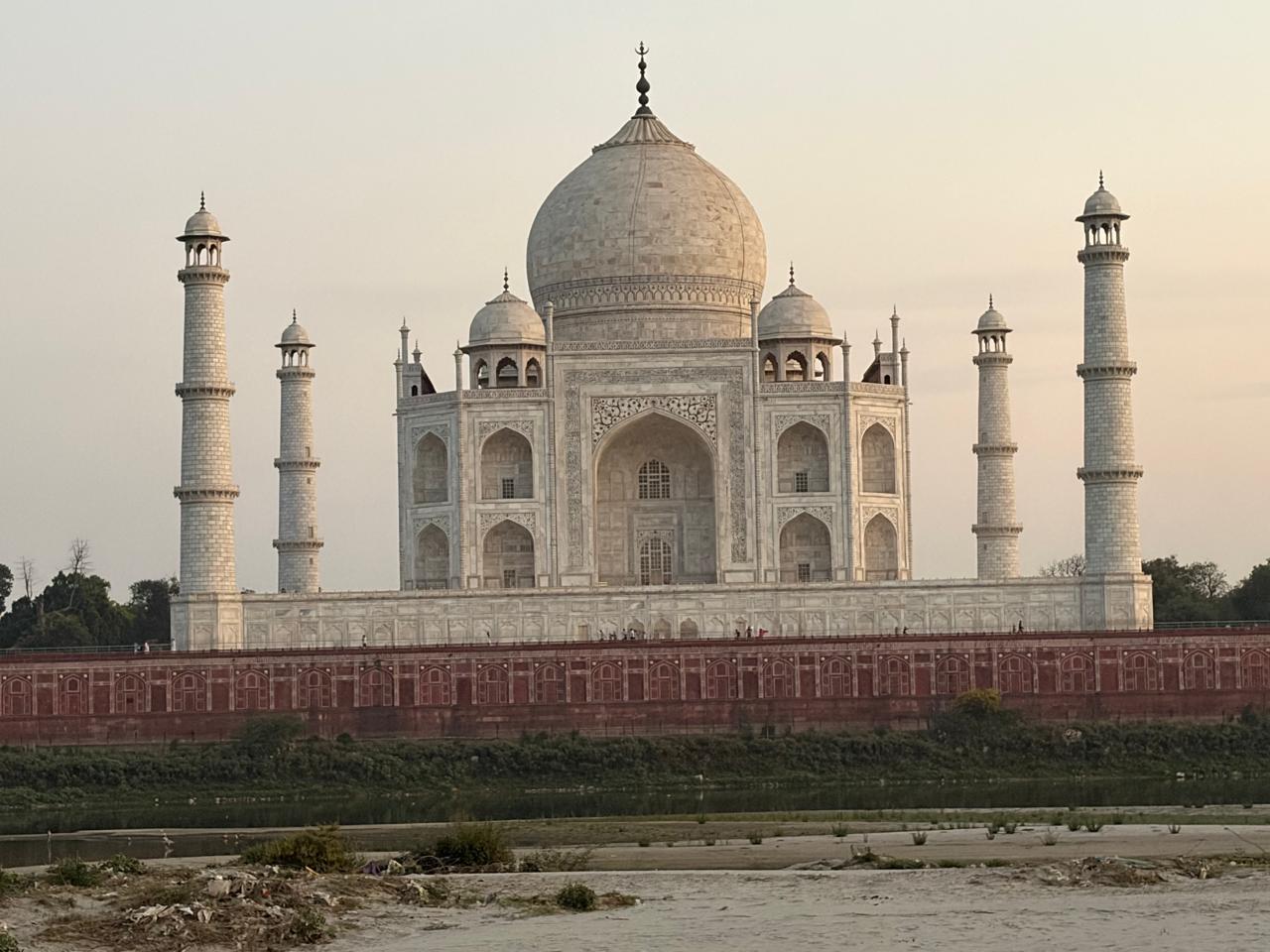
Tip for an incomparably beautiful view of the Taj Mahal: Mehtab Bagh garden, on the other side of the Yamuna River, dates back to the first Mughal ruler, Babur, and offers a fantastic view of the mausoleum at sunrise, as its outline slowly emerges from the morning mist.
Information and ticket sales: tajmahal.gov.in
-
- An almost fairy-tale-like marvel carved from marble: the Taj Mahal in Agra, in the state of Uttar Pradesh, attracts up to 50,000 visitors a day, most of whom are Indian.
-
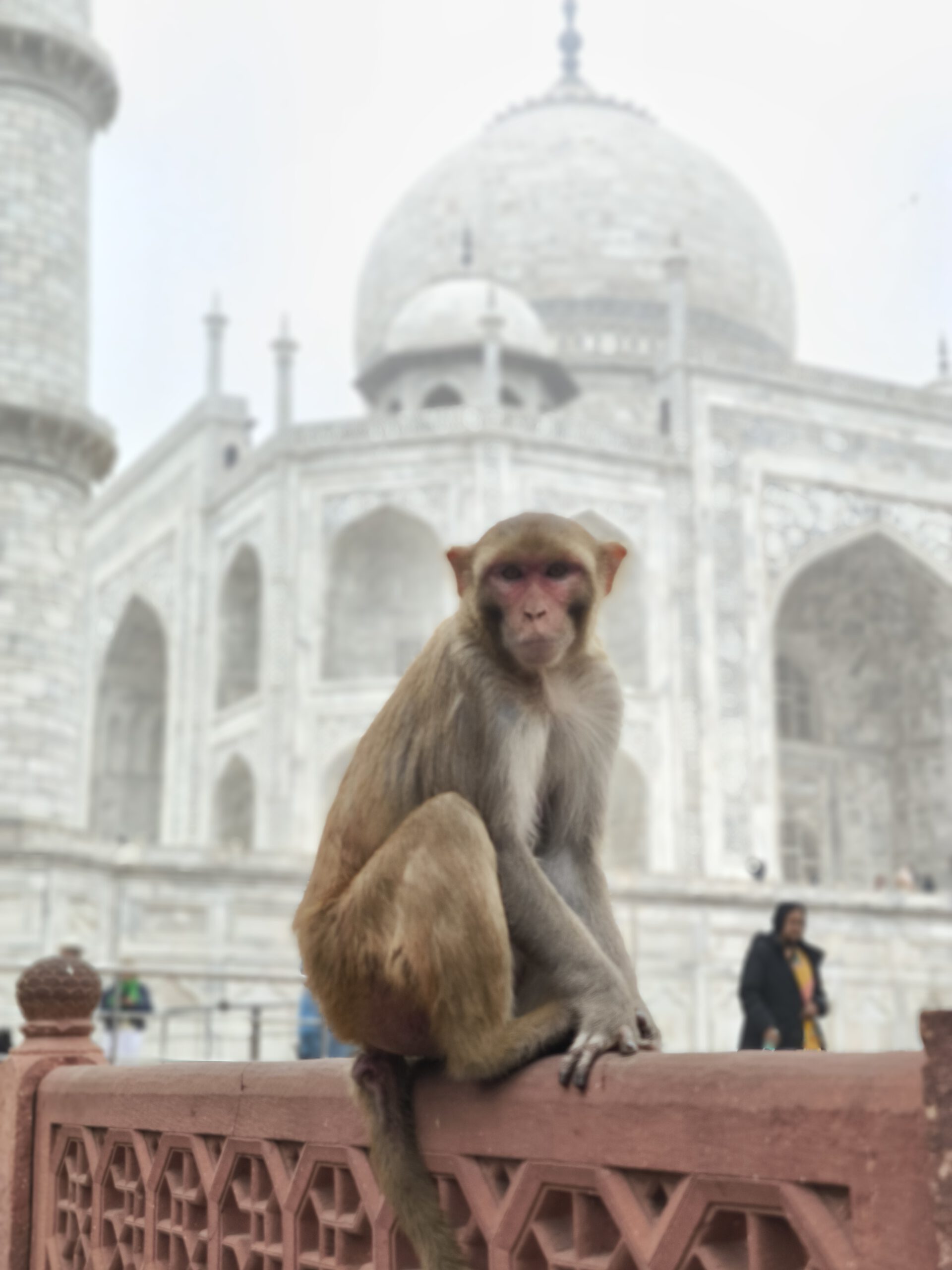
- Monkeys love the gardens of the Taj Mahal and can be quite pushy.
-
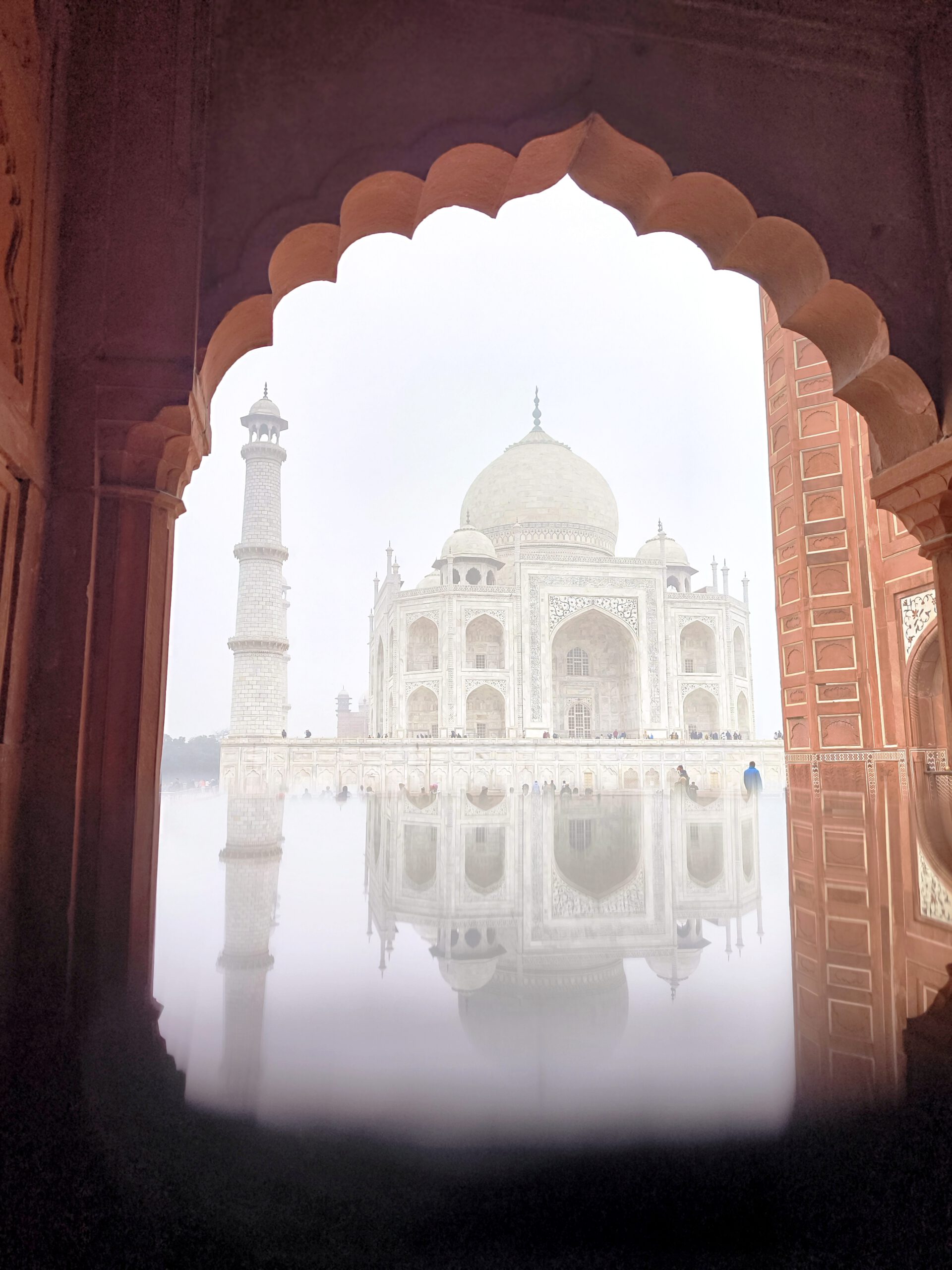
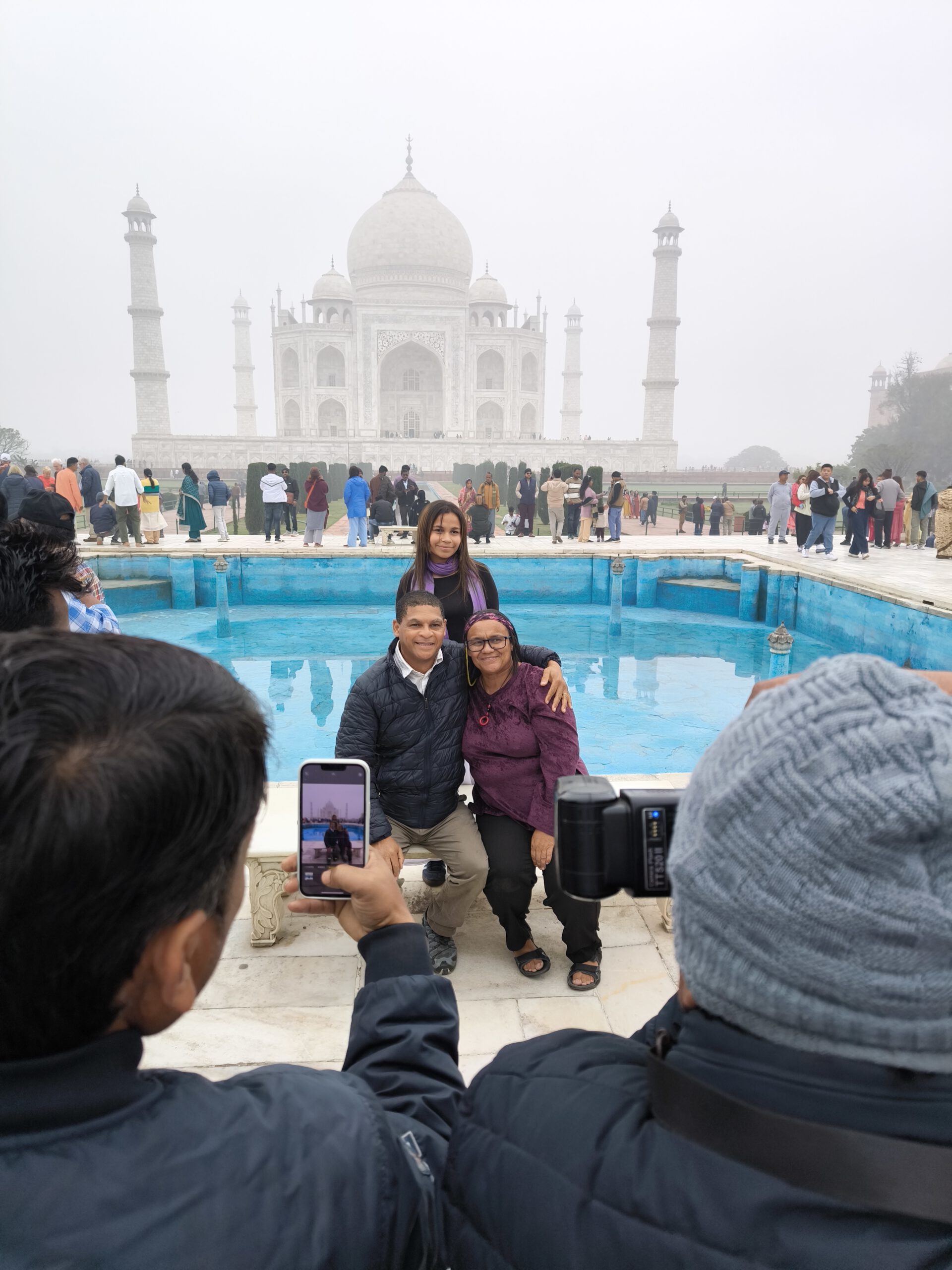
- Indian photographic art: Countless photographers wait at the Taj Mahal for customers, who give them precise instructions on how to pose. I really enjoyed it. Unfortunately, there was thick fog over Agra on that winter’s day.

-
- A hugely popular photo spot at the Taj Mahal is the marble bench where Lady Di once had her photo taken.
-
- The Taj Mahal seen from the other side of the Yamuna River: Methab Bagh, the garden laid out by the Mughal ruler Babur, offers a fantastic view of the world-famous mausoleum.
The mausoleum of Itimad-ud-Daula – the ‘Baby Taj’
Few tourists visit the tomb of Mumtaz Mahal’s grandfather, located just a few kilometres from her own. Yet it is a picture-perfect jewel of Mughal architecture. Because it is significantly smaller and was built some 20 years earlier, it is known in India as the “Baby Taj”. A nobleman who fled Persia, named Ghyas Begh, and his wife are buried here. He was very successful, rising to the position of Prime Minister at the court of the Great Mughal Shah Jahangir (1569–1627) and receiving the honorary title Itimad-ud-Daula, which means “pillar of the state”. His daughter Nur Jahan was Shah Jahangir’s 20th and last wife and had the “Baby Taj” built for her parents after their deaths.
Thanks to the influential Nur Jahan, many scholars, artists and soldiers from Persia moved to the Mughal Empire. Her brother, Asaf Khan, was Mumtaz Mahal’s father and followed in his father’s footsteps after his death.
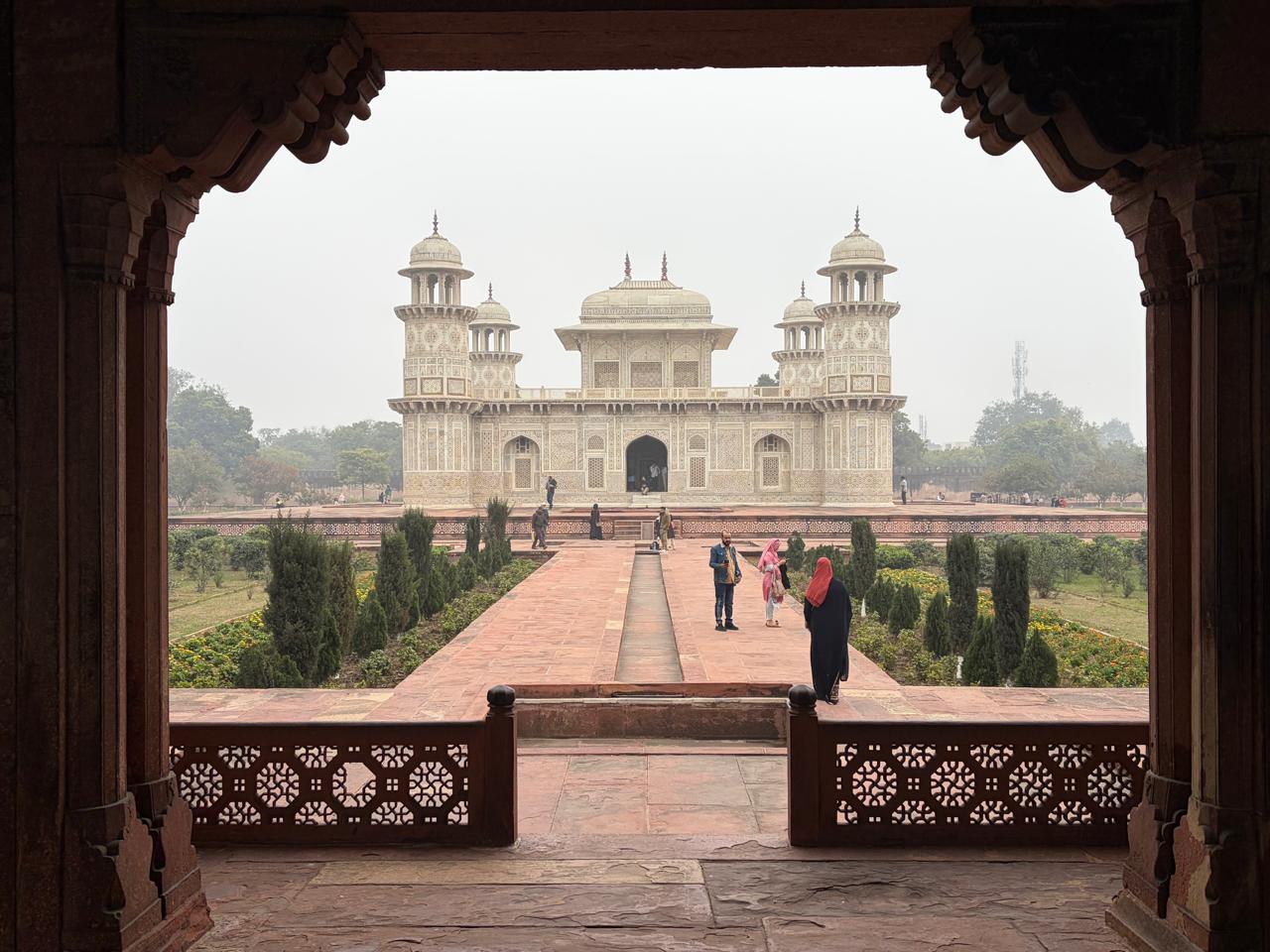
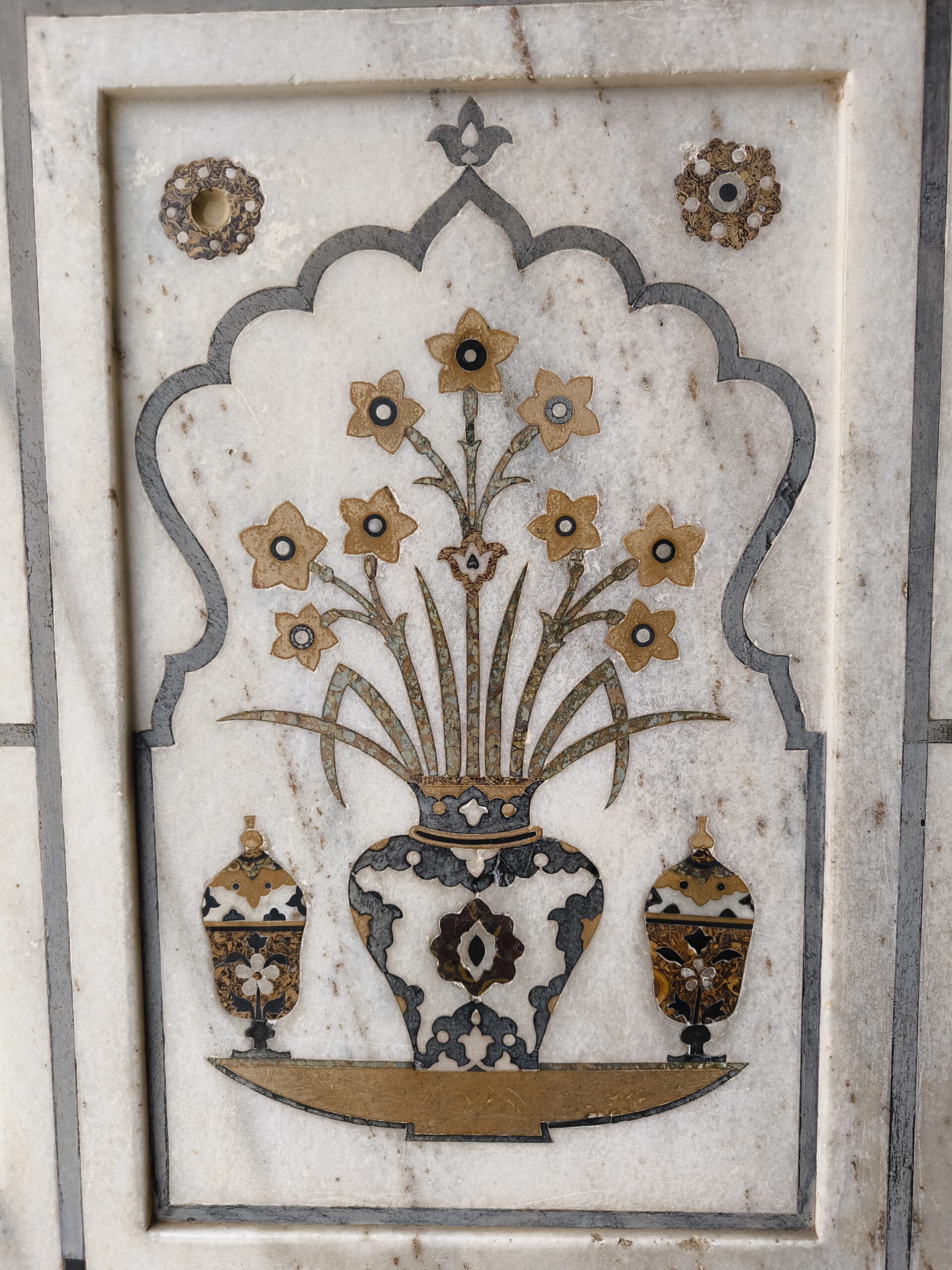
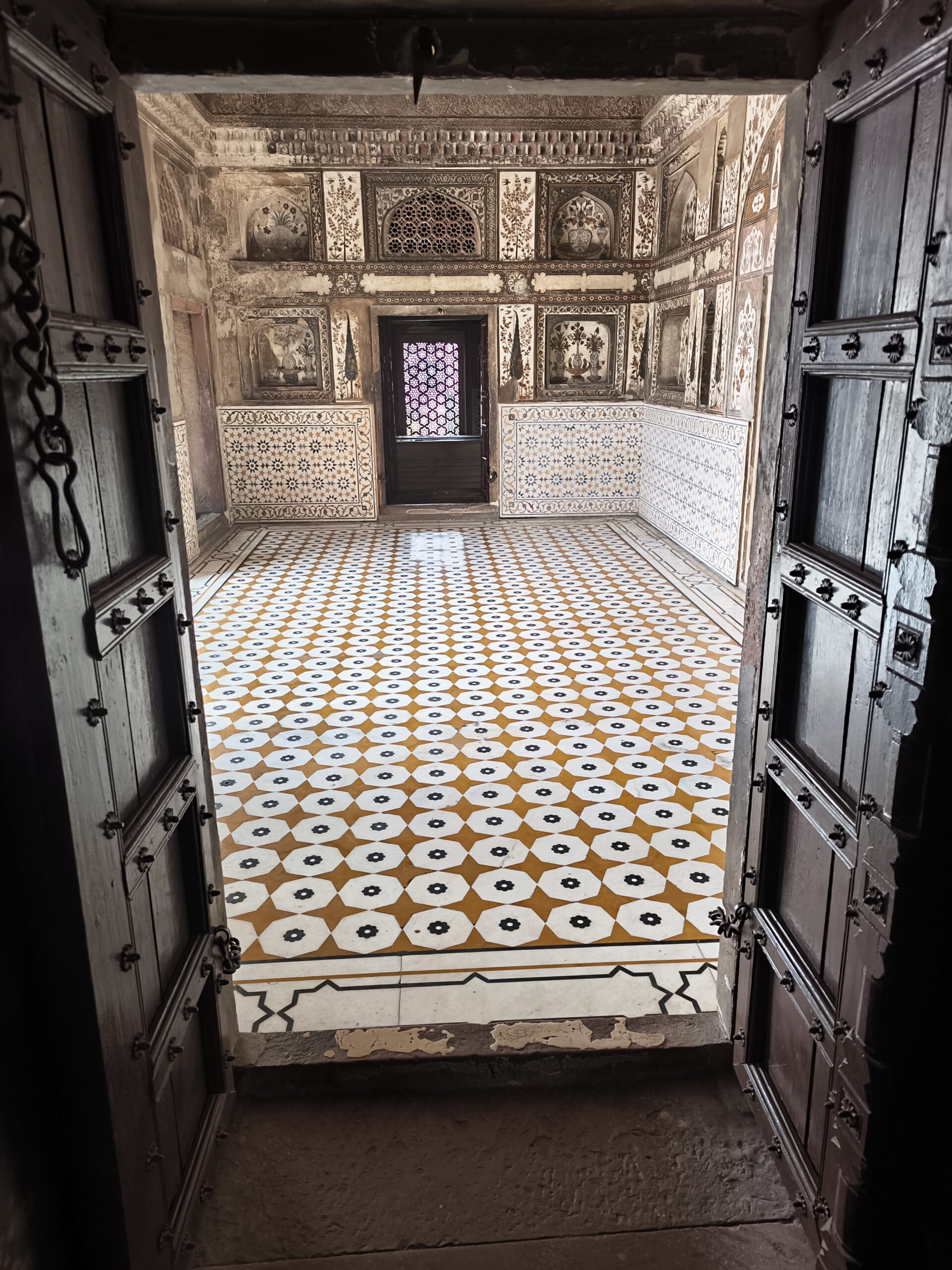
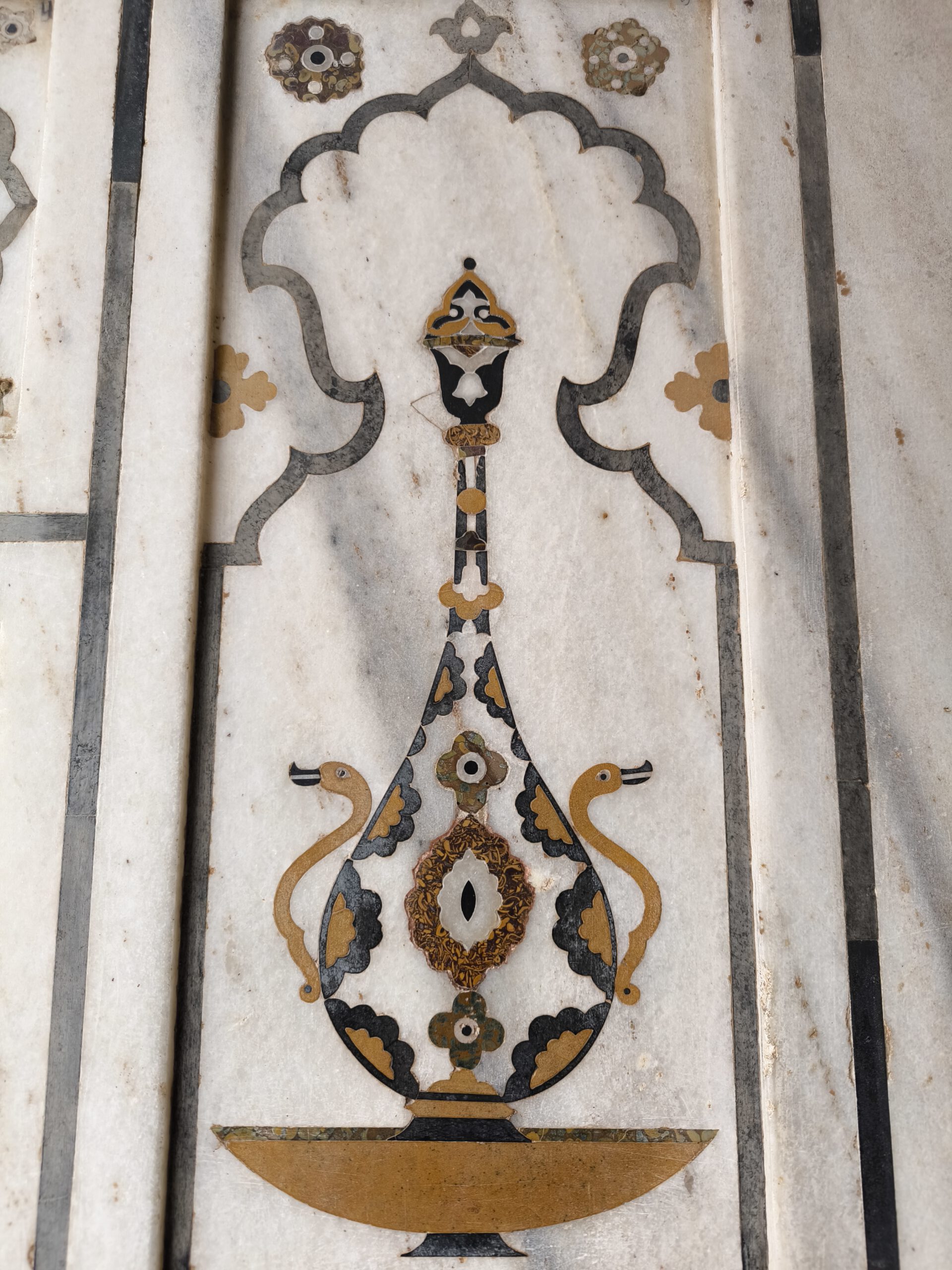
Visitors to the ‘Baby Taj’ on the banks of the Yamuna first pass through a sandstone gateway and then walk through the Char Bagh garden, designed to evoke paradise, laid out with cypresses and fruit trees as symbols of life and eternity. Like the garden of the Taj Mahal, it is divided into four equal parts by four watercourses, representing the four rivers of life: milk, water, wine and honey. The marble mausoleum is dominated by corner towers and a mighty pavilion at its centre. The wall decorations, both inside and out, are of extraordinary beauty: geometric patterns, vases, wine jugs and even cypress trees have been inlaid into the marble slabs using semi-precious stones, creating a stunning effect; this technique is known as pietra dura. In the interior rooms housing the cenotaphs of the deceased, the marble floor is a real eye-catcher: inlaid with brown and yellow semi-precious stones, it resembles a magnificent carpet in the play of light and shadow cast by the stone latticework in front of the wall openings – a building of magical and mystical beauty.
-
- The ‘Baby Taj’ – harmonious symmetry set against a backdrop of a paradise-like garden.
-
- Semi-precious stones set in white marble at the Baby Taj ‘adorn’ a vase.
-
- The marble floor inside the Baby Taj.
-
- Pietra dura work dating back some 400 years on the ‘Baby Taj’: brown and yellow semi-precious stones are inlaid into the marble, depicting a wine jug with bird-head handles.
-
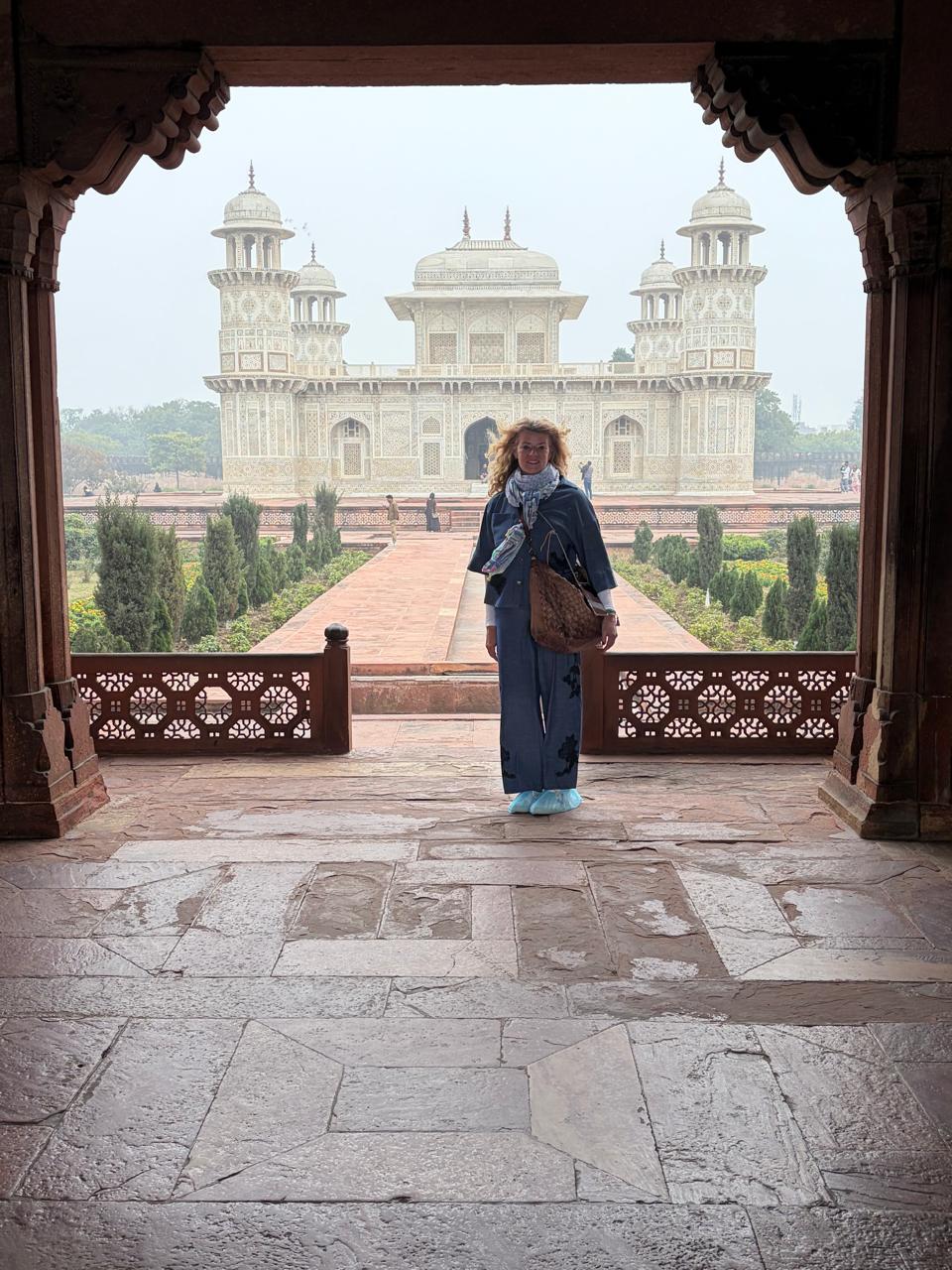
- The ‘Baby Taj’ is much smaller and was built around 20 years before the Taj Mahal, but it is also an architectural gem. You have to put on blue plastic shoe covers everywhere to protect the marble.
Why is the Taj Mahal an Islamic mausoleum?
A brief journey through India’s history
About a year before I visited the Taj Mahal, I spent a short time in Delhi and walked through the magnificent Lodi Gardens. Here stand several imposing tombs of the rulers from the Lodi dynasty (1451–1526). They were the forerunners of the Mughals. I didn’t know that at the time and wondered why these mausoleums often also had mosques and looked so oriental – with arched gateways, delicate latticework and façades inscribed with verses from the Quran.
Until I learnt that as early as the 10th century there had been an Islamic invasion of India, which – coming from Afghanistan – with a massive army of Turkish Mamluks, pillaged, plundered and ultimately founded an Islamic empire with a sultanate in Delhi. In short, this gave rise to the Lodi dynasty with a sultan from Afghanistan, followed by the rule of the Mughals. The invaders were not only better equipped in the art of war, but also united in the Muslim faith – regardless of whether they were Turks or Persians. In contrast, the Indian rulers were divided, and their strict caste system made it virtually impossible for them to act in unison or to repel the invaders.
If you’d like, join me on a brief journey back in time, some 400 years, to the era when the ‘Baby Taj’ and the famous Taj Mahal in Agra were built. Back then, from the early 16th century onwards, the Mughal dynasty was founded in the Indus-Ganges plain around Delhi, Agra and Lahore by a warlike ruler named Babur. He hailed from the steppes of Central Asia and came to India via Uzbekistan and Persia. He laid the foundations for the Mughal Empire, which reached the height of its power in the 17th century. At that time, it encompassed India, the neighbouring states to the north and parts of Afghanistan. This came to an end in 1858: the British colonial rulers deposed the last Great Mughal. His empire was absorbed into British India.
Yet art flourished during the Mughal era. Persian-Arabic artists incorporated Oriental elements into the Indian craft traditions of architecture and painting. This gave rise to fantastic Indo-Islamic structures such as the forts in Delhi and Agra (Red Forts), magnificent mosques and mausoleums – such as the Taj Mahal.
The visit to the Taj Mahal and the Baby Taj took place at the kind invitation of Lernidee Erlebnisreisen and Anuj Dhingra.
Photo credit:
Petra Kirsch (5), Anuj Dhingra (6)
