


The ten best experiences in Central Switzerland – by train or car
12. May 2026
Lightning over the rainforest – a cruise through the green heart of Africa
6. September 2026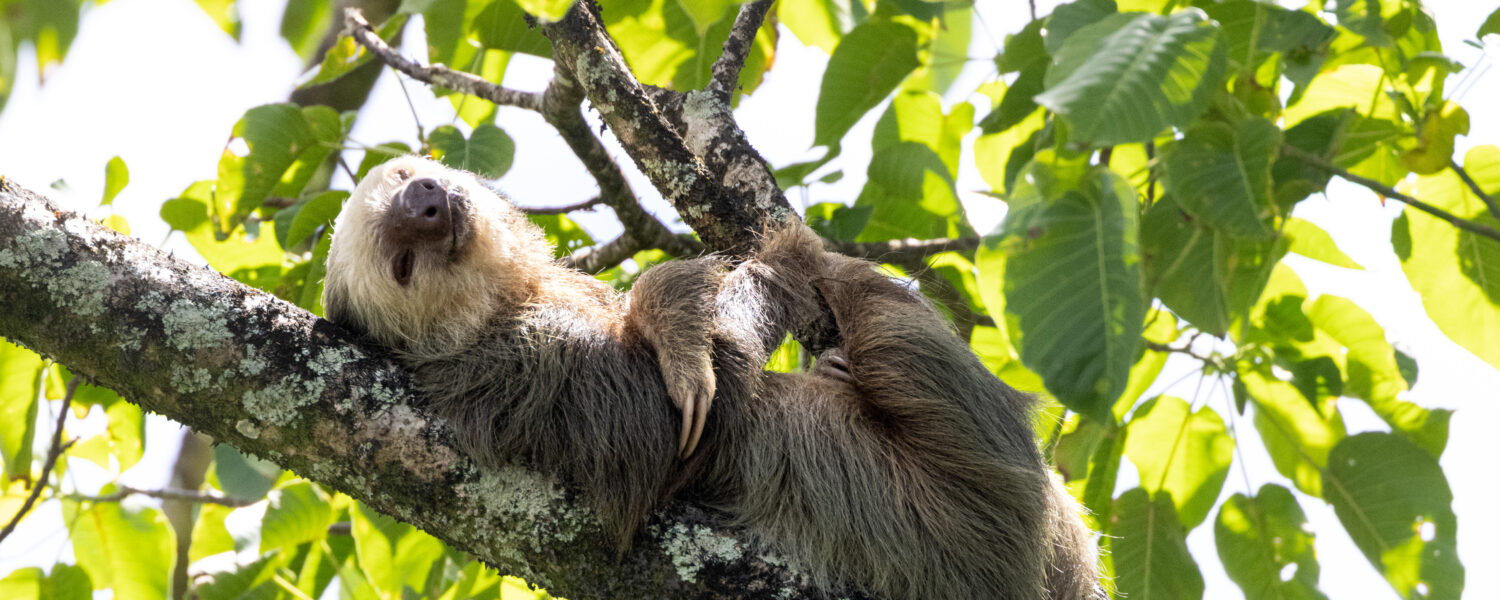
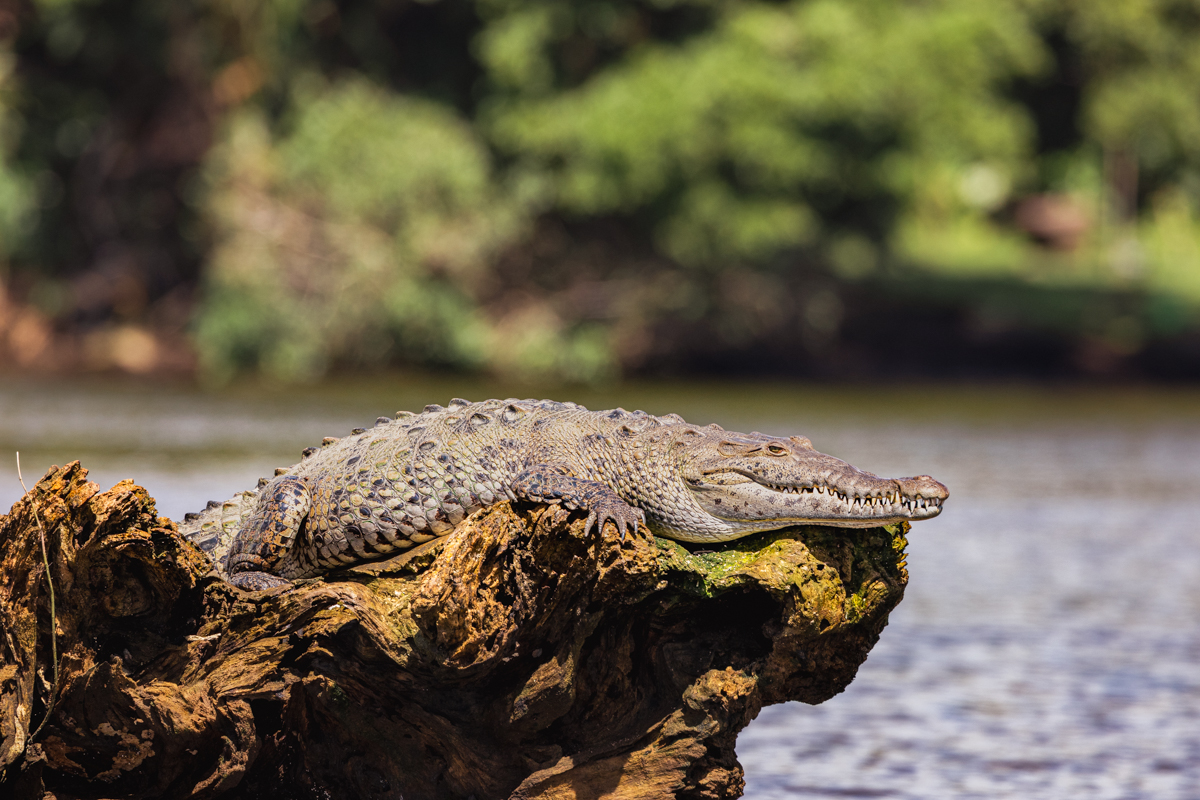
Two olive-brown eyes stare at us motionless. Just an arm’s length separates our canoe from a caiman lying on a tree trunk by the bank. For a moment, nobody dares to breathe. Then we glide silently on through the dense rainforest of Tortuguero. It is one of those moments that make Costa Rica so special.
It is precisely this sense of life that accompanies me on two journeys across this small Central American country – first by car through the north, and later under sail along the Pacific coast as far as Panama. For me, it was a dream trip, and perhaps I can inspire you too.
-

- With our hearts pounding, we glide past the caiman dozing on a tree trunk in our canoe, whilst the photographer takes this fantastic photo
Although Costa Rica is only about the same size as the German state of Lower Saxony, hardly any other country boasts such a diverse range of natural landscapes within such a small area. Nestled between the Pacific and the Caribbean, it is home to cloud forests, active volcanoes, palm-fringed dream beaches, turquoise rivers and wildlife that is second to none. More than a quarter of the country is protected – a paradise for nature lovers. Let’s go!
Across suspension bridges through a green natural wonder
Apart from the chirping of birds, it is almost completely silent. Only now and then does the powerful flapping of a heron’s wings break the tranquillity. Together with a photographer who, with admirable composure, lugs her heavy camera kit through the humid tropical heat, I’m sitting in a canoe on the River Penitencia near Tortuguero on the northern Caribbean coast.
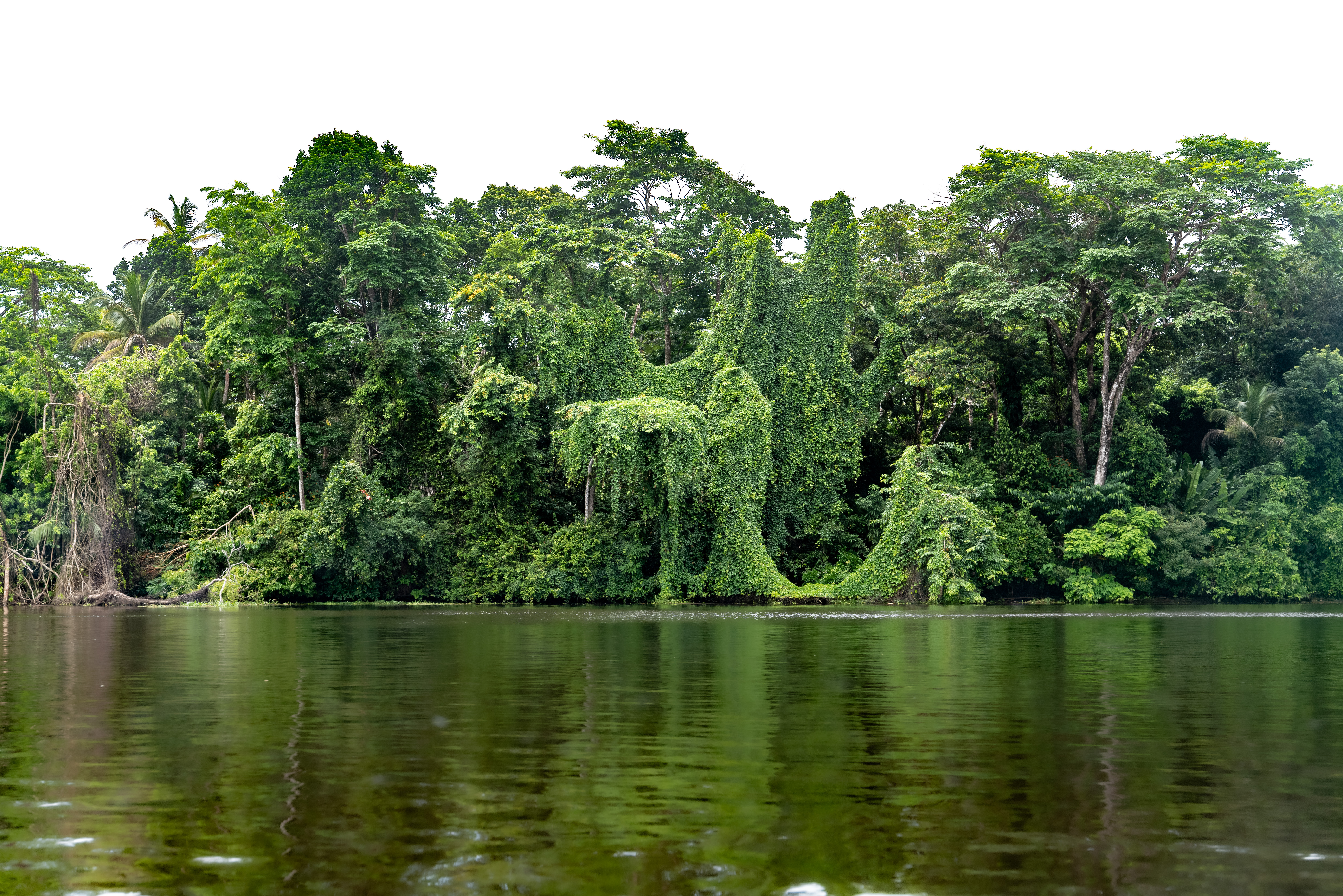
All around us, green walls of primeval forest tower some 30 metres high. Palm trees, lianas and strangler figs are reflected, almost unreal, on the smooth surface of the water. Capuchin monkeys tumble through the treetops, whilst palm-sized blue morpho butterflies glide silently across the river. We paddle rhythmically through the shimmering green-brown water until the river branches off and grows ever narrower. Nobody wants to capsize here. Why becomes clear to us just a few minutes later.
The photographer spots them first: two olive-brown eyes. A caiman lies motionless on a tree trunk – barely an arm’s length away from our canoe. For a moment, we freeze. Then, slowly and with due respect, we glide past the reptile and back into a wider section of the river.
-
- Palm trees, lianas and strangler figs: the primeval forest in Tortugero National Park towers like metre-high walls around the branching lagoons and canals
-
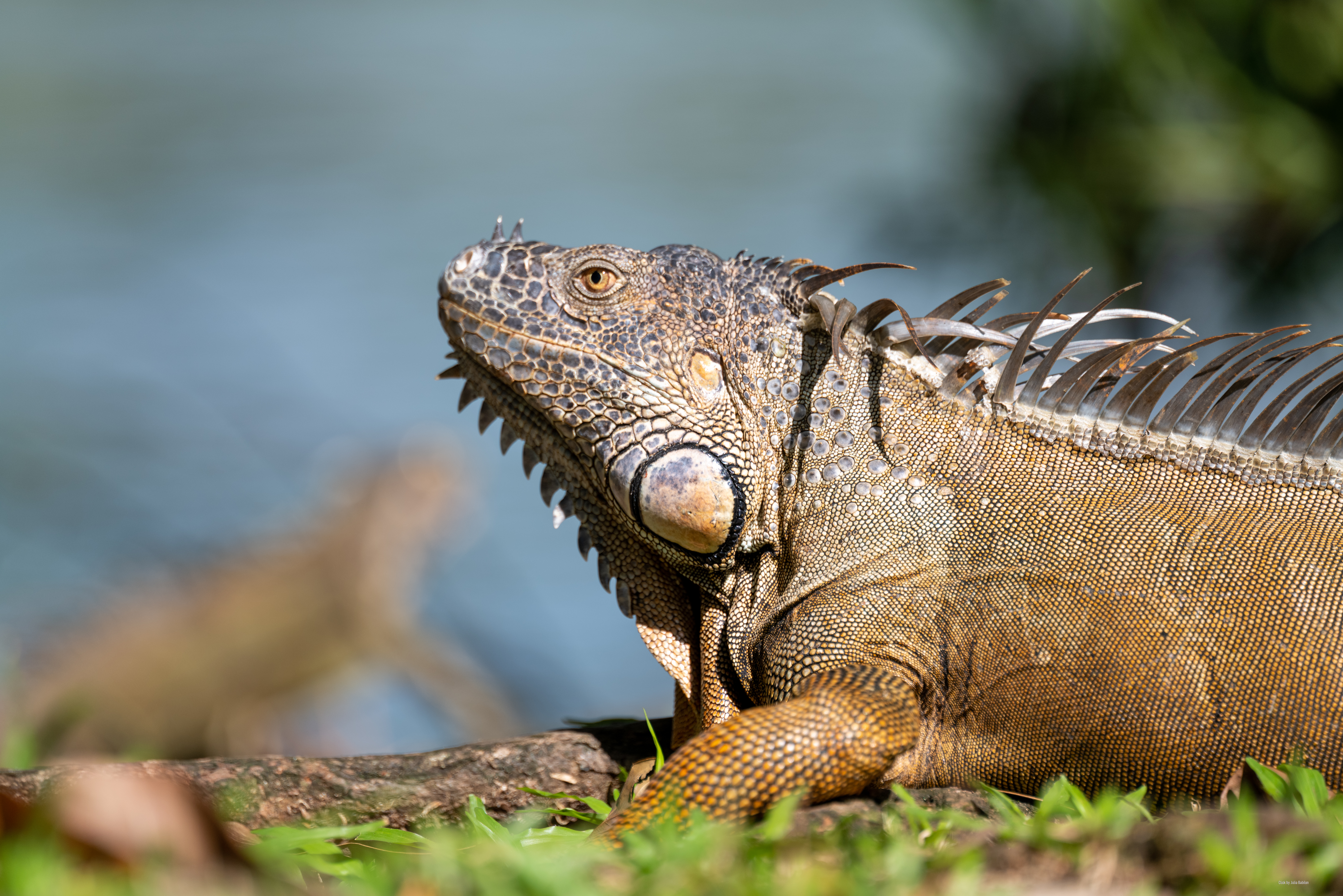
- Sunbathing on a bush in the lodge park in Tortugero: the iguana is about 1.30 m long
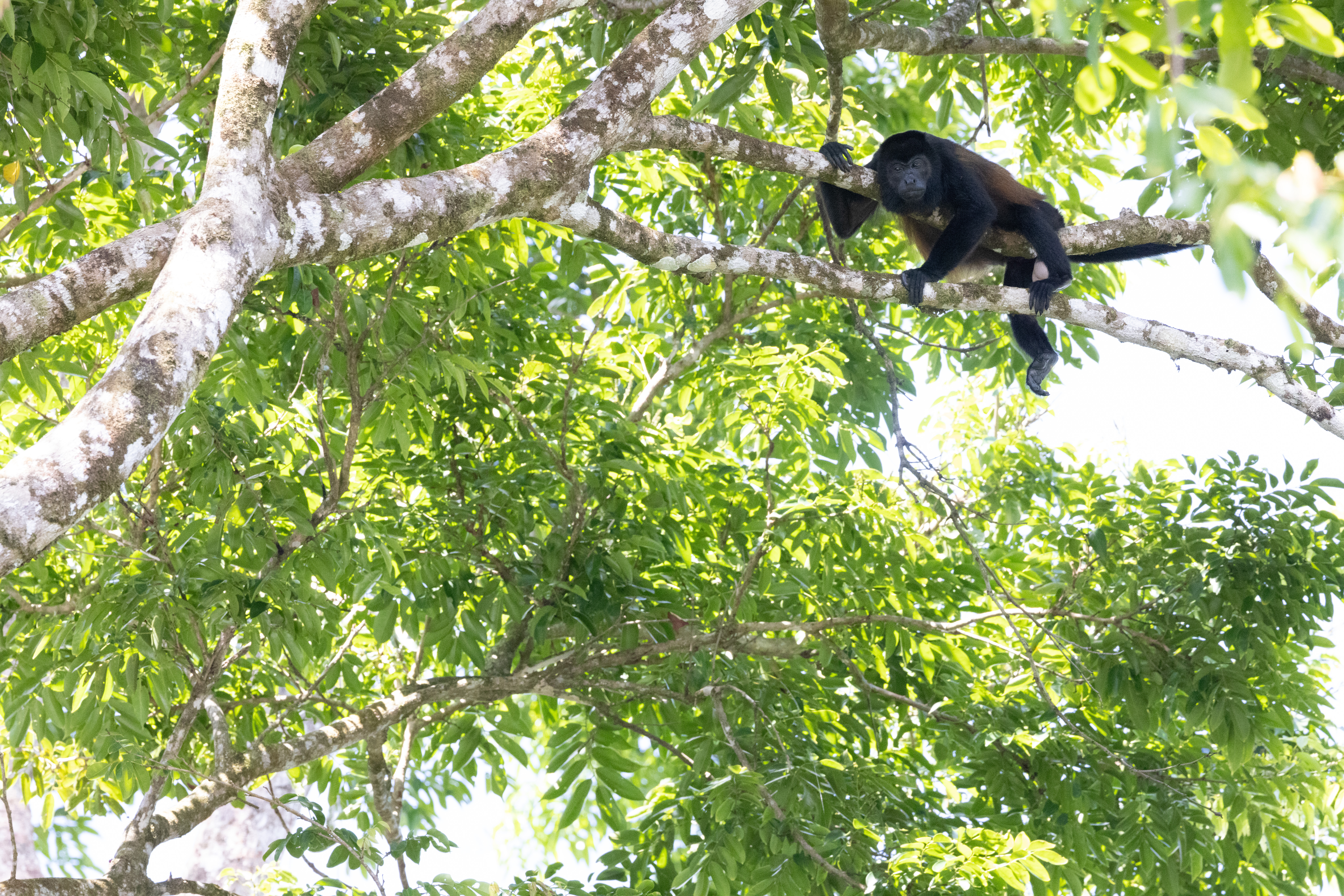
Suddenly, a hoarse, deep roar shatters the silence – an ancient sound that can be heard for kilometres. High up in the treetops, black howler monkeys appear to be holding a boisterous family meeting. Our guide, Enrique Balsevicius Uquillas, stops his canoe, pulls out his mobile phone with a smile and records the spectacle. “That’s going to be my new ringtone,” he says with a laugh.
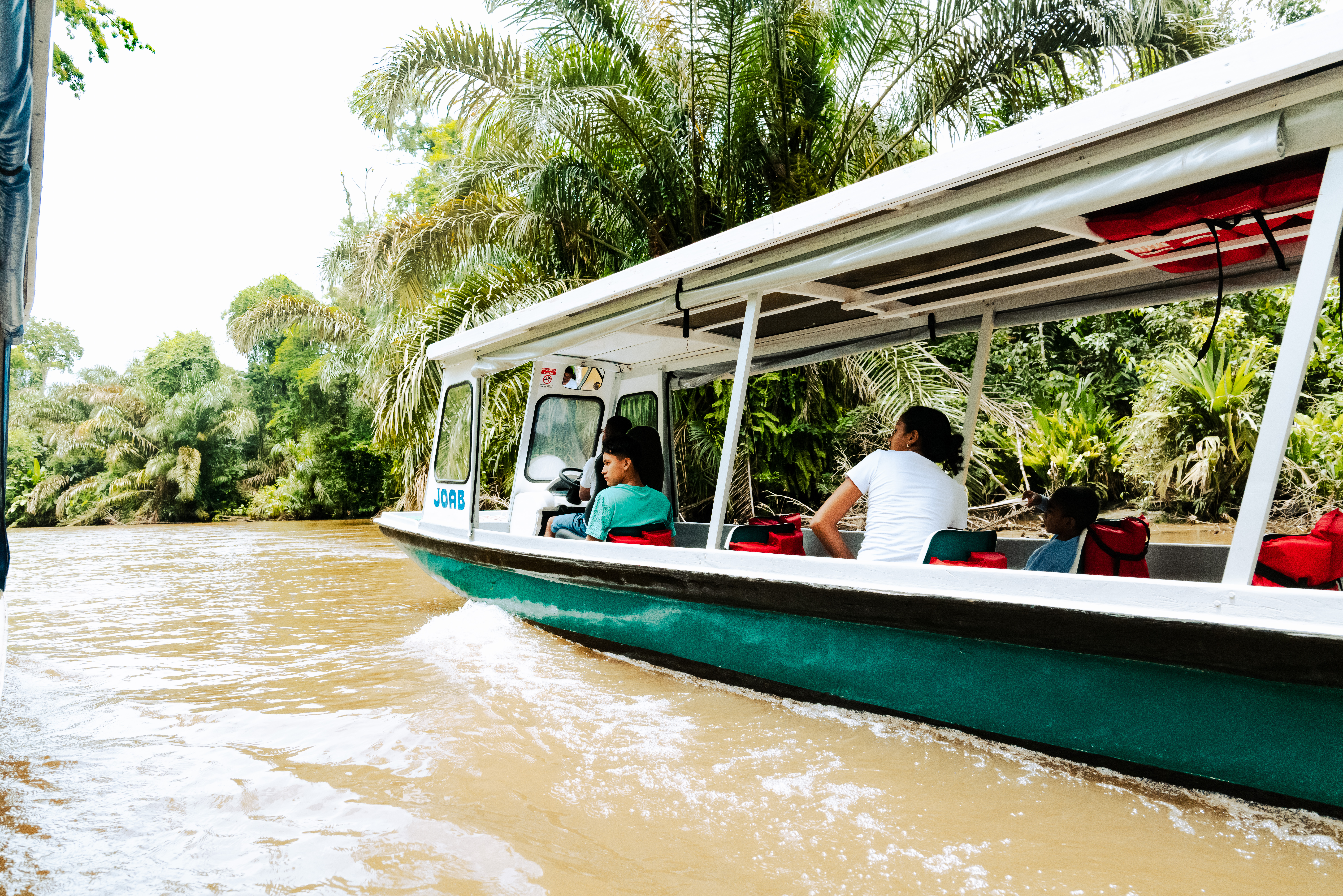
We’re travelling with Enrique for ten days from the capital, San José, through northern Costa Rica. Our first stop is Tortuguero National Park, a vast, branching labyrinth of lagoons, rivers and canals in the heart of the rainforest off the Caribbean coast. This remote area, with its small, sleepy village, is accessible only by boat – for example, from La Pavona via the Río Suerte.
-
- You can reach Tortugero on the northern Caribbean coast by these taxi boats
-
- A howler monkey peeks down from a tree into a hotel room in Nosara – for once, without a single howl
Even on the journey here, I spot animals I never thought I’d see in the wild – such as the frilled lizard. It’s no coincidence that this emerald-green lizard is nicknamed the ‘Jesus lizard’: when fleeing, it can run across the water’s surface at lightning speed.
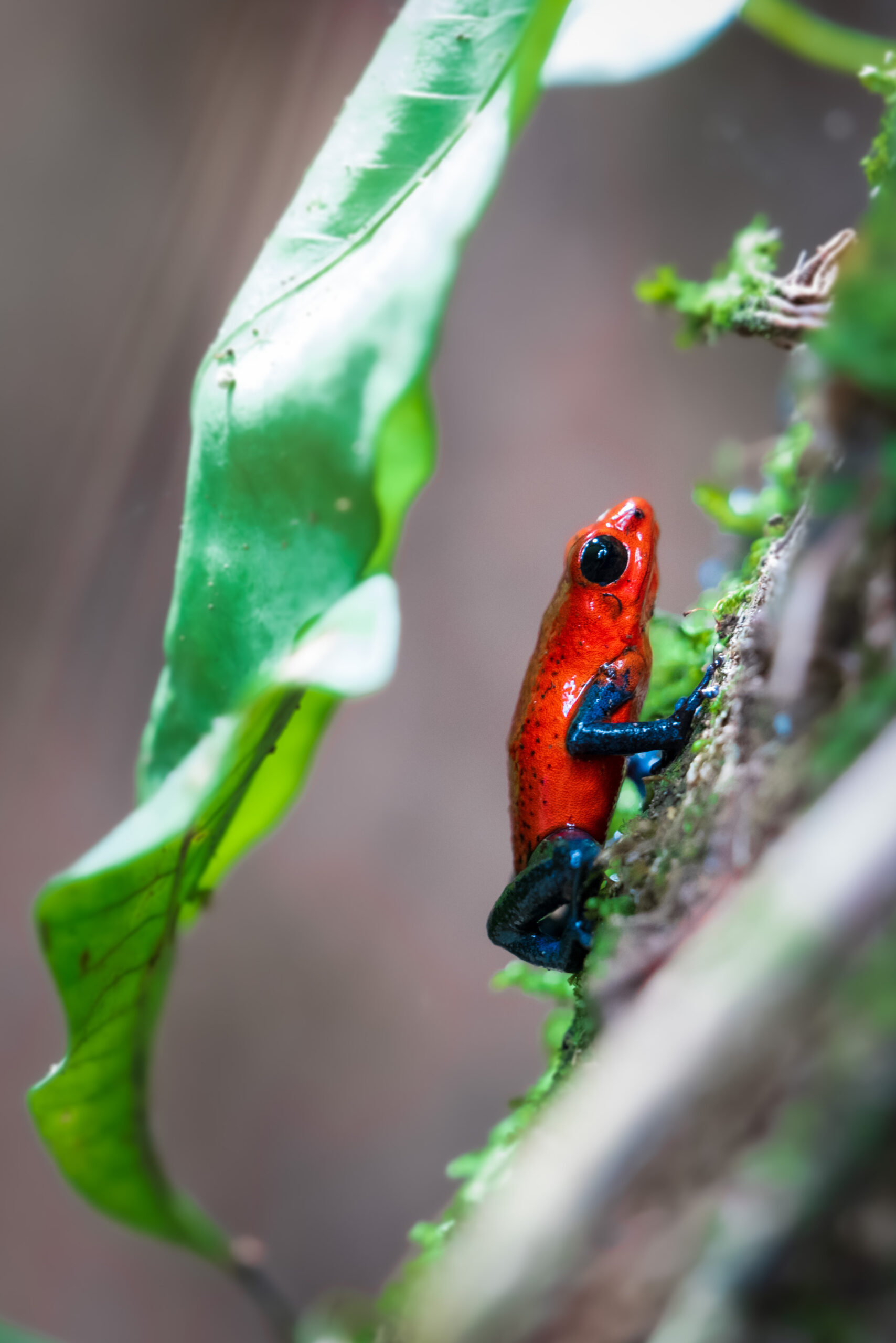
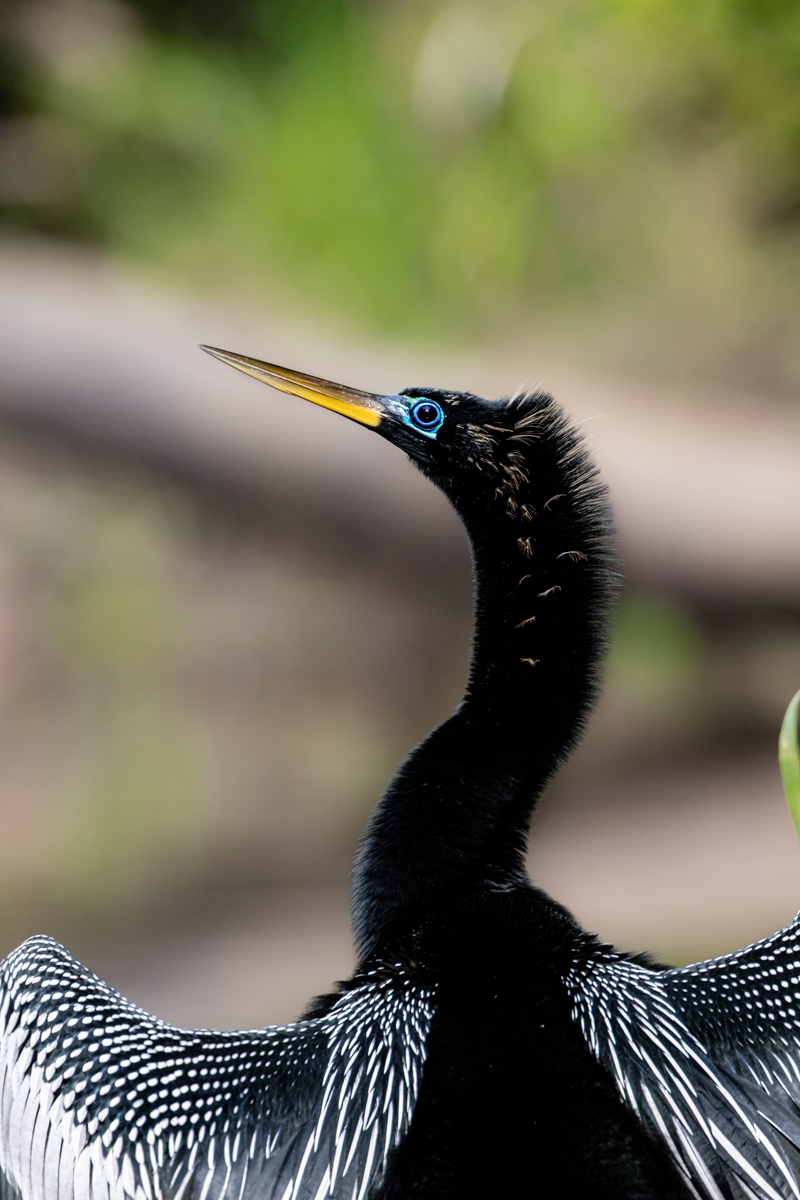
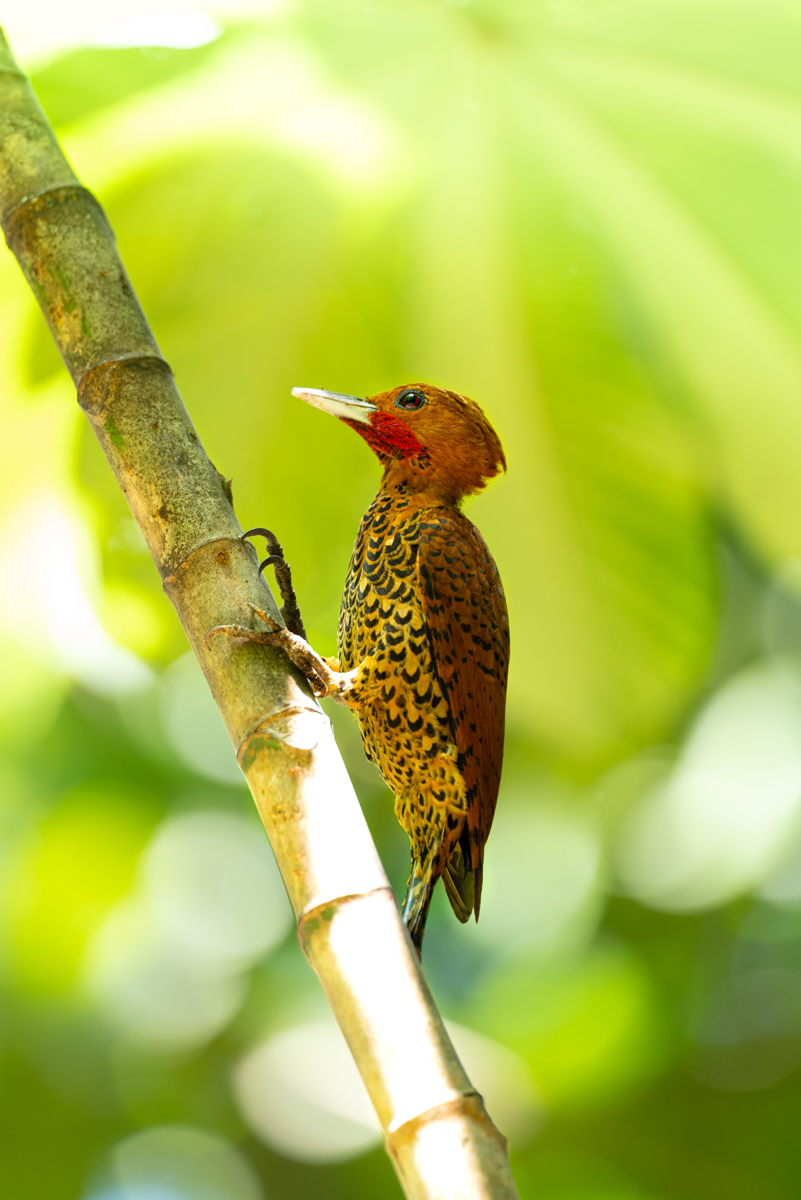
We spot jet-black snake-necked birds drying in the sun with their wings spread out, colourful cinnamon woodpeckers, as well as toucans, macaws, tapirs and coatis. I’m particularly fascinated by the strawberry frog, though. Bright red and barely bigger than a gummy bear, it sits well camouflaged in the undergrowth. Without Enrique’s trained eye, we would have easily overlooked the tiny creature.
Pumas and jaguars also live here – but unfortunately, these shy big cats don’t show themselves to us.
-
- Blue legs, a red body and as small as a gummy bear: the strawberry frog
-
- Fascinating: a jet-black snake-necked bird with bright blue eyes is drying its plumage
-
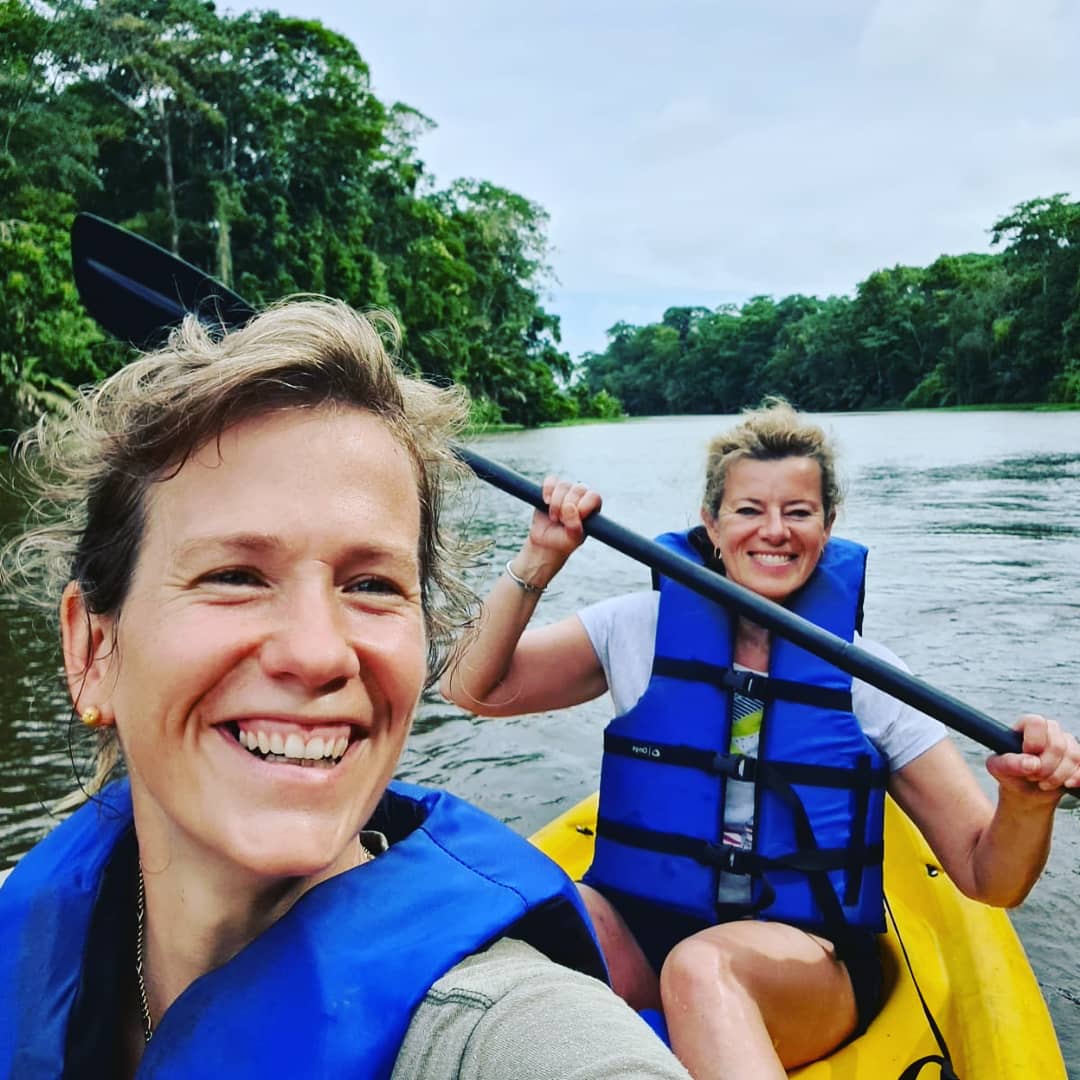
- A feel-good adventure: I’m out canoeing in Tortugero with photographer Julia Babilon
Costa Rica, a country without an army and which has been at peace for decades, embraced sustainable tourism early on – alongside the traditional cultivation of pineapples, bananas and coffee. More than a quarter of the country’s land area is now protected. In keeping with this, the motto of the friendly Ticos – as Costa Ricans call themselves – is ‘Pura Vida’ (‘pure life’). It is a greeting, a philosophy of life and a trademark all in one. The phrase is emblazoned on T-shirts, coffee mugs and house façades, and even taxi drivers bid their passengers farewell with a hearty “Pura Vida”.
Life here is not entirely carefree, however. Costa Rica lies on a major route for the international smuggling of cocaine from South to North America. As a result, many houses and terraces are secured with high railings. Added to this are high youth unemployment and a comparatively high cost of living. Costa Rica is considered the most expensive country in Central America. Nevertheless, the general price level is around 20 per cent lower than in Germany – though in tourist regions, restaurants and national parks are significantly more expensive than the national average.
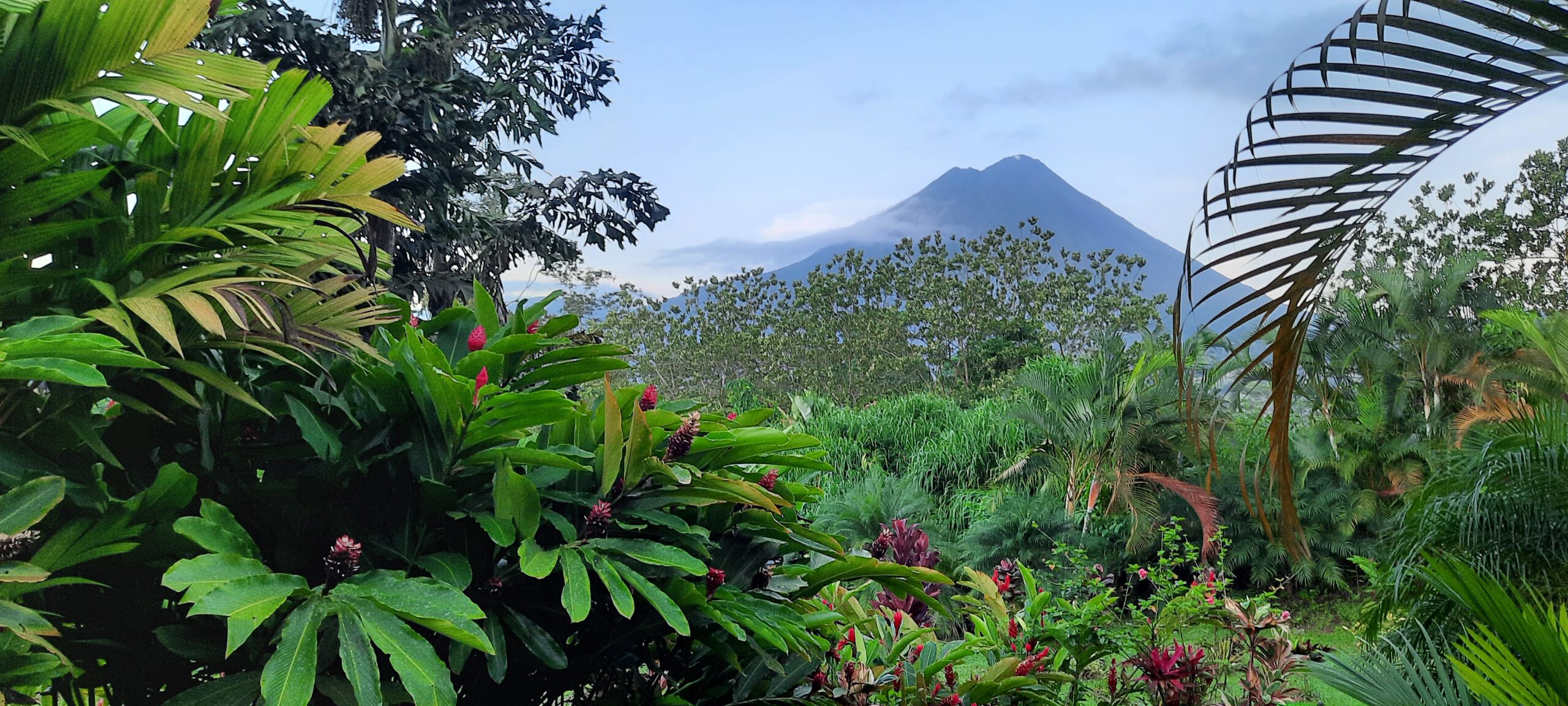
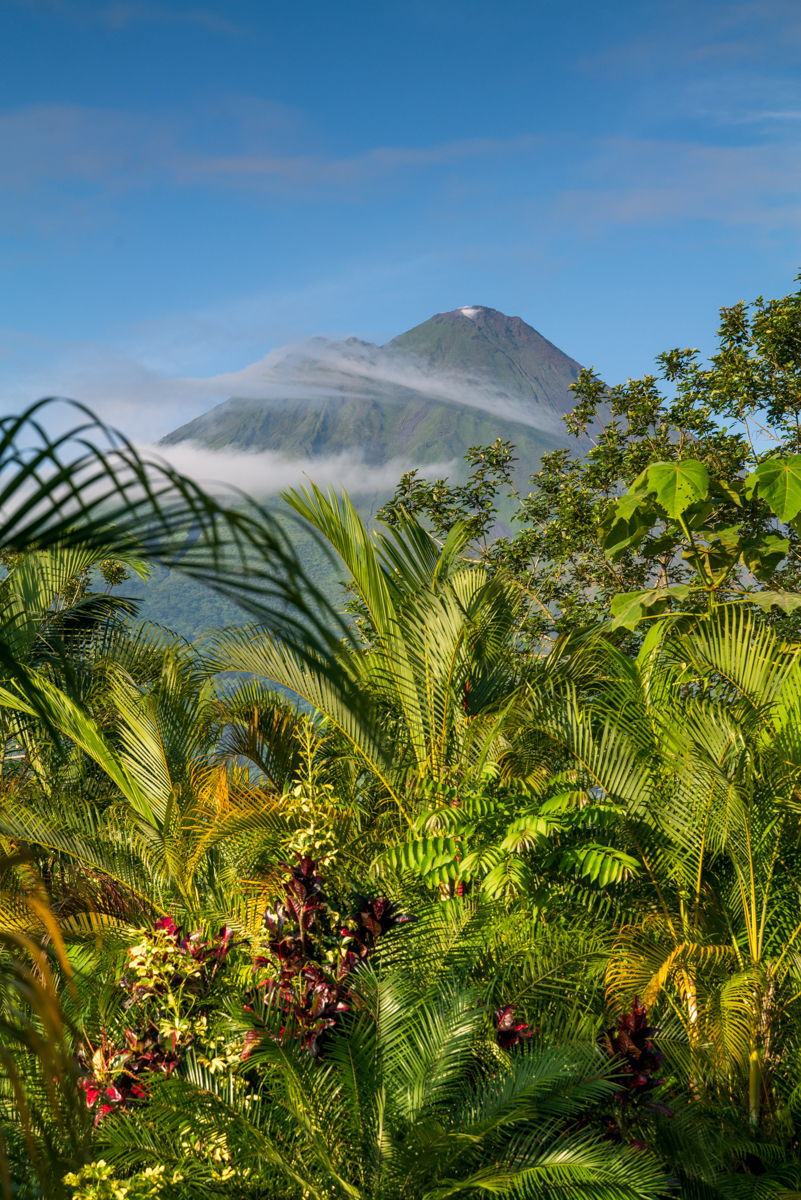
We leave the Caribbean coast and head up into the highlands, which stretch across the country like a mighty spine. Cloud forests, waterfalls, hot springs, suspension bridges and the perfectly conical Arenal volcano near La Fortuna make the region a paradise for outdoor enthusiasts. Whether it’s hiking, ziplining through the treetops, windsurfing on Lake Arenal or relaxing in hot thermal springs with a view of the volcano – every nature lover will find something to their liking here.
-
- At the moment, the stratovolcano Arena lies dormant. After 400 years of deep slumber, it spewed ash and glowing boulders once more in 1968, burying two villages. It remained active until 2010 and has been monitored ever since. Climbing it is prohibited
-
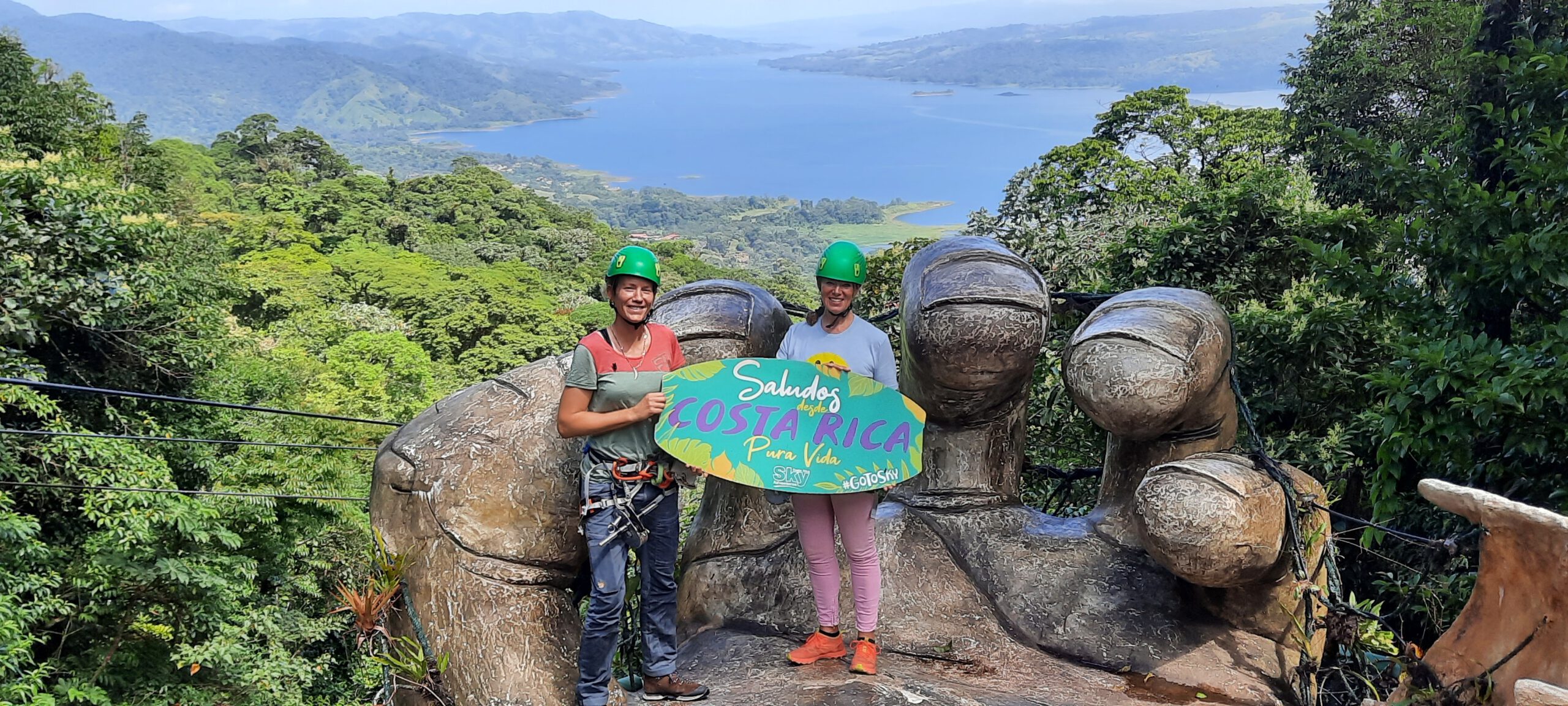
- Adventures in Arenal National Park, situated around the volcano of the same name: whilst ziplining at treetop height and from a viewing platform shaped like a hand, you’ll be treated to breathtaking views of the Arenal
-
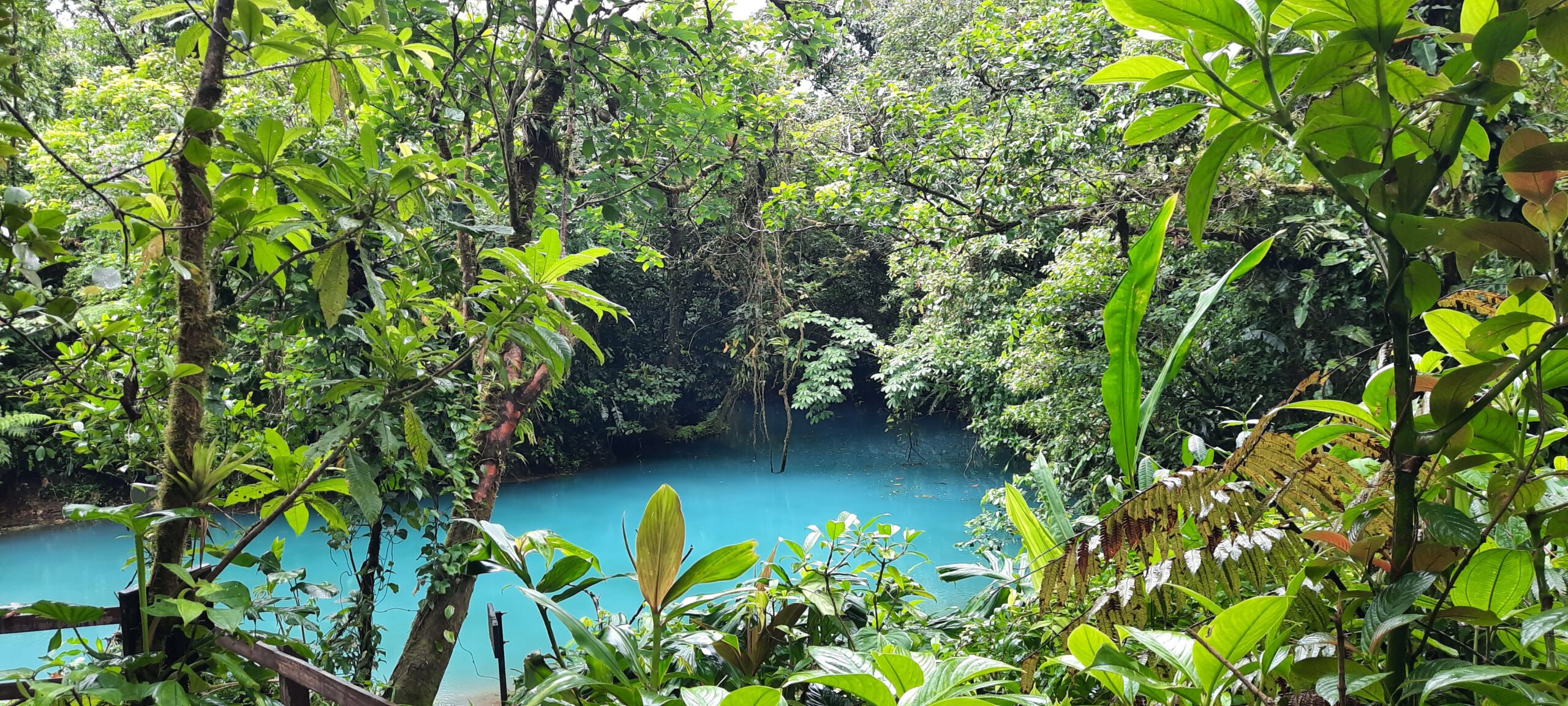
- Jungle magic in Tenorio National Park: The Rio Celeste’s mesmerising turquoise colour is caused by an optical phenomenon: Certain minerals react with acidic water, causing sunlight to be reflected
-
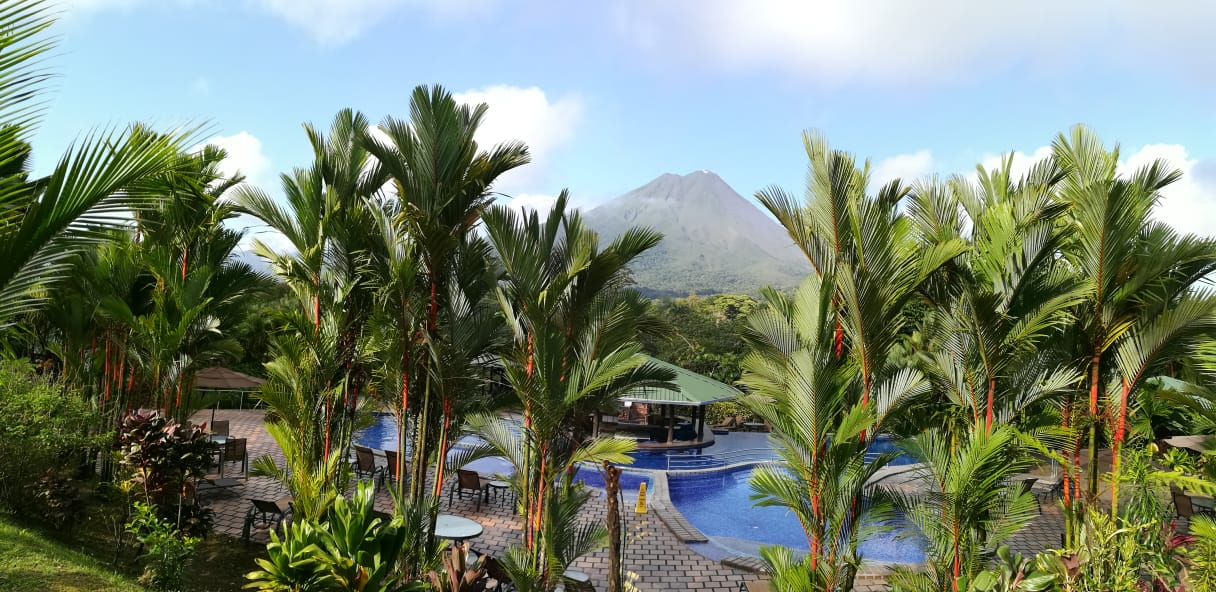
- At the Arenal Manoa Hot Springs Resort, you can swim whilst enjoying views of the volcano
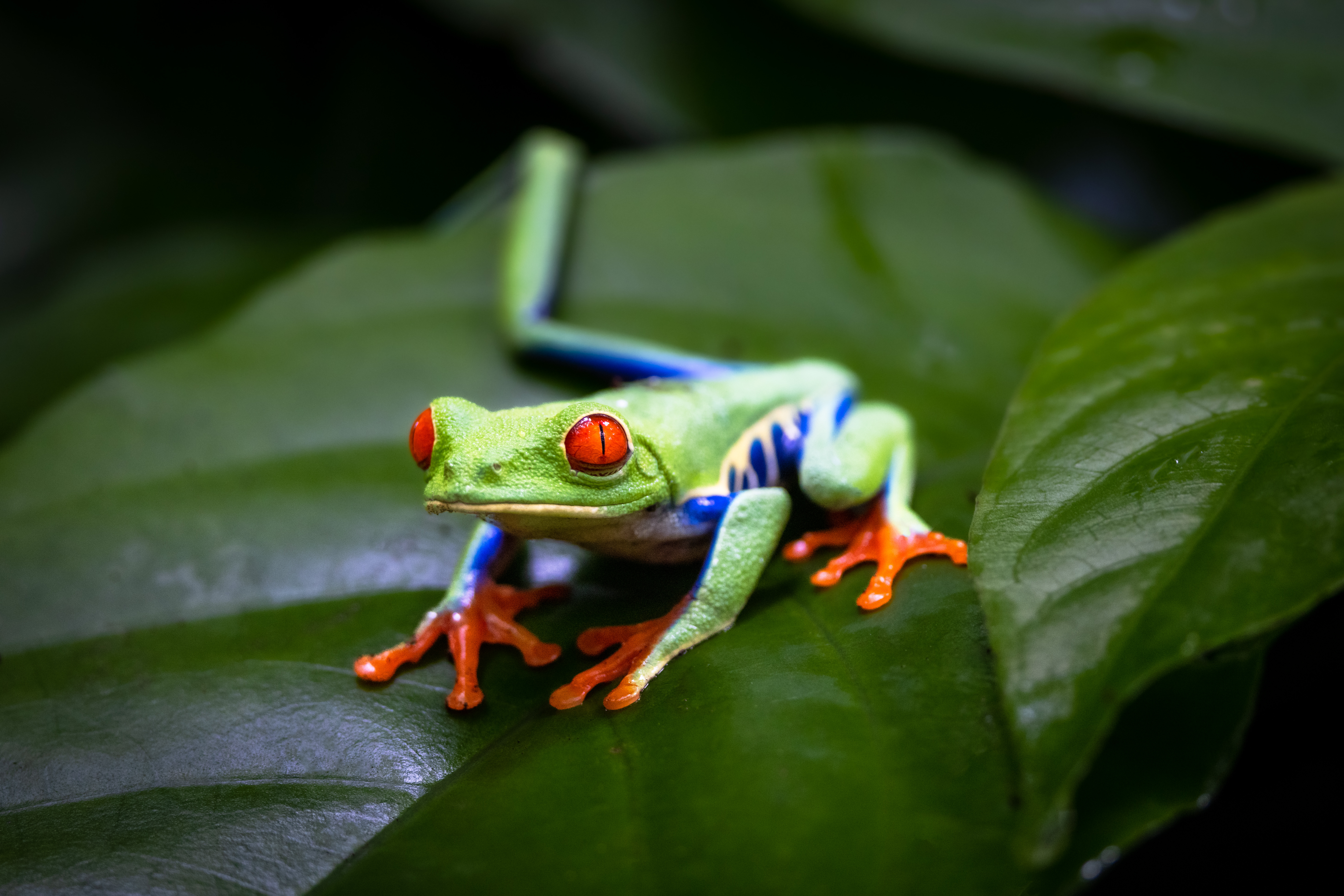
I find Tenorio National Park, further north, even more like something out of a fairy tale. We hike through a misty rainforest where every leaf glistens with moisture, as if it had just been varnished. It’s worth taking a closer look here: the tiny red-eyed tree frog rests, perfectly camouflaged, on damp leaves and seems oblivious to the world around it.
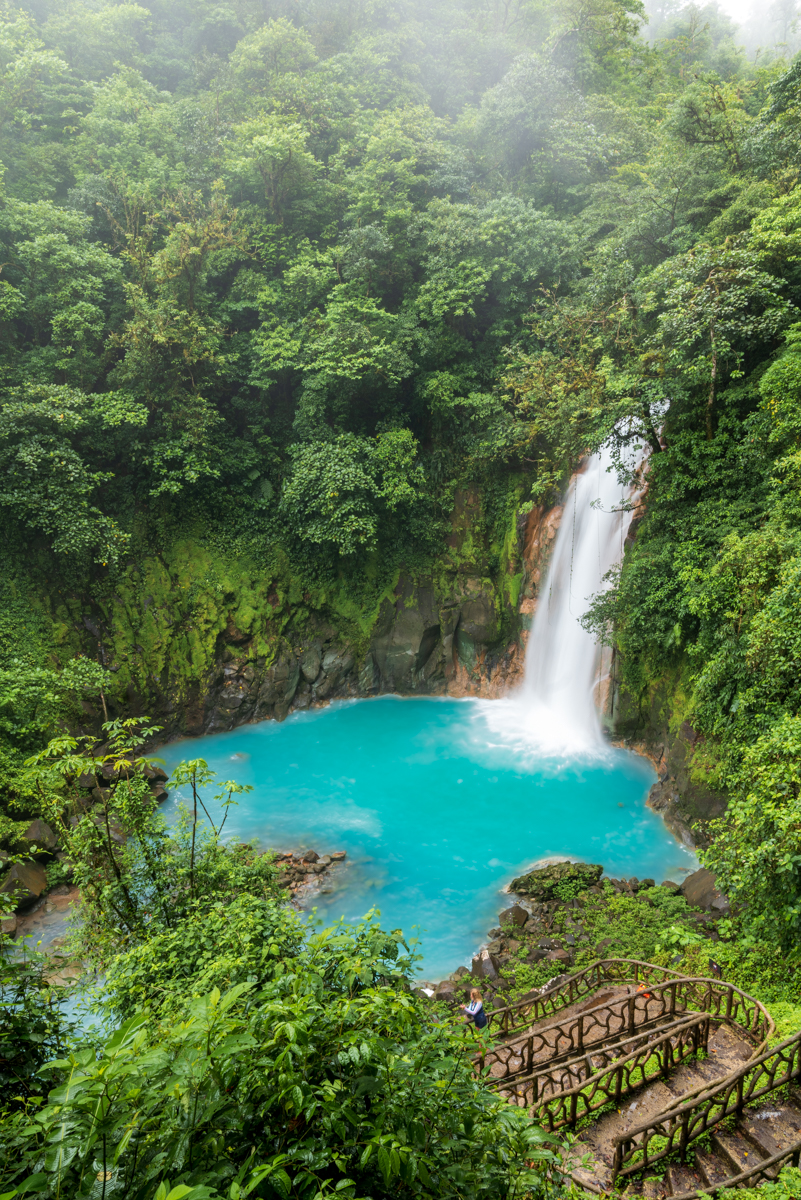
Then we reach the waterfall on the Río Celeste. The water plunges into the depths in an almost unreal shade of turquoise, before winding its way through the dense rainforest – a sight straight out of a fairy tale.
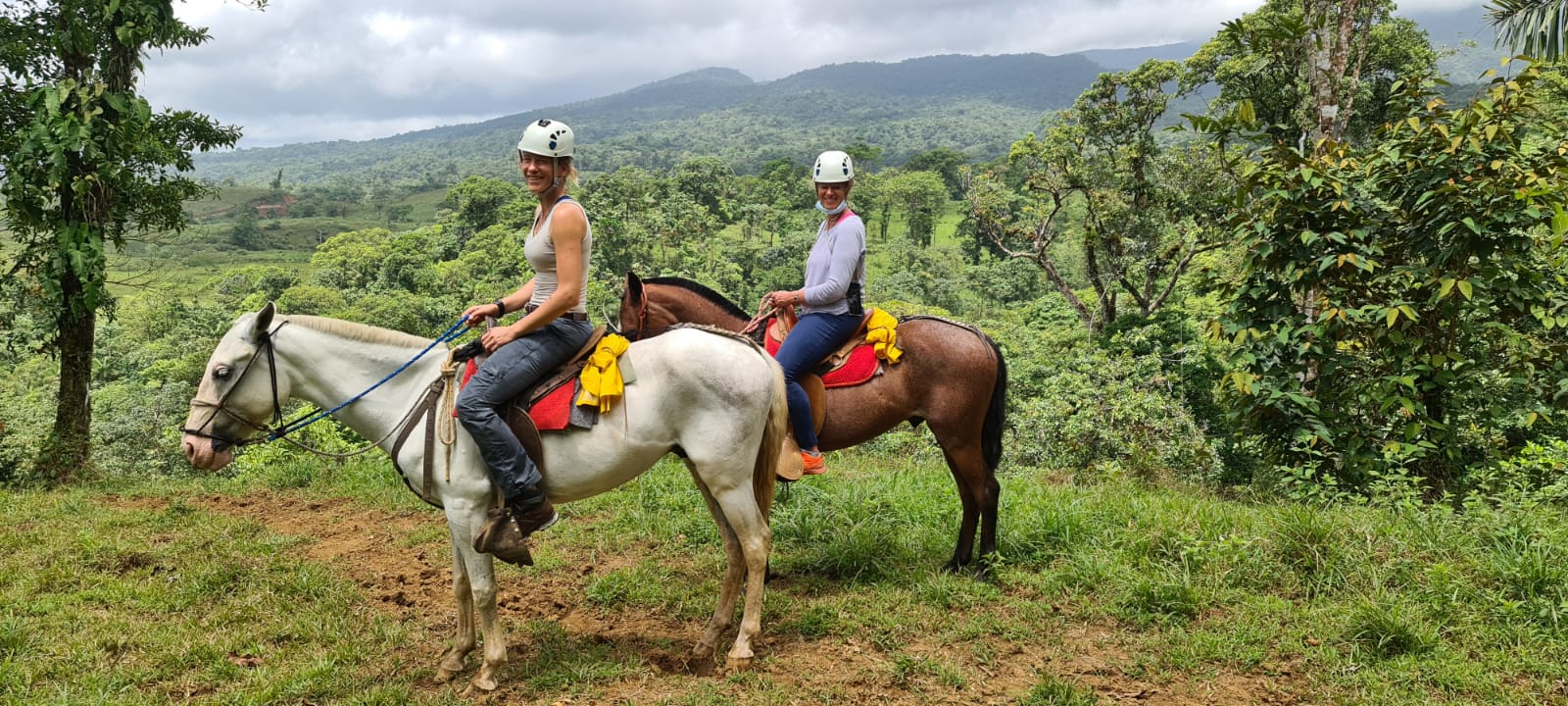
In the nearby village of Río Celeste, David Quesada runs a small restaurant with his family and organises horse rides. So, on with the helmet and into the saddle. We ride down to the river along narrow sandy paths. As we’re outside the national park, we’re even allowed to swim in the turquoise water. Afterwards, we swing on a huge jungle swing high above the treetops and ride on to a viewpoint overlooking the vast Lake Nicaragua in the neighbouring country.
-
- The turquoise water plunges noisily into the depths: a hike through Tenorio National Park to the Rio Celeste waterfall should be on your itinerary
-
- Jungle magic at the foot of the Arenal: here, hiking trails featuring solidified lava and hot springs beckon
-
- Julia, the photographer, and I are riding on horseback through the hilly countryside along the Rio Celeste
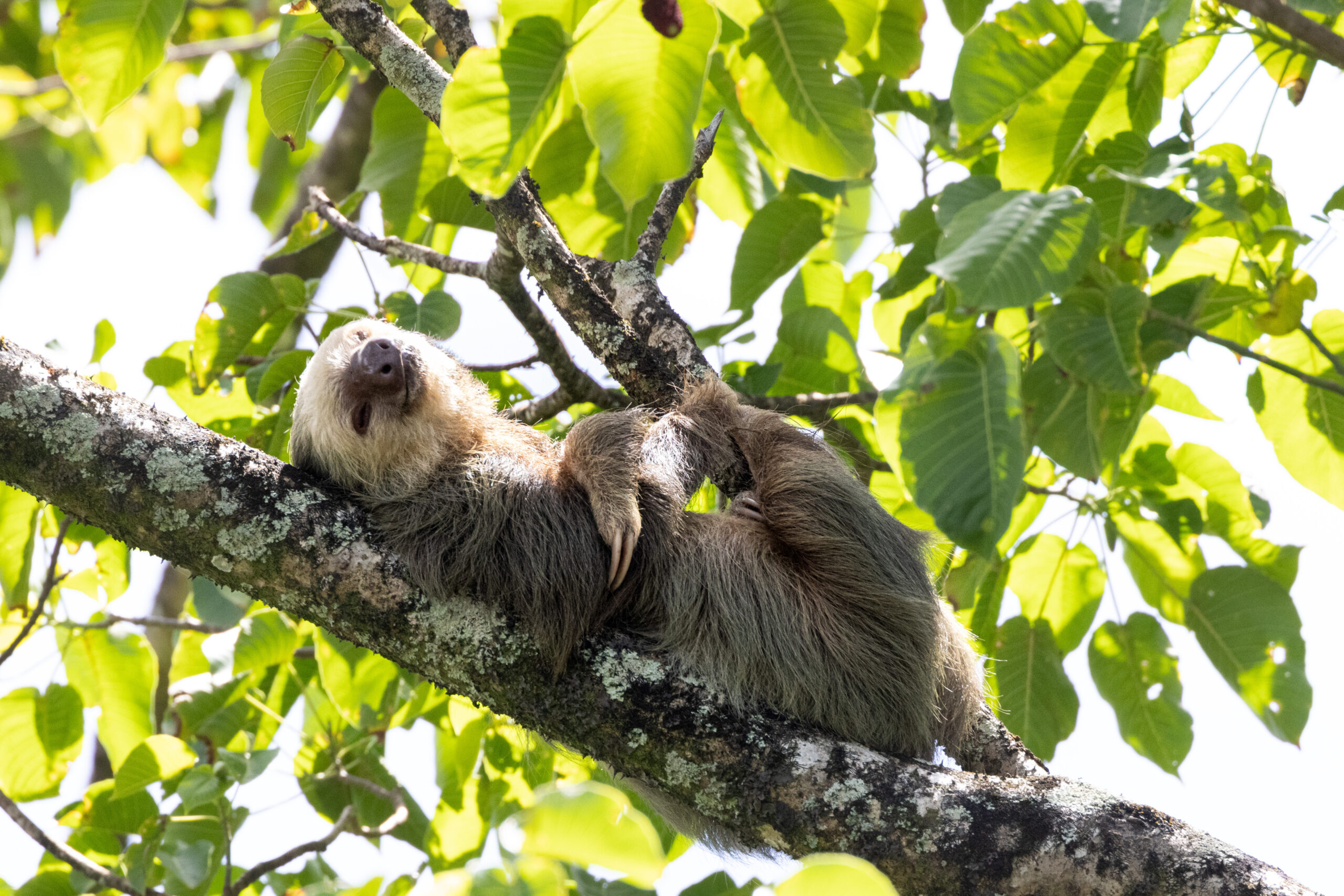
An excursion I can wholeheartedly recommend – as I can the privately run Spring Paradise Bijagua nature reserve, which is very close by. There, we finally encounter what is probably Costa Rica’s most famous inhabitant: the sloth. Outside the wild, people usually only know it as a soft toy from souvenir shops. At San José airport, it smiles down from posters and appears on key rings and coffee mugs. In the wild, these animals prefer to hang out in the metre-high ant trees, living up to their name. They move no more than 40 metres a day, sleep for around 18 hours, and only climb down from the tree once a week to do their business – a very laid-back existence.
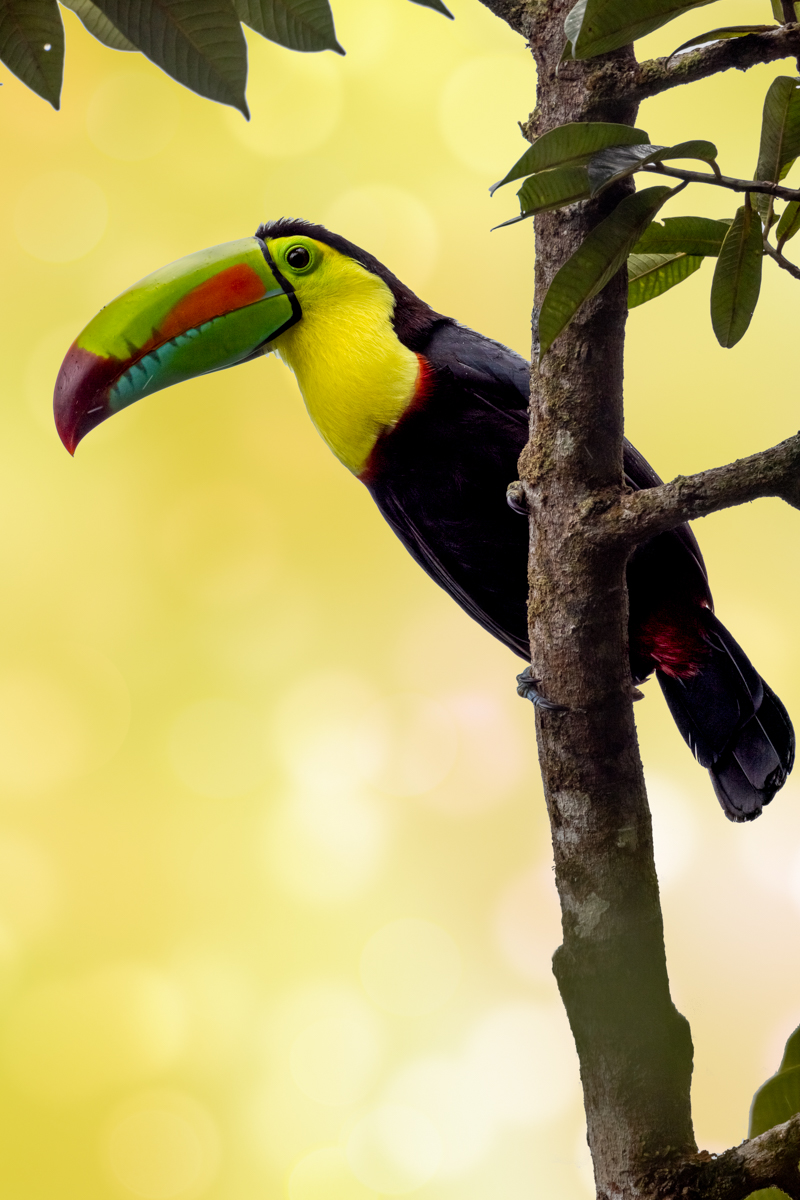
But as if the sloth weren’t enough, a little later a tapir – rarely seen – crosses our path, whilst toucans feast on the nuts of nutmeg trees.
-
- The most striking feature of a toucan is its brightly coloured beak
-
- A gorgeous little bird in a crystal-clear close-up: a cinnamon woodpecker with a cinnamon-coloured head
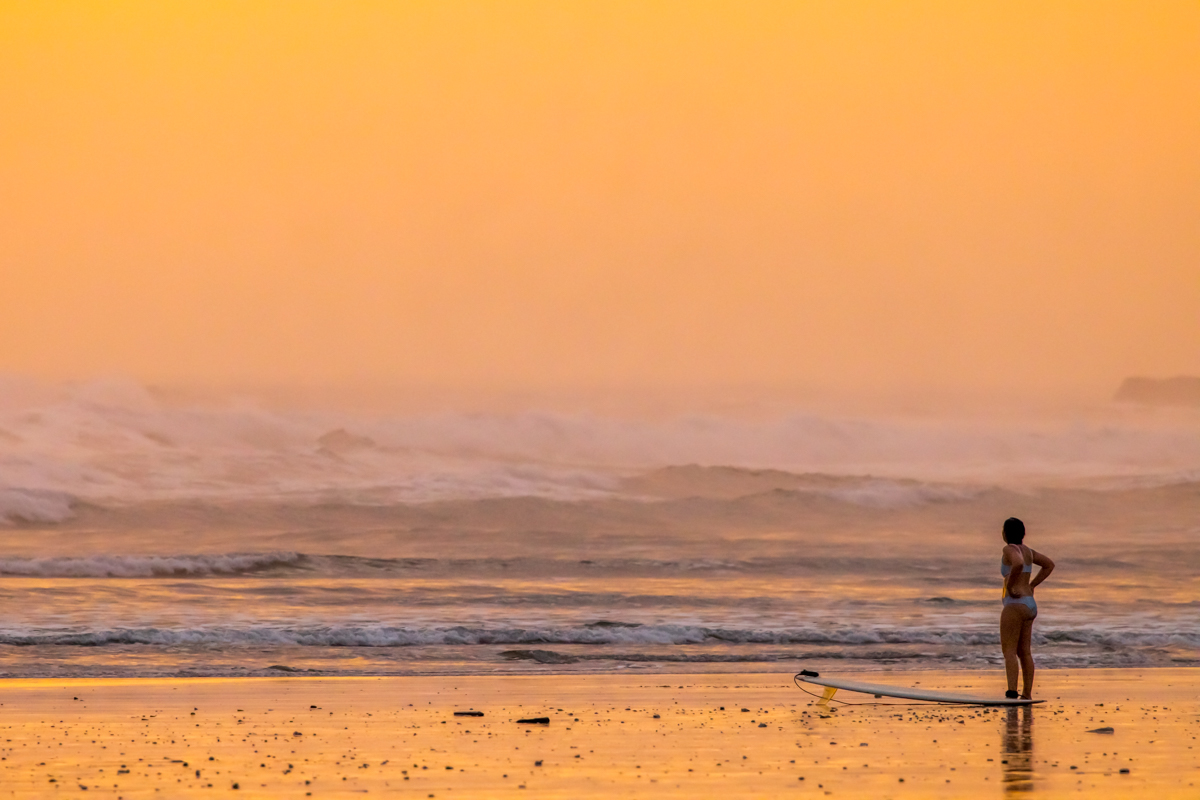
Then we hop in the car and, after a good three-hour drive – partly along the legendary Pan-American Highway – we finally reach Nosara on the Nicoya Peninsula. This little coastal village on the Pacific is a surfer’s paradise. Everywhere you look, people are out and about in flip-flops and shorts, either heading for the long, high waves or for the palm-fringed Playa Guiones, where they celebrate the fiery red sunset with a cold beer.
-
- A picture-perfect scene: the Pacific waves crash onto Nosara beach in the orange glow of the sunset, whilst a female surfer waits for the perfect moment
-
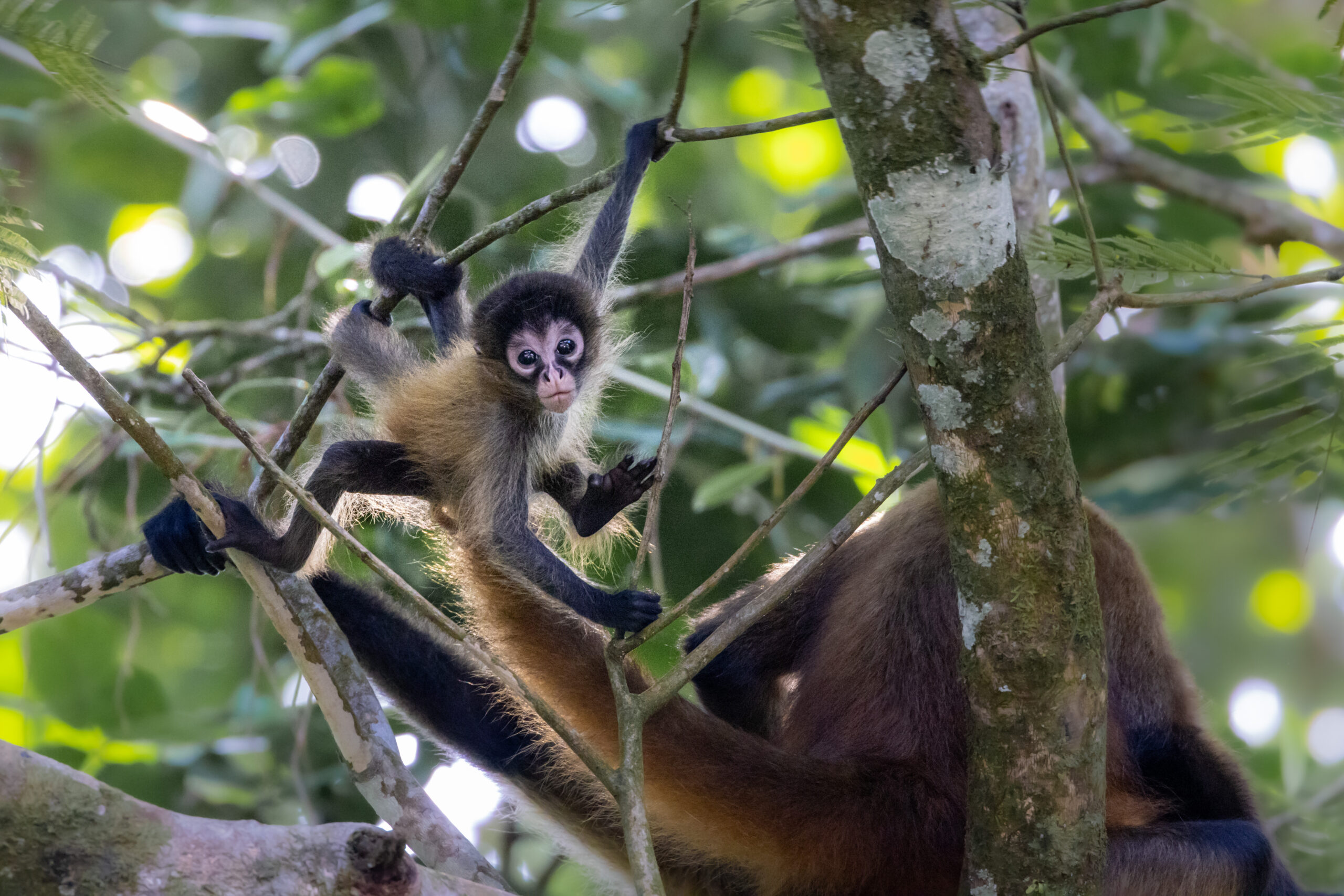
- The young, cute ‘Spiderman’ is a squirrel monkey who is looking curiously into the camera lens whilst his mother tries to pull him towards her
-
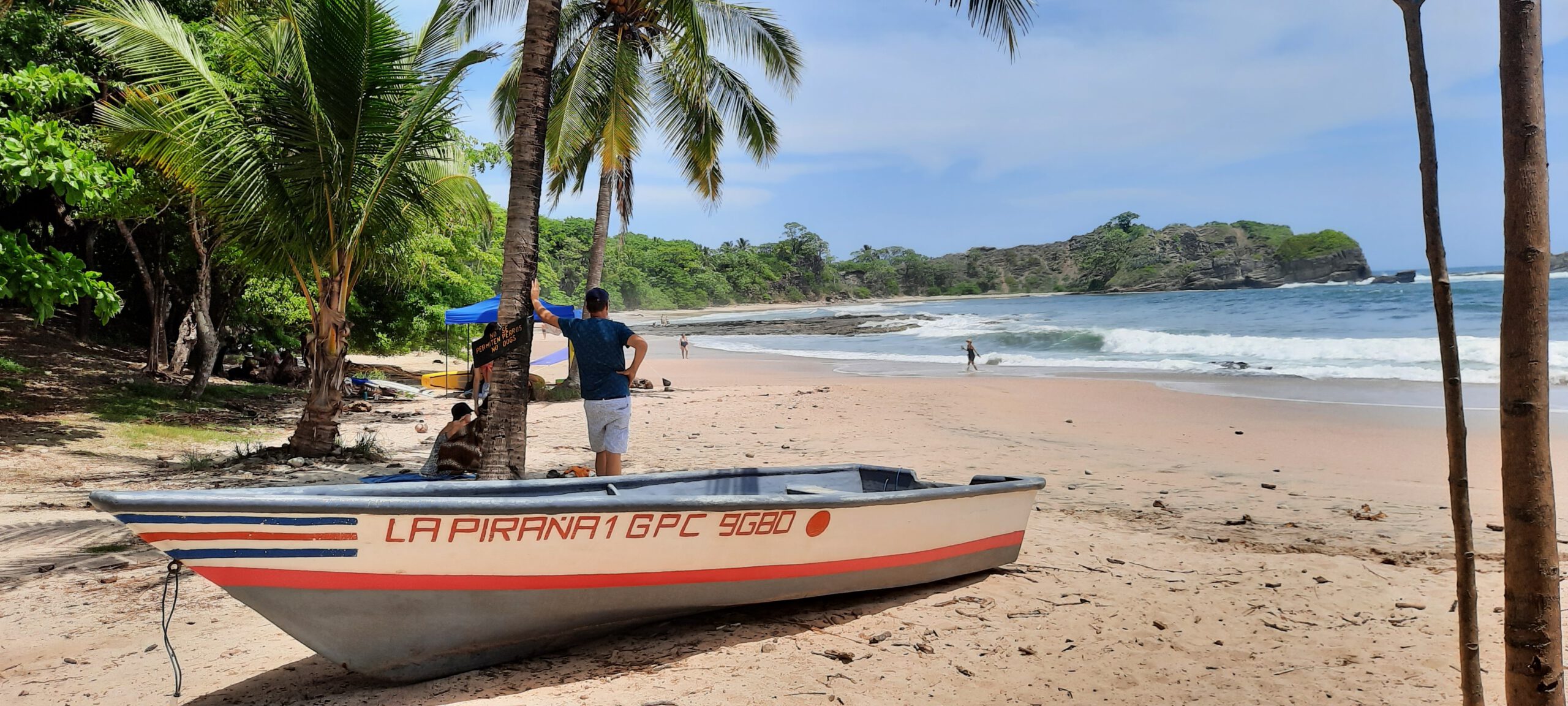
- The almost untouched beaches on the Nicoya Peninsula have everything you could wish for
-
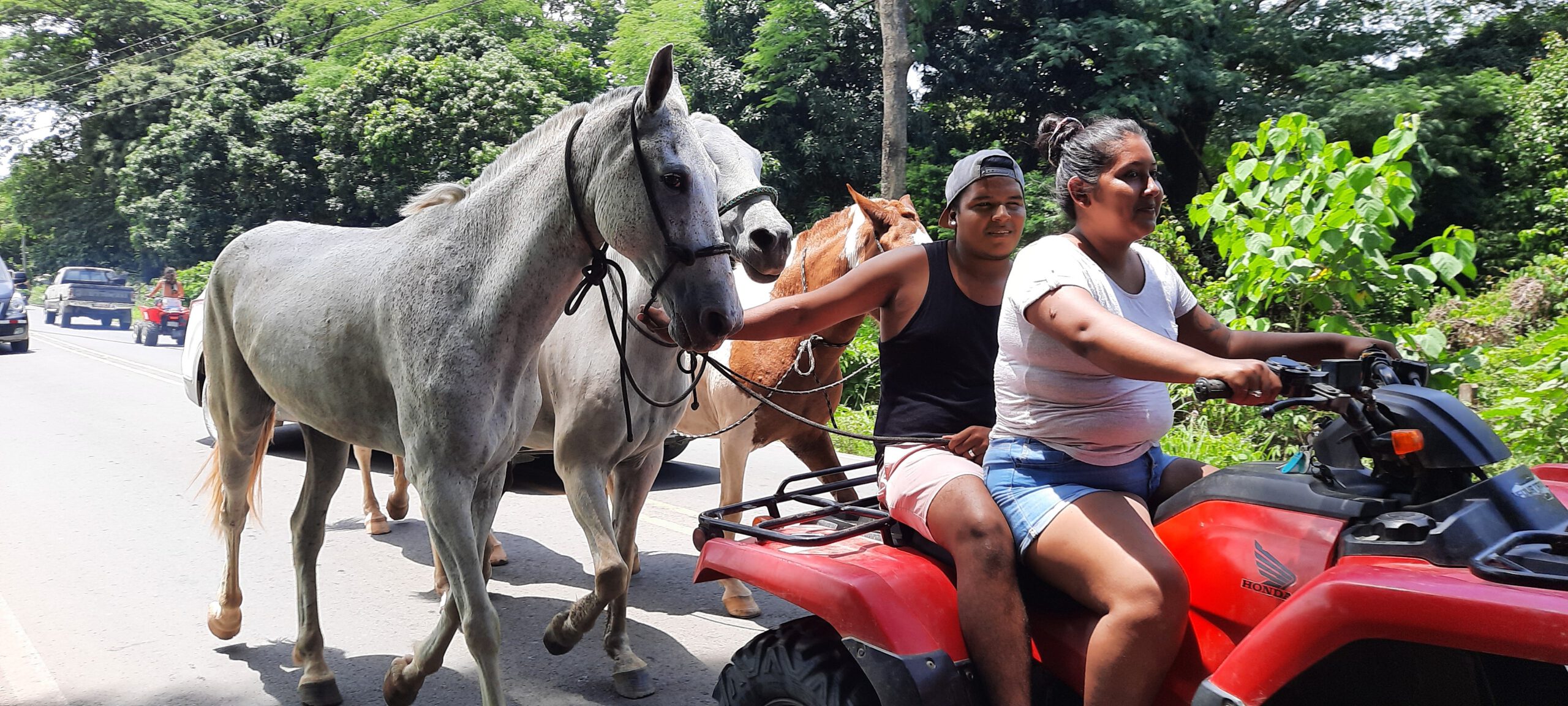
- Pick-up trucks, quad bikes and horses are a common sight on the roads
-
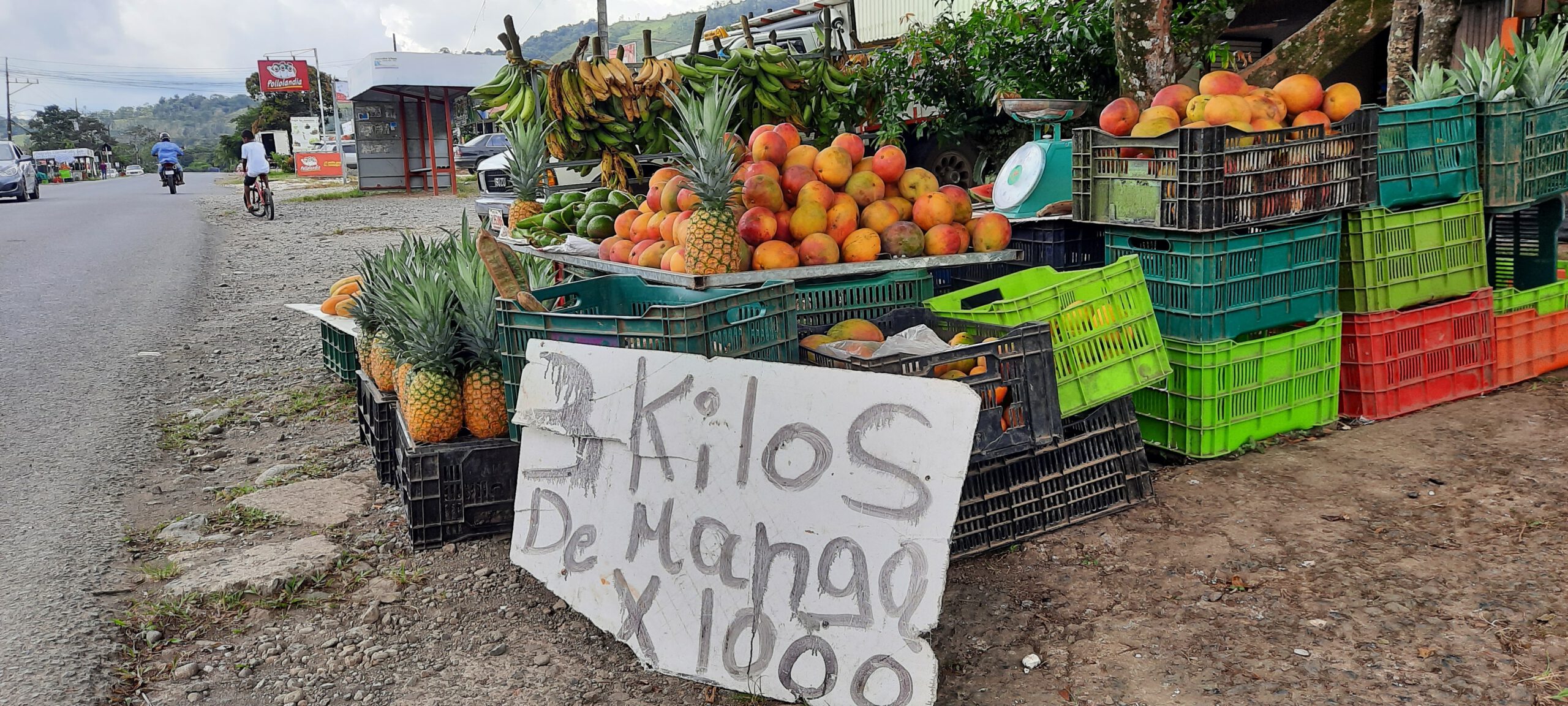
- Freshly harvested pineapples, mangoes or bananas: the streets are lined with fruit stalls
The photographer and I check into our rooms at the small boutique hotel Olas Verdes, just a few steps from the beach. We spend the next few days living almost like sloths – only a little more active: we swim, surf the pleasantly warm Pacific waves and start the morning with yoga in the jungle. To go with it, we have ice-cold horchata, freshly caught ceviche and, for breakfast of course, gallo pinto – rice, black beans, scrambled eggs and sweet plantains. Pura Vida!
And on we go to the next adventure...
Sailing along the Pacific coast to Panama
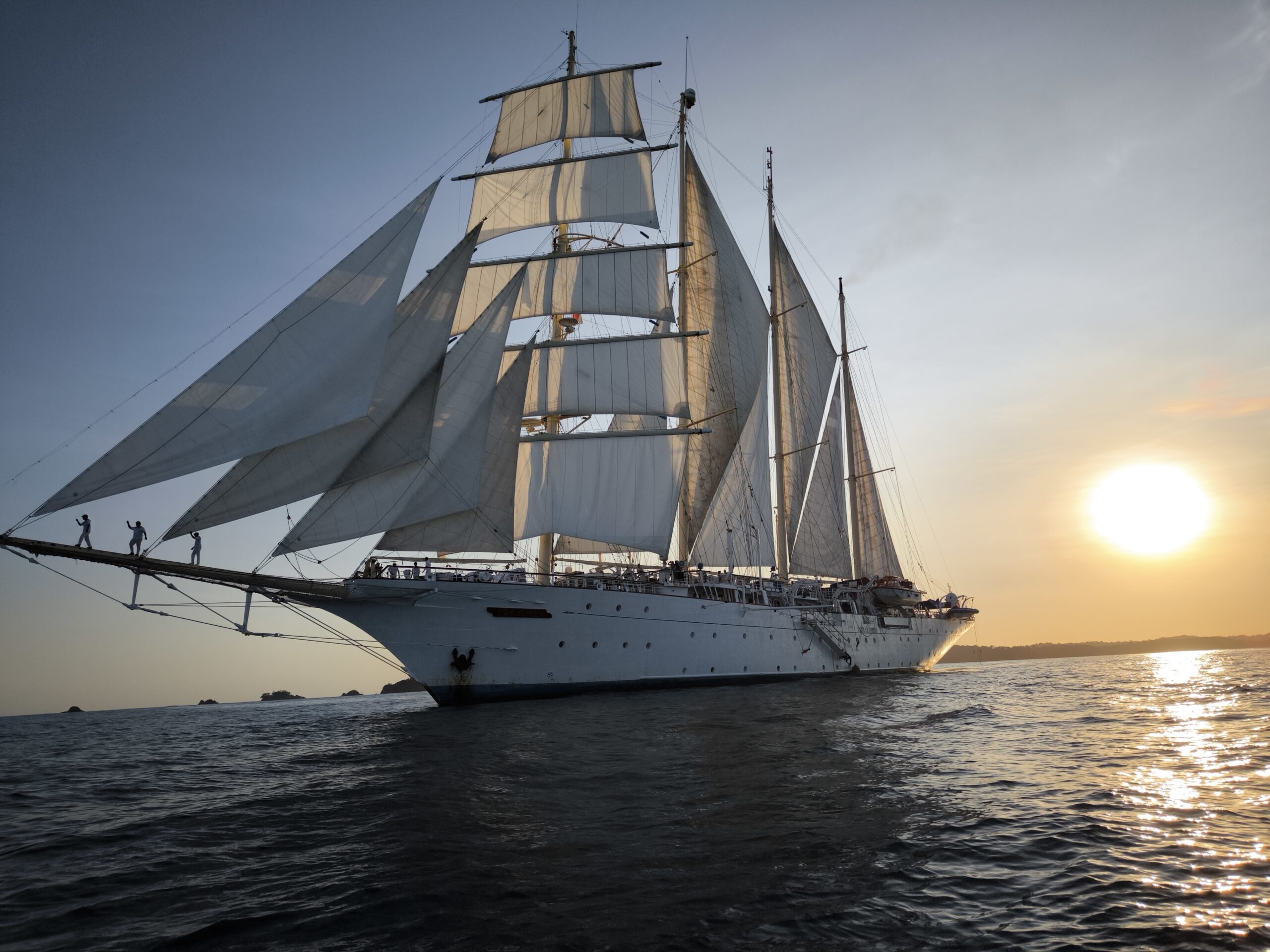
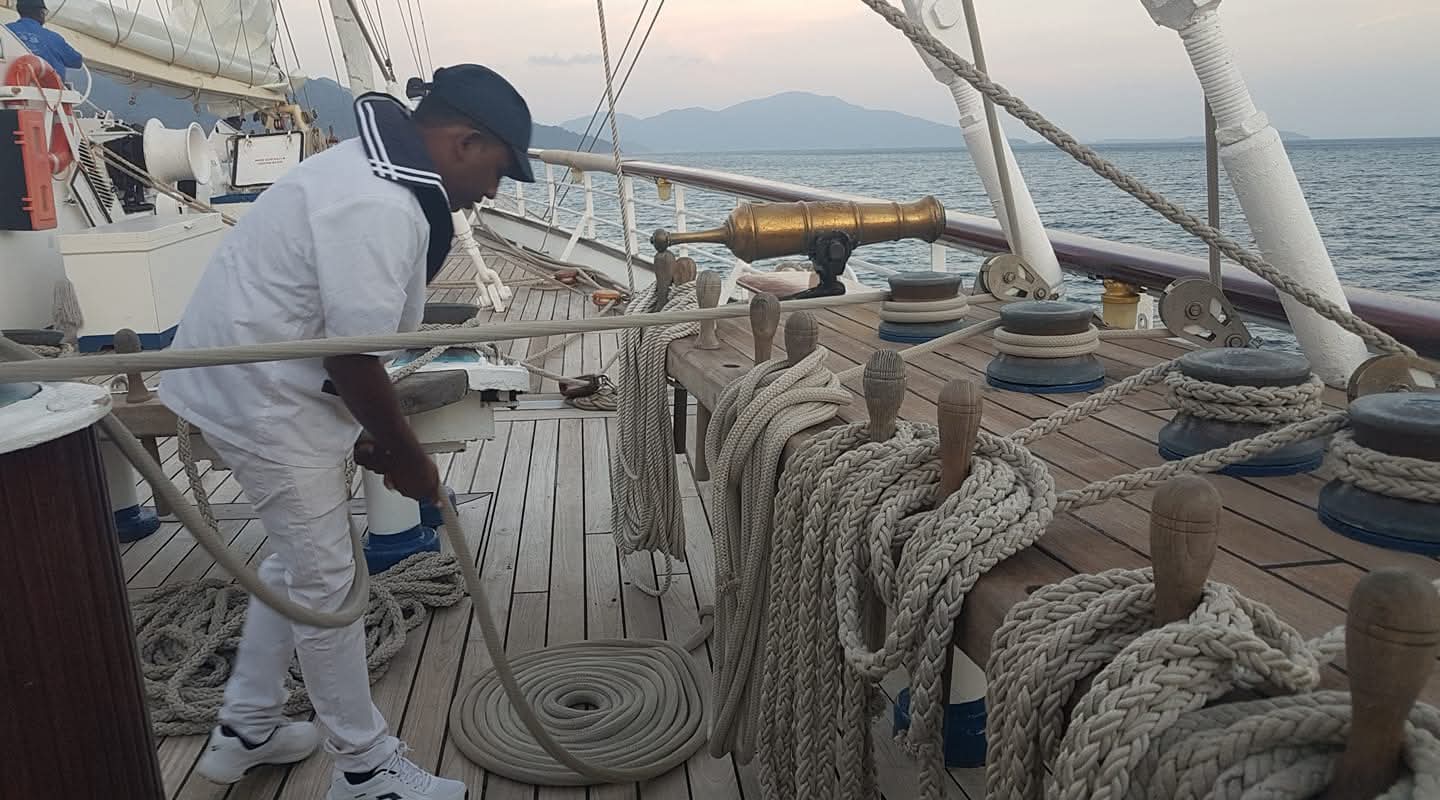
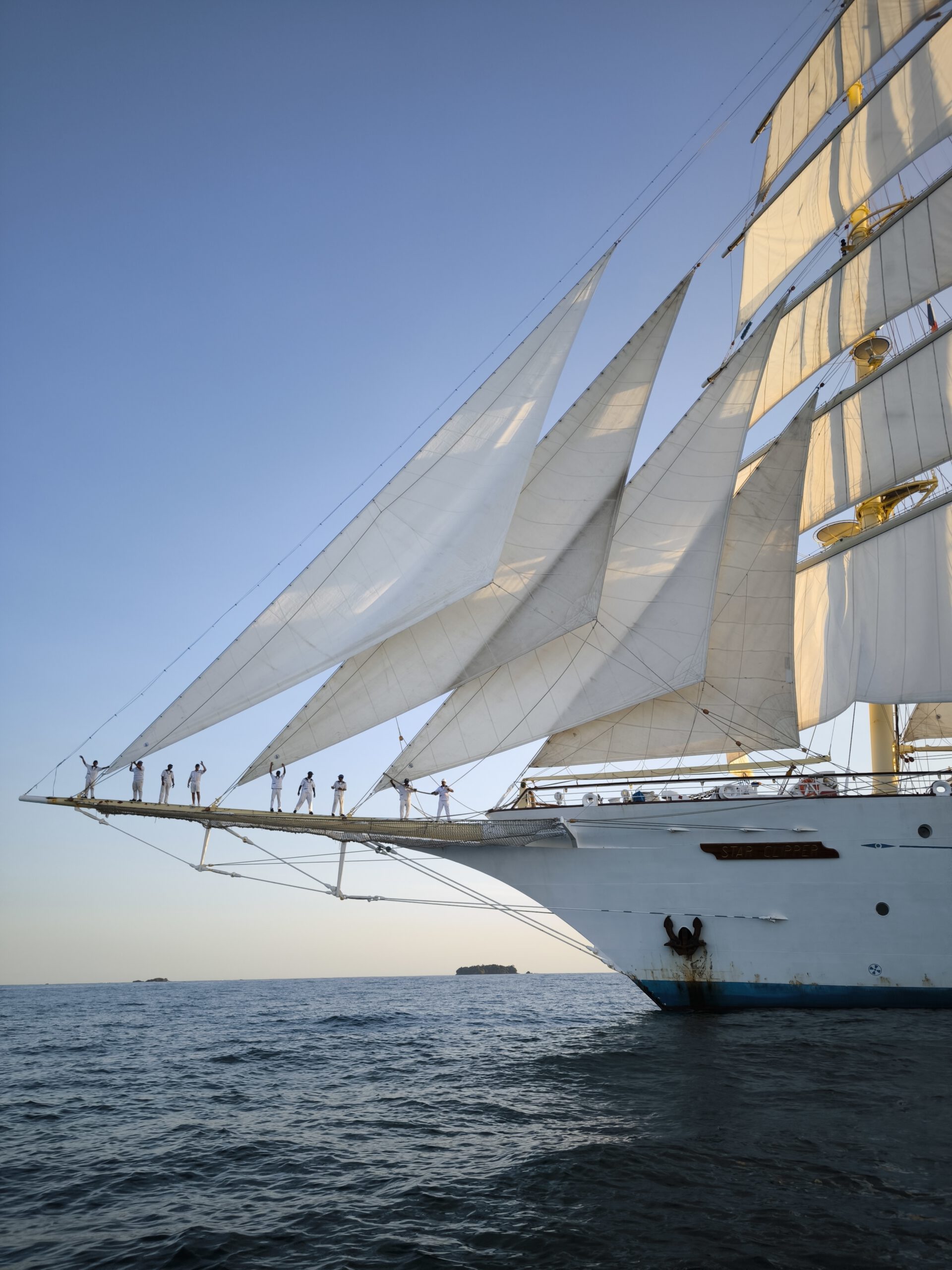
Thousands of stars twinkle in the night sky, rivalling the lights in the Star Clipper’s four 63-metre-high masts. Captain Ante Basica gives the order to set sail. The sailors work hard, pulling the thick ropes across gleaming brass winches. Slowly, the massive headsails and the five square sails at the bow fill out. The wind fills the sails – and with a soft rustle, we glide out onto the Pacific off the coast of Costa Rica.
-
- The Star Clipper’s crew wave from the jib boom to the guests in Zodiacs on the Pacific Ocean off the coast of Panama
-
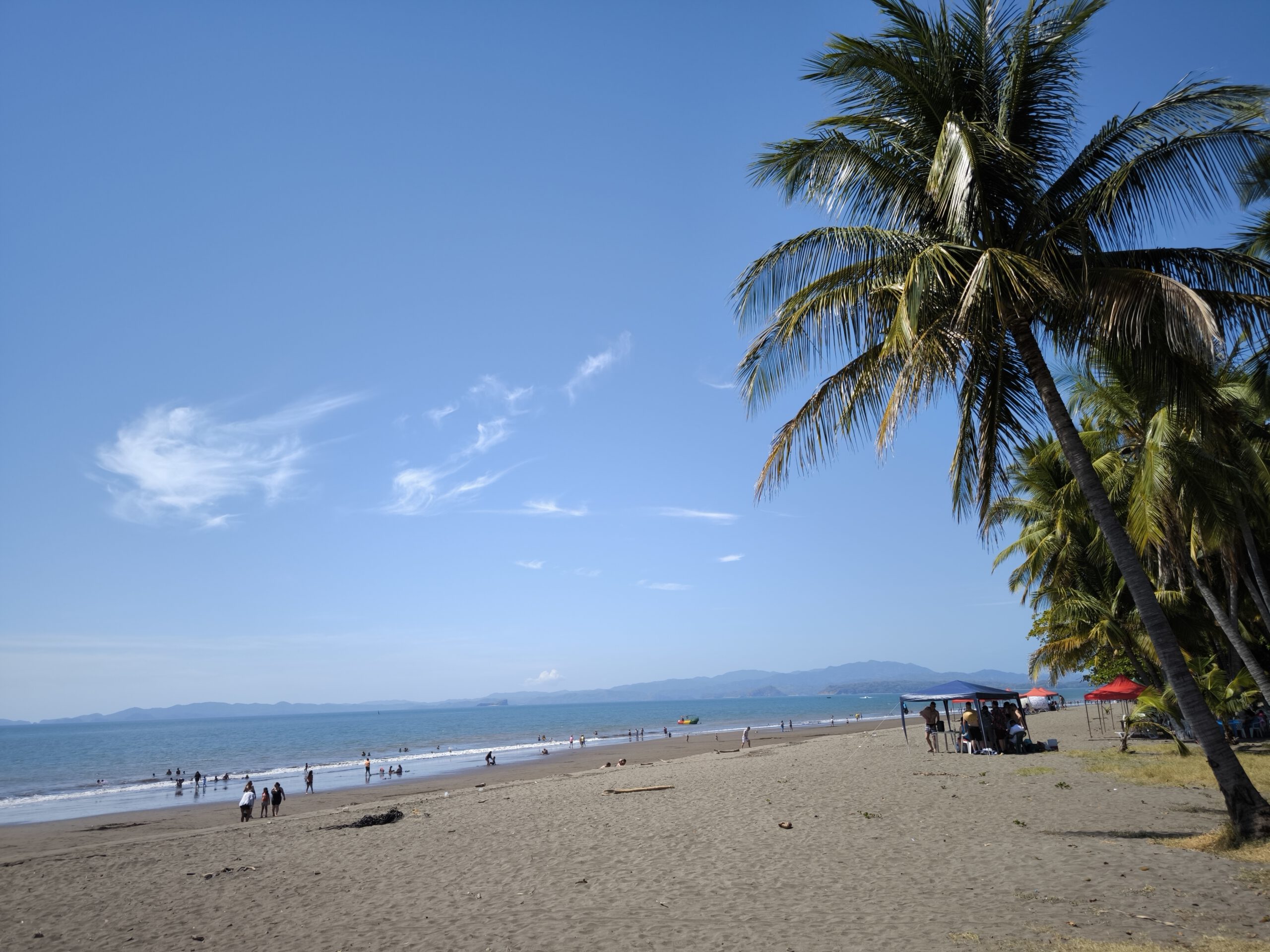
- The kilometre-long, palm-fringed sandy beach in Puntarenas is mainly frequented by Ticos
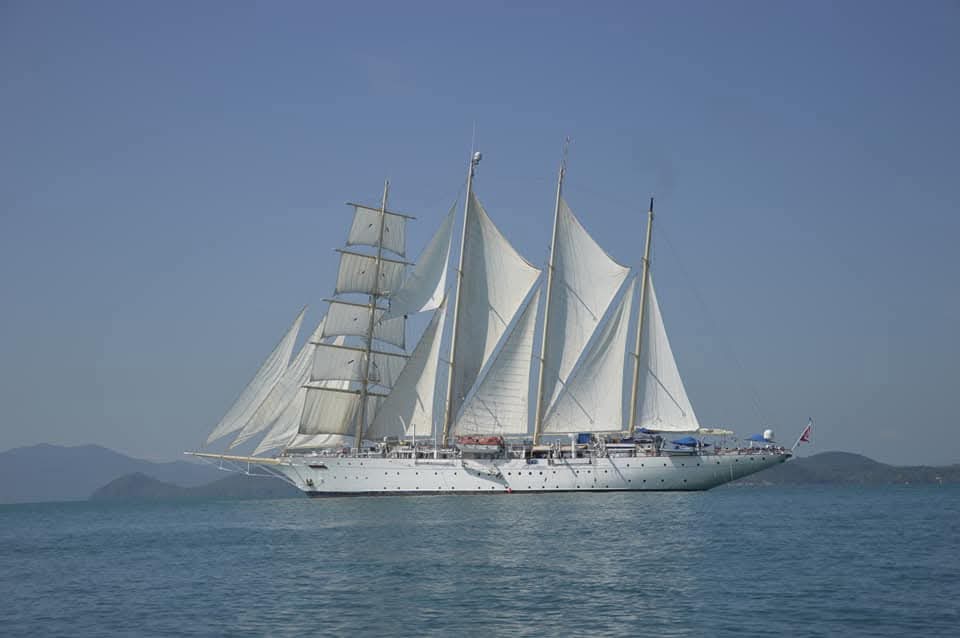
For a whole week, night after night, I savour that spine-tingling moment when the anchor is weighed and the ship sets sail overnight towards its next destination. The 115.5-metre-long Star Clipper is one of the largest passenger sailing ships in the world and even significantly outshines the German Navy’s training ship, the 89-metre-long Gorch Fock.
The 84 cabins, each decorated in a nautical style – most with portholes – can accommodate up to 170 guests. Anyone who comes on board here experiences a cruise with a difference: instead of huge entertainment complexes, it is the wind, the waves and the sails that set the pace. Added to this are excellent cuisine, a relaxed atmosphere on deck and in the bar, two small pools and numerous water sports such as snorkelling, kayaking, water skiing and diving. Those who wish can start the day with morning exercises on deck.
The atmosphere on board is pleasantly informal and personal. No wonder, then, that around half of the international guests are travelling on the Star Clipper for the second or subsequent time.
-
- A magnificent sight: the Star Clippers under sail
-
- A sight that’s almost like travelling back in time to a bygone century: the sailors are hoisting the sails of the Star Clipper
Kicking off in the port city of Puntarenas
Pelicans, frigatebirds and raven vultures circle above the harbour of Puntarenas or perch on the roofs of the warehouses. As the cruise gets underway, there’s time for a stroll through what was once Costa Rica’s most important Pacific port, from which coffee, bananas and pineapples used to be shipped all over the world. Today, Puntarenas has long since ceded this role to the modern port of Puerto Caldera, further south.
The tropical humidity is oppressive. Many guests therefore choose to wind down the first day by the pool – with an ice-cold Ankerbier in hand, of course.
The next morning, things get exciting. The Star Clipper sets course southwards. Along the coast, lush green rainforests alternate with dark sandy beaches and secluded bays. Finally, we reach Quepos, the gateway to the famous Manuel Antonio National Park.
Although the park, covering just under seven square kilometres, is one of Costa Rica’s smaller national parks, it is among the most biodiverse in the country. Huge iguanas bask on branches, the distinctive roars of monkeys echo through the jungle, capuchin monkeys leap curiously through the undergrowth, and, with a bit of luck, toucans or bright red macaws glide over the treetops.
Here, too, you’ll encounter Costa Rica’s secret star – the sloth. It hangs leisurely high up in the trees – unfazed by the hustle and bustle of the world and the tourists.
A truly tropical paradise. Or, as the Ticos would say: Pura Vida.
-
- A tiny creature that makes a big impression: the red-eyed tree frog is only about 60 to 80 millimetres long. When it sleeps, it tucks its legs close to its body, closes its eyes, and its warning colouring is then no longer visible. This provides perfect camouflage on a green leaf
-
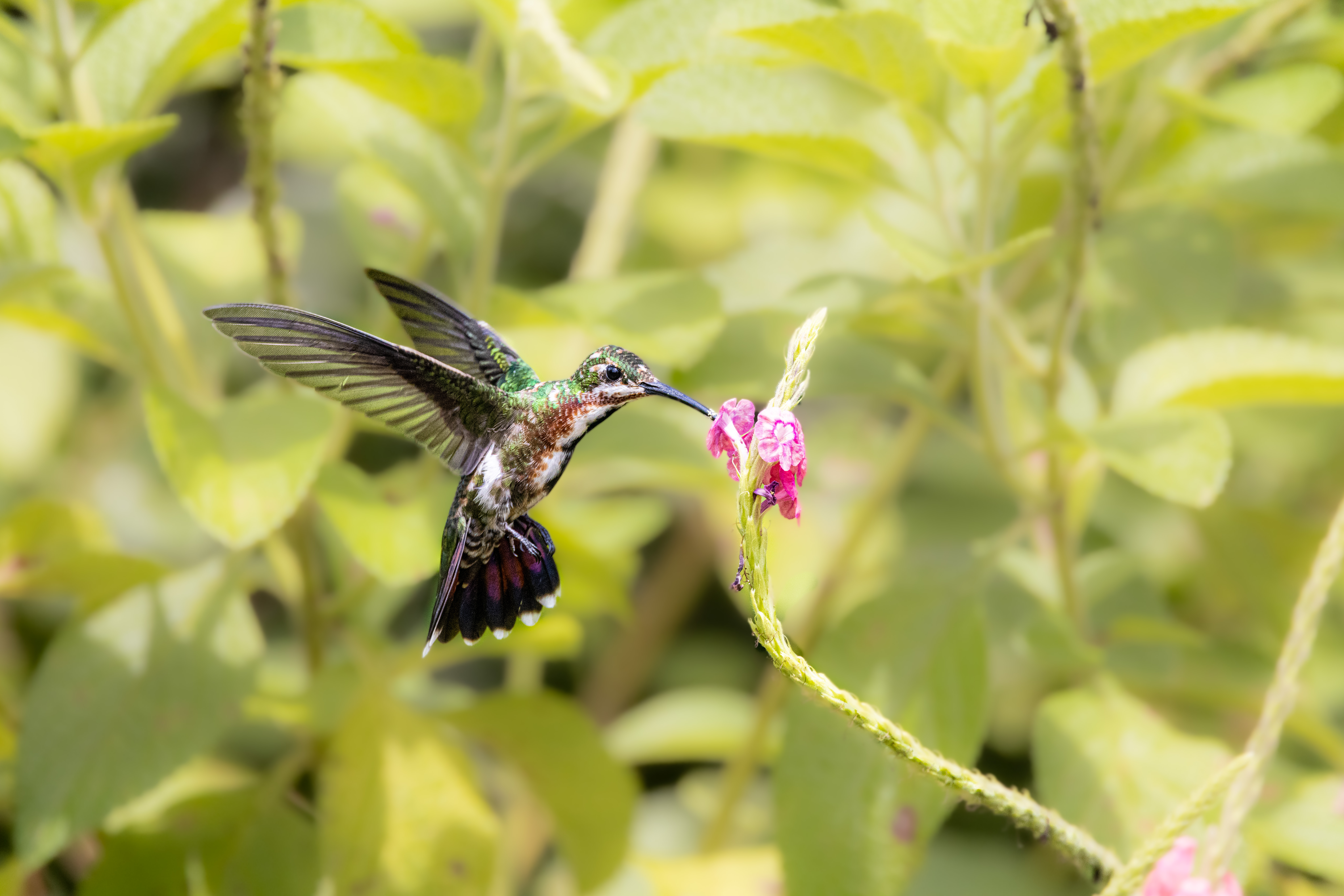
- Hummingbirds can be found almost everywhere and are easy to watch as they hover over flowers
-
- On the road from Puntarenas – the sun is beating down from the sky
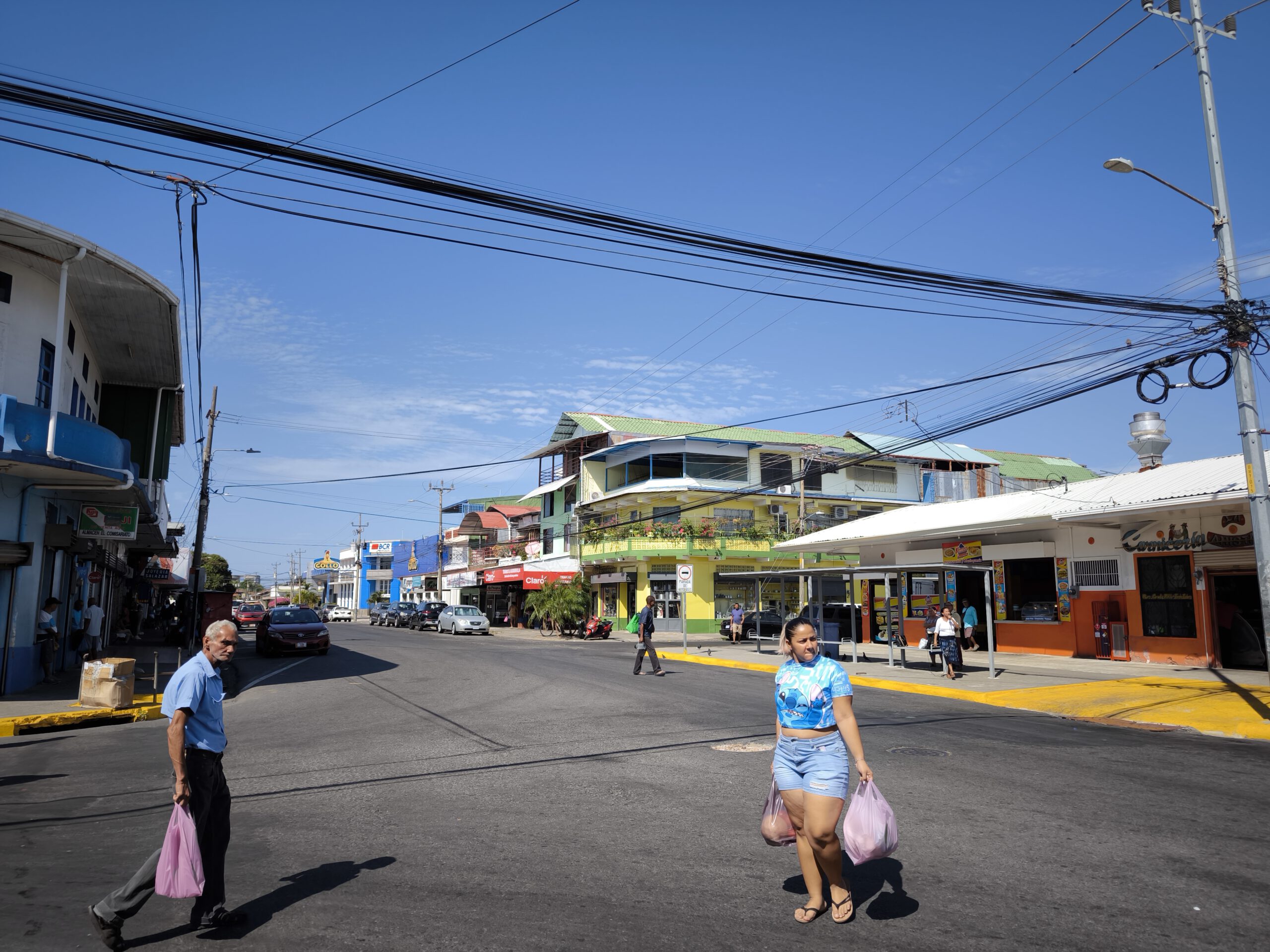
-
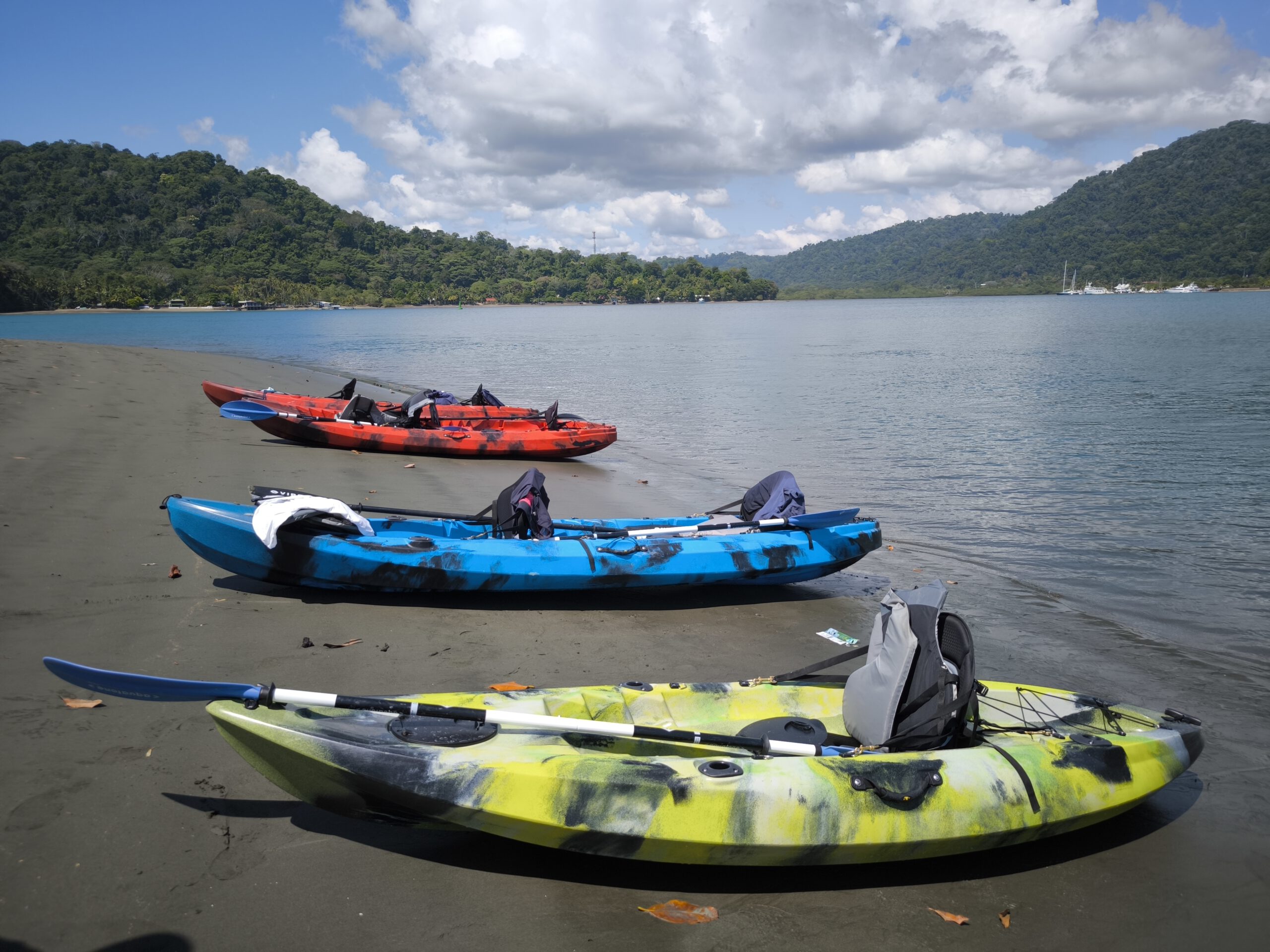
- From the sailing cruise ship to two-person kayaks: the journey through the lagoon of the port city of Golfito on the Pacific leads to almost black sandy beaches. In the humid tropical heat, bananas, orchids and palm trees thrive here magnificently
Powered by the wind
Two nights later, we reach Panama. Ahead of us lies Coiba National Park, which has been a UNESCO World Heritage Site since 2005. You won’t find any large cruise ships here; they are not permitted to enter the protected waters.
Spanning more than 2,500 square kilometres in the Gulf of Chiriquí, this protected area comprises 38 islands and is one of Central America’s most valuable marine ecosystems. To protect the flora and fauna, visitors are only permitted to go ashore or snorkel in small groups.
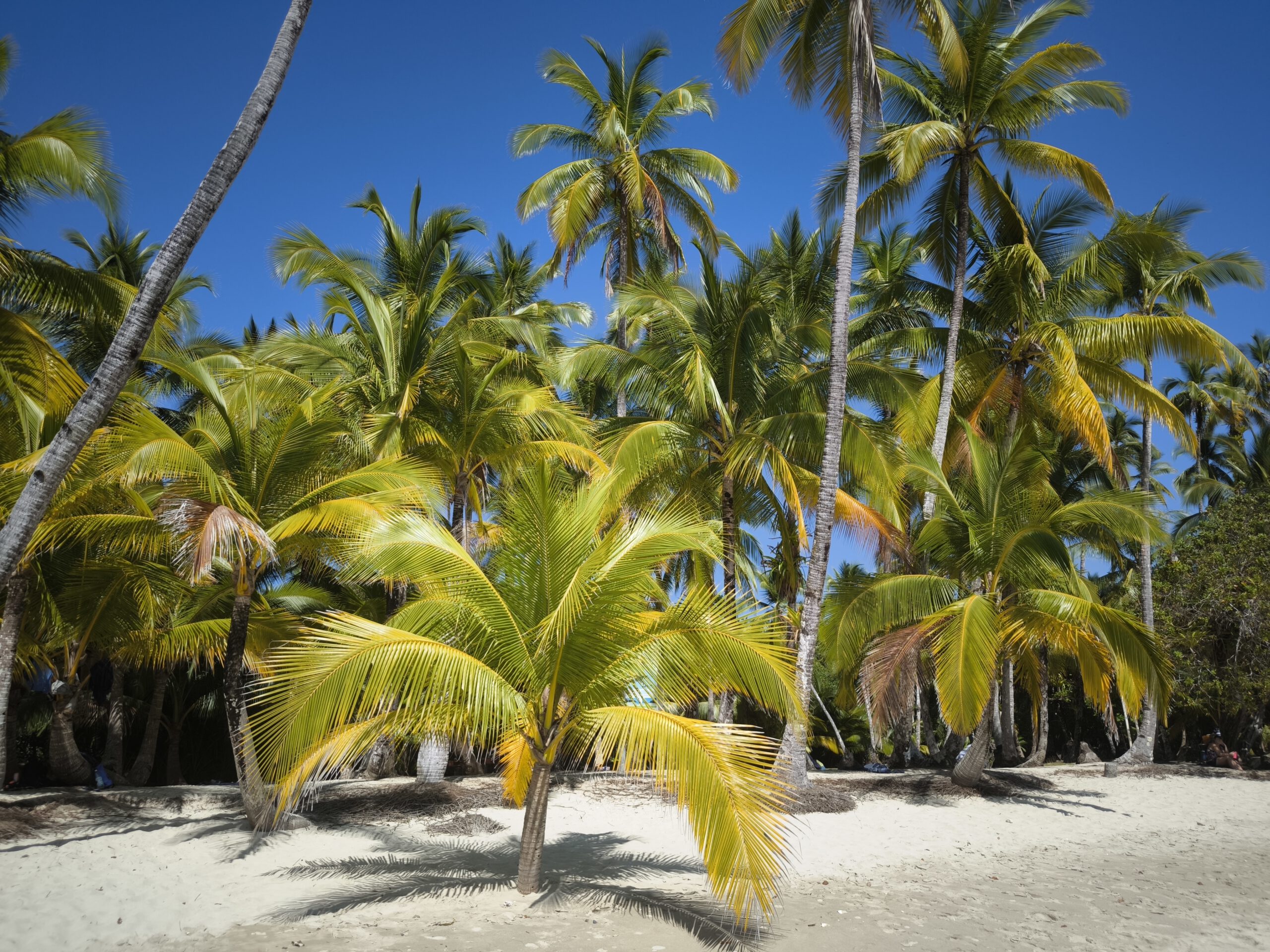
We cross over to Ranchería Island in tender boats. As soon as we moor, it feels as though we’ve stepped onto a postcard: powder-white sand, towering coconut palms, exotic birds and crystal-clear water teeming with corals, colourful fish and sea turtles. It’s one of those places where you’d love to make time stand still.
The following day, Parida Island proves to be no less idyllic. Under the palm trees, the crew sets up a sumptuous barbecue buffet, whilst the guests stroll barefoot through the warm sand or bathe in the turquoise waters.
-
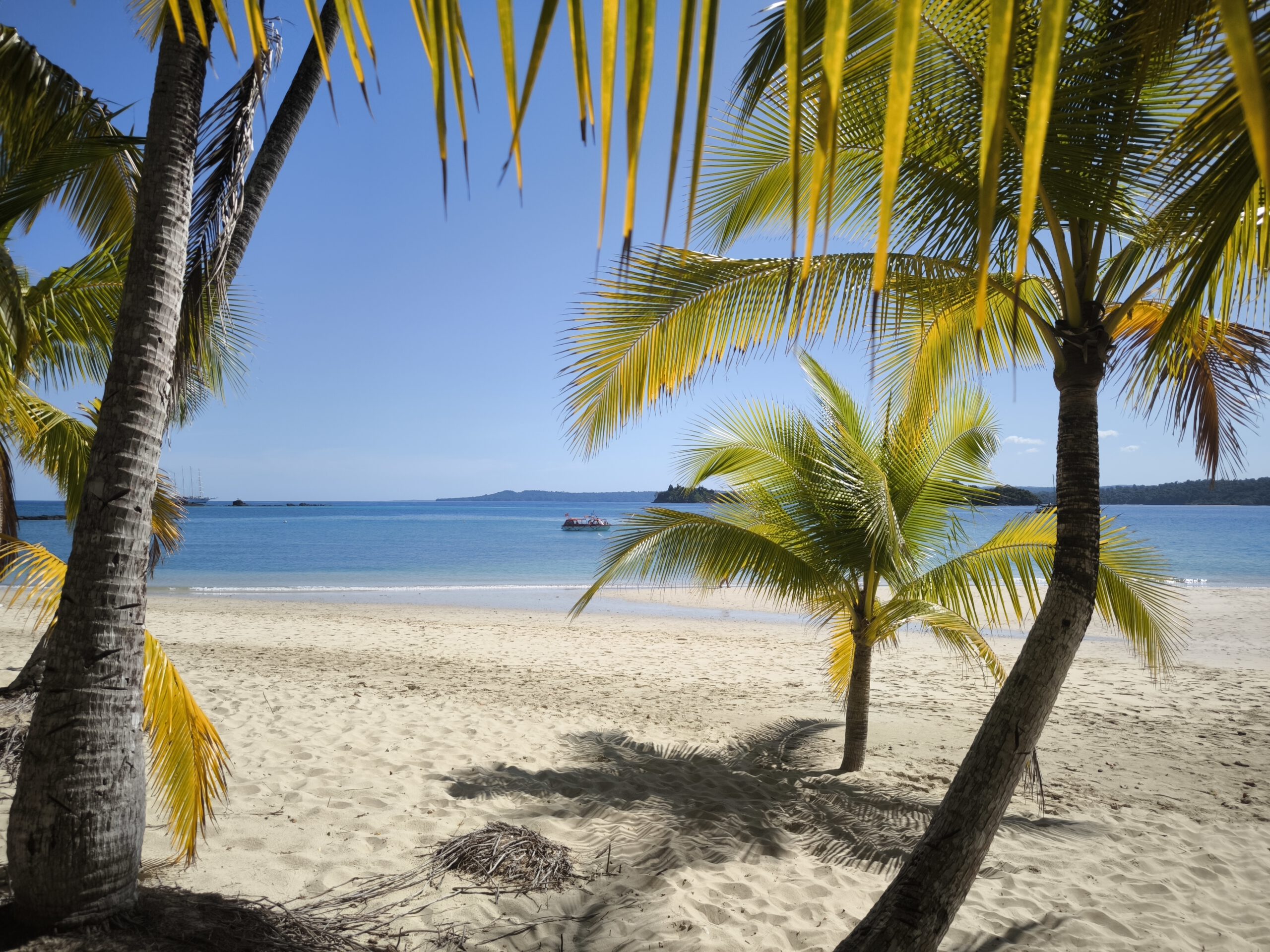
- Picture-postcard palm-fringed beaches: the islands in the Golfo de Chiriquí Marine Park off the coast of Panama are absolutely stunning – it feels just like being Robinson Crusoe. The Star Clipper ship’s tender bring guests out to the beaches
-
- The Star Clipper is anchored in Coiba National Park off the coast of Panama. This 2,500-square-kilometre protected area in the Gulf of Chiriquí comprises 38 islands. We take a tender boat across to the island of Ranchería – a dream day at the other end of the world
Overnight, we sail northwards again. One last day on the beach awaits us on Tortuga Island. This naturally includes a traditional ‘Coco Loco’ – a rum cocktail served in a fresh coconut. The curious wild boars seem particularly taken with it, enthusiastically tucking into the rum-soaked coconut flesh.
After just under 620 nautical miles, it’s finally time to say goodbye. Captain Ante Basica explains that the Star Clipper was able to cover about half the distance under sail alone. How often the engine is actually needed depends entirely on the wind. Sometimes, he says with a smile, the ship can even manage without engine power for even longer.
That is precisely what makes this journey so special for me: unhurried, extraordinary and comparatively climate-friendly. Anyone who has ever experienced a tall ship gliding across the Pacific under full sail, with the waves lapping against the cabin porthole like lullabies – as if in a washing machine – will not forget that moment in a hurry – for me, it’s a traveller’s dream.
The voyages took place at the kind invitation of the Costa Rica Tourist Board, the Star Clippers shipping company and the tour operator Star Clippers Cruises.
Info:
Getting there:
Direct flight from Frankfurt to San José, Costa Rica, e.g. with Lufthansa, approx. 850 euros www.lufthansa.com
My hotel recommendations for a self-drive tour with a hire car:
Laguna Lodge in Tortugero
www.lagunatortuguero.com
Arenal Manoa Hot Spring Resorts in La Fortuna
https://arenalmanoa.com
Tenorio Lodge in Bijagua
www.tenoriolodge.com
Olas Verdes Hotel in Nosara
www.olasverdeshotel.com
Horse riding excursion with a swim in the Rio Celeste:
www.riocelestehorsebackride.com
Price examples:
Many tour operators offer organised round trips, e.g.:
www.gadventures.com or www.djoser.de
Sailing cruise:
Nine nights in Costa Rica and Panama on the Star Clipper, e.g. from 12 February 2028, from 3,255 euros per person, full board excluding drinks.
Twelve nights in Costa Rica and on the Panama Canal aboard the Sea Cloud Spirit, e.g. from 28 January 2028, from 10,740 euros per person, all-inclusive.
www.seacloud.com
Photo credit:
Julia Babilon (20)
Petra Kirsch (19)
-
- Bye Bye Star Clipper – Costa Rica and Panama were my second sailing trip. Before that, I’d been sailing the tall ship in the Andaman Sea off the coasts of Thailand and Malaysia. The third trip is coming up soon… stay tuned
-
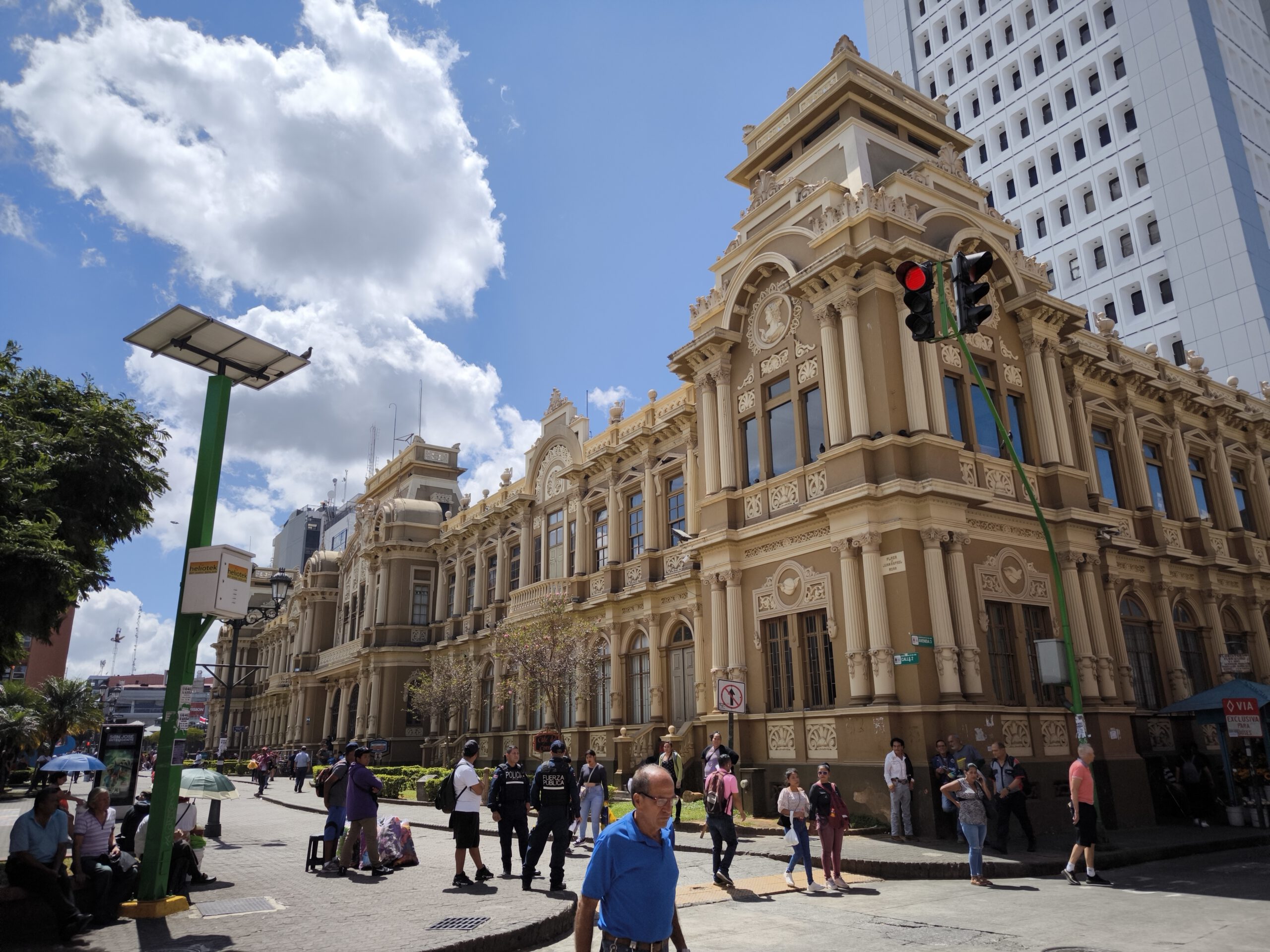
- The main post office in San José, built in the neoclassical style, is one of the city’s few historic buildings. It’s on the way to the Mercado Central. Tip: Stop off at a small ‘soda’ there to enjoy some local cuisine at reasonable prices and buy some coffee beans

2 Comments
Dear Petra, Thank you for narrating the incredible experience of your Costa Rica trip. All the photos shared are reflecting the local life and your enjoyment too. It was much more than a fantasy to live the life of being a native person of this beautiful place….and Yes I like the way to wrote and local people usually say “Pura Vida”…. All the best for upcoming blogs, and as usual I am excited for new ones.
Dear Anuj, your are my best reader! Thank you so much for this wonderful comment!